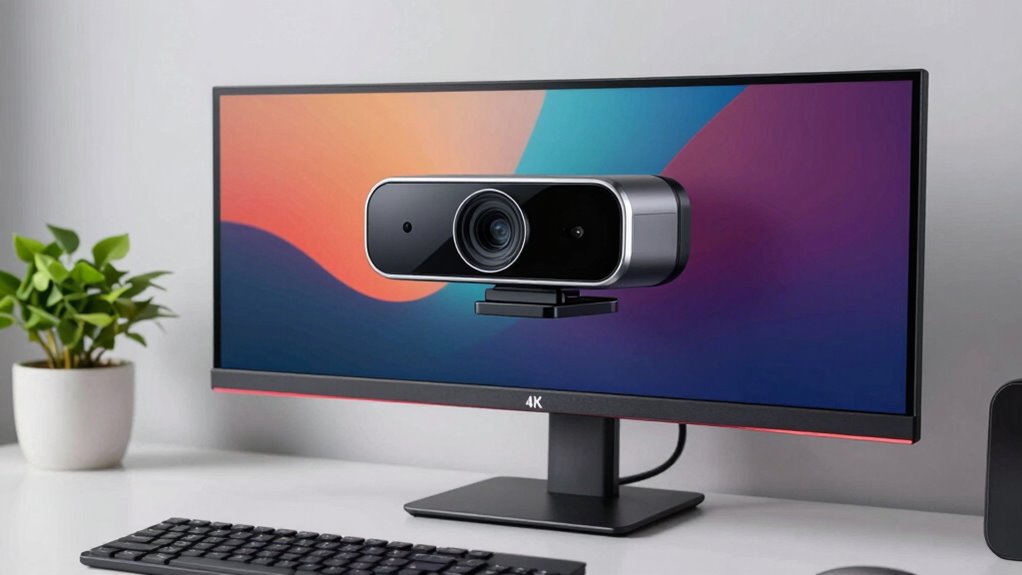

If you’re searching for a 4K webcam, the biggest surprise is how differently these cameras perform despite sharing the same resolution. My top overall pick is the Logitech MX Brio, which pairs a large 1/1.4-inch sensor with reliable image processing and software that works cleanly across every major app. Close behind, the Insta360 Link 2 stands out for its PTZ gimbal and AI tracking, while the EMEET NOVA 4K delivers the best balance of price and picture quality for everyday callers. The main tradeoffs in this category come down to sensor size versus cost, autofocus technology (PDAF beats fixed focus), and whether you actually need smart tracking or just a sharp, stable image. Read on for the full breakdown of all 15 models and which one fits your setup.

Get privacy and security gear delivered free with Prime
- Fast, free delivery on millions of items
- Prime Video, Amazon Music and more included
- Member-only deals all year
Complete the kit

Key Takeaways
- Sensor size mattered more than any other spec: the MX Brio’s 1/1.4-inch sensor and the Sony 1/2-inch sensors in the Acer and OBSBOT Meet 2 produced noticeably cleaner low-light footage than the smaller sensors in budget models like the Elelink and AOC.
- PDAF autofocus separated the serious contenders from the rest — fixed-focus budget 4K webcams often deliver soft, hunting footage once you move off your mark.
- Three of the fifteen models (j5create 360, EMEET PIXY Dual, EMEET PIXY Wireless) are really conference-room cameras repurposed for desks; solo streamers should generally skip them.
- Insta360‘s PTZ gimbal and OBSBOT’s AI framing represent a genuine step up in tracking quality, but both demand more desk space and USB bandwidth than fixed-lens models.
- The original Logitech Brio still competes in 2026, but its aging sensor and middling low-light handling explain why the MX Brio justifies its premium for anyone buying new.
| Acer 4K Webcam with Sony 1/2-Inch Sensor, PDAF, Dual Microphones, and Magnetic Privacy Cover |  | Best Overall Image Quality | Resolution: UHD 4K | Image sensor: Sony 1/2-inch CMOS | Autofocus: Phase Detection Autofocus (PDAF) | VIEW ON AMAZON | See Our Full Breakdown |
| Philips 4K Webcam with Microphone and Privacy Shutter |  | Best No-Frills Value | Resolution: 4K Ultra HD | Microphone: Built-in | Privacy: Physical shutter | VIEW ON AMAZON | See Our Full Breakdown |
| Logitech MX Brio Ultra HD 4K Webcam | 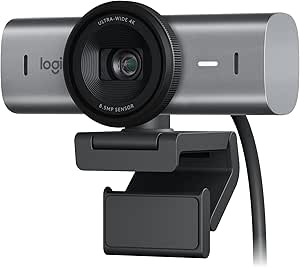 | Best Premium Pick | Resolution: 4K at 30 fps / 1080p at 60 fps | Microphones: Dual noise-reducing | Connectivity: USB-C | VIEW ON AMAZON | See Our Full Breakdown |
| EMEET NOVA 4K Webcam with PDAF Autofocus and Dual Microphones |  | Best Budget 4K | Max resolution: 4K at 30 fps (defaults to 1080p) | Autofocus: PDAF, fixed range 7.9–118 in | Field of view: 73° fixed | VIEW ON AMAZON | See Our Full Breakdown |
| j5create 4K 360° AI Conference Camera |  | Best for Conference Rooms | Video: 4K 360°, MPEG format | Effective resolution: 12 MP still and video | Sensor: CMOS | VIEW ON AMAZON | See Our Full Breakdown |
| OBSBOT Meet 2 4K Webcam with 1/2-Inch Sensor, AI Framing, and Autofocus |  | Best Compact Pick | Resolution: UHD 4K | Sensor: 1/2-inch CMOS | Features: AI framing, autofocus, gesture control, zoom control | VIEW ON AMAZON | See Our Full Breakdown |
| Insta360 Link 2 4K PTZ Webcam |  | Best for Presenters | Resolution: 4K | Sensor: 1/2-inch | Autofocus: Phase Detection Auto Focus (PDAF) | VIEW ON AMAZON | See Our Full Breakdown |
| Acer A640 4K Webcam with AI Noise-Canceling Microphone |  | Best Privacy Hardware | Maximum resolution: 4K at 30 fps | Supported resolutions: 2K or 1080p at 60 fps | Sensor: Sony 1/2.8-inch | VIEW ON AMAZON | See Our Full Breakdown |
| EMEET PIXY Dual-Camera AI PTZ 4K Webcam |  | Best for Hybrid Teaching | Sensor: 1/2.55-inch Sony | Resolution: 4K at 30 FPS | Autofocus: PDAF and AI autofocus; 0.2-second focusing | VIEW ON AMAZON | See Our Full Breakdown |
| Elelink 4K USB Webcam with Autofocus and Dual Noise-Canceling Microphones |  | Best Budget Entry Point | Resolution: 4K UHD | Frame rate: 30 FPS | Microphones: Dual noise-canceling | VIEW ON AMAZON | See Our Full Breakdown |
| EMEET C960 4K Webcam with PDAF Autofocus and Dual Microphones |  | Best Budget 4K Upgrade | Video resolution: True 4K (defaults to 1080p) | Focus: PDAF autofocus | Field of view: 73° | VIEW ON AMAZON | See Our Full Breakdown |
| AOC 4K Webcam with Noise-Reducing Microphone |  | Best Plug-and-Play Simplicity | Resolution: 4K Ultra HD | Field of view: 80° | Adjustability: 180° tilt, 360° swivel | VIEW ON AMAZON | See Our Full Breakdown |
| EMEET PIXY Wireless 4K Dual-Lens AI Tracking Camera |  | Best for Mobile Creators | Resolution: UHD 4K | Camera design: Dual-lens with dedicated AI tracking lens | Field of view: 97° | VIEW ON AMAZON | See Our Full Breakdown |
| EMEET S600 4K Webcam with Sony Sensor and PDAF Autofocus |  | Best Image Quality Per Dollar | Sensor: Sony 1/2.55-inch | Max resolution / frame rate: 4K at 30 fps | 1080p frame rate: 60 fps | VIEW ON AMAZON | See Our Full Breakdown |
| Logitech Brio Ultra HD 4K Webcam |  | Best Overall 4K Webcam | Maximum resolution: 4K | Maximum frame rate: 30 fps | Digital zoom: 5x | VIEW ON AMAZON | See Our Full Breakdown |
| 4k webcam | Compatibility | Resolution | Microphones |
|---|---|---|---|
| Acer 4K Webcam with Sony 1/2-I | Windows, Mac, ChromeOS, Switch 2 | UHD 4K | Dual high-sensitivity digital mics, up to 2.5 m pickup |
| Philips 4K Webcam with Microph | Windows and macOS | 4K Ultra HD | — |
| Logitech MX Brio Ultra HD 4K W | Windows, macOS, Chrome OS, Linux | 4K at 30 fps / 1080p at 60 fps | Dual noise-reducing |
| EMEET NOVA 4K Webcam with PDAF | Windows 10/11, macOS 10.14+, Android TV 7.0+ | — | 2 built-in, up to 8 ft pickup |
| j5create 4K 360° AI Conference | Windows 11/10, macOS 10.14+, Chrome OS | — | — |
| OBSBOT Meet 2 4K Webcam with 1 | — | UHD 4K | Dual omnidirectional noise-canceling |
| Insta360 Link 2 4K PTZ Webcam | Mac and Windows; not ARM-based Windows or Windows Hello | 4K | — |
| Acer A640 4K Webcam with AI No | Nintendo Switch 2, Teams, Zoom, Twitch, and mainstream platforms | — | — |
| EMEET PIXY Dual-Camera AI PTZ | — | 4K at 30 FPS | Three-microphone array, three sound modes |
| Elelink 4K USB Webcam with Aut | Windows, Mac OS, Android | 4K UHD | Dual noise-canceling |
| EMEET C960 4K Webcam with PDAF | Windows, macOS 10.14+, Android TV 7.0+, Linux | — | Dual omnidirectional |
| AOC 4K Webcam with Noise-Reduc | Zoom, Teams, Skype; computers, laptops, tablets | 4K Ultra HD | — |
| EMEET PIXY Wireless 4K Dual-Le | — | UHD 4K | — |
| EMEET S600 4K Webcam with Sony | — | — | — |
| Logitech Brio Ultra HD 4K Webc | Windows, Mac, ChromeOS | — | Dual omnidirectional, noise-canceling |
More Details on Our Top Picks
Acer 4K Webcam with Sony 1/2-Inch Sensor, PDAF, Dual Microphones, and Magnetic Privacy Cover
This option stands out for pairing a Sony 1/2-inch CMOS sensor with PDAF autofocus, a combination usually reserved for pricier picks like the Logitech MX Brio. The larger sensor means noticeably cleaner detail in dim home-office lighting, while phase-detection focusing keeps faces sharp without the hunting that cheaper contrast-focus cams exhibit. The aluminum unibody doubles as a heat sink, which helps sustain long streaming sessions without image degradation. At 57 g, it is also the most travel-friendly of the premium 4K picks here. The tradeoff: Acer specifies no frame rate for the 4K mode, so buyers who need guaranteed 30 fps streaming metrics may prefer the MX Brio’s documented specs. Compared with the EMEET NOVA, it offers superior low-light performance but a less flexible mount.
Pros:- Sony 1/2-inch sensor delivers strong detail in poor lighting
- PDAF autofocus tracks subjects quickly and accurately
- Aluminum unibody aids durability and heat dissipation
- Magnetic privacy cover with 12 magnets stays securely attached during travel
Cons:- 4K frame rate is not specified by the manufacturer
- Microphone noise filtering is only described as effective in most scenes
- No adjustable field of view
Best for: Remote workers and streamers who want large-sensor image quality and fast autofocus in a portable body
Not ideal for: Buyers who need verified frame-rate specs for production streaming workflows
- Resolution:UHD 4K
- Image sensor:Sony 1/2-inch CMOS
- Autofocus:Phase Detection Autofocus (PDAF)
- Microphones:Dual high-sensitivity digital mics, up to 2.5 m pickup
- Body:Aerospace-grade aluminum, 57 g
- Privacy:Magnetic cover with 12 built-in magnets
- Connection:USB-C to USB-A with adapter
- Compatibility:Windows, Mac, ChromeOS, Switch 2
Our verdict“The pick for buyers who prioritize sensor size and focus speed over spec-sheet certainty.”
Philips 4K Webcam with Microphone and Privacy Shutter
For buyers who just want 4K resolution without extra complexity, this Philips model keeps things simple: USB plug-and-play, a built-in mic, and a physical shutter. Where the Acer Sony-sensor cam and EMEET NOVA layer on autofocus branding, dual mics, and software toggles, this one strips the experience down to the essentials — which is exactly its appeal for classroom use, presentations, and family calls. The physical privacy shutter is a genuinely useful touch at this level, since many budget 4K cams ship without any cover. The tradeoff is transparency: Philips provides no microphone performance details and doesn’t specify the USB connector type, so buyers with USB-C-only laptops should plan on an adapter. Compared with feature-rich rivals, it trades capability for straightforward reliability.
Pros:- 4K Ultra HD resolution at a simple price point
- Physical privacy shutter included
- True plug-and-play setup with no software required
- Works across Windows, macOS, and common meeting platforms
Cons:- No microphone performance details provided
- USB connector type unspecified, risking adapter needs on modern laptops
Best for: Students, teachers, and casual callers who want basic 4K video with minimal setup fuss
Not ideal for: Streamers and podcasters who depend on strong built-in audio and detailed specs
- Resolution:4K Ultra HD
- Microphone:Built-in
- Privacy:Physical shutter
- Setup:USB plug and play
- Compatibility:Windows and macOS
Our verdict“A sensible, uncomplicated 4K webcam for anyone who values simplicity over spec depth.”
Logitech MX Brio Ultra HD 4K Webcam
The MX Brio earns the premium slot through AI-enhanced image processing that rescues faces in backlit and low-light rooms — a real advantage over the Philips 4K, which offers no lighting assistance at all. Its flexibility is the other selling point: 4K at 30 fps for detail, or 1080p at 60 fps when smooth motion matters more, a choice the fixed-spec EMEET NOVA doesn’t give you. Show Mode tilts the camera down to share desk work, which is handy for creators demonstrating handwriting or product shots. The tradeoffs are real, though. 4K tops out at 30 fps, and several image controls plus workflow features live inside Logitech’s software rather than the camera itself — buyers who dislike vendor apps will find that friction annoying. Broad certification across meeting and streaming platforms offsets some of that.
Pros:- Dual modes: 4K at 30 fps or smooth 1080p at 60 fps
- AI image processing improves face visibility in bad lighting
- Dual noise-reducing microphones
- Show Mode enables desk-view sharing for demos
Cons:- 4K is capped at 30 fps
- Some image controls and workflow features require Logitech software
Best for: Professionals and hybrid creators who want polished video in difficult lighting and deep software control
Not ideal for: Buyers who want every feature available without installing manufacturer software
- Resolution:4K at 30 fps / 1080p at 60 fps
- Microphones:Dual noise-reducing
- Connectivity:USB-C
- Image controls:Autofocus, auto-exposure, auto white balance
- Extras:Privacy cover, Show Mode
- Compatibility:Windows, macOS, Chrome OS, Linux
Our verdict“The most complete 4K webcam here for buyers willing to pay for lighting intelligence and software depth.”
EMEET NOVA 4K Webcam with PDAF Autofocus and Dual Microphones
The NOVA makes this list by delivering PDAF autofocus and dual mics at a budget price, features the plainer Philips 4K Webcam can’t match. Its mounting system is a hidden strength: 360° horizontal rotation, vertical tilt, a 180° adjustable stand, and a standard 1/4-inch tripod thread give placement flexibility that even the pricier Acer Sony-sensor model doesn’t offer. The honest catch is that the camera defaults to 1080p, and you have to enable 4K inside supported software — a reasonable safeguard for weaker computers, but a genuine surprise for buyers expecting 4K out of the box. The fixed 73° field of view and non-adjustable autofocus range also mean less framing freedom than AI-framing competitors like the OBSBOT Meet 2 elsewhere in this roundup. As an affordable step up from 1080p webcams, it still makes sense.
Pros:- PDAF autofocus with automatic light adjustment
- Dual built-in microphones with 8-foot pickup range
- Highly adjustable mounting plus standard tripod thread
- Physical privacy cover included
Cons:- Defaults to 1080p; 4K must be manually enabled in software
- Field of view and autofocus range cannot be adjusted
- USB 2.0 connection may limit bandwidth headroom
Best for: Budget-conscious upgraders who want PDAF autofocus, dual mics, and flexible mounting without a premium price
Not ideal for: Users on older or slower PCs who might never successfully enable the 4K mode
- Max resolution:4K at 30 fps (defaults to 1080p)
- Autofocus:PDAF, fixed range 7.9–118 in
- Field of view:73° fixed
- Microphones:2 built-in, up to 8 ft pickup
- Connectivity:USB 2.0 Type-A, 1.5 m cable
- Mounting:360° rotation, 15° tilt, 180° stand, 1/4-inch tripod nut
- Compatibility:Windows 10/11, macOS 10.14+, Android TV 7.0+
Our verdict“A smart budget buy if you’re comfortable flipping one software switch to unlock 4K.”
j5create 4K 360° AI Conference Camera
This j5create model plays a completely different game from the desk-cam picks above. Its 4K 360° lens captures an entire meeting room, while six smart display modes — host selection, multi-speaker views, and picture-in-picture tracking — reshape that footage for remote attendees. Compared with the Logitech MX Brio, which frames a single person beautifully, this camera solves the multi-person problem that traditional webcams simply can’t. Echo cancellation and noise reduction handle the acoustics of larger rooms where a laptop mic would fail. The tradeoff is a notable one: AI functions are unavailable in full 4K 360° mode, so teams must choose between maximum resolution and smart framing. Solo users gain nothing here — for one person at a desk, the Acer or EMEET NOVA are cheaper and better suited. At 0.25 kg with a fixed wide lens, it’s a room device, not a travel companion.
Pros:- 4K 360° room capture with HDR support
- Six smart display modes including host selection and multi-speaker views
- AI auto framing and people detection
- Echo cancellation and background noise reduction for group audio
Cons:- AI features don’t work in 4K 360° mode
- Overkill in size, weight, and price for single-user setups
- Fixed 3.5 mm lens with no optical zoom options
Best for: Small-to-medium meeting rooms where multiple people need to be visible and tracked
Not ideal for: Solo remote workers — a standard front-facing 4K webcam does the job for less
- Video:4K 360°, MPEG format
- Effective resolution:12 MP still and video
- Sensor:CMOS
- Lens:3.5 mm focal length with digital zoom
- Focus:Autofocus
- Weight:0.25 kg
- Compatibility:Windows 11/10, macOS 10.14+, Chrome OS
- Cable:USB-C with USB Type-A connector
Our verdict“The right tool only if your 4K needs involve a room full of people rather than one face.”
OBSBOT Meet 2 4K Webcam with 1/2-Inch Sensor, AI Framing, and Autofocus
The OBSBOT Meet 2 stands out for packing a 1/2-inch CMOS sensor — the same sensor class as the pricier Insta360 Link 2 — into a body that weighs just 40.5 grams. That combination makes this pick the right fit for laptop users and frequent travelers who want genuine 4K detail without carrying a chunky device. Gesture control for framing and zoom means one person can adjust their shot mid-call without touching software menus, which the fixed-lens Elelink simply cannot match. The tradeoffs are real, though: OBSBOT acknowledges the camera may run hot during use, and deeper settings live inside the OBSBOT Center app rather than native controls. Compared with the Acer A640, you also give up a physical privacy shutter, relying on software privacy instead.
Pros:- Large 1/2-inch sensor delivers sharper 4K detail than most compact webcams
- AI framing and autofocus keep you centered without manual adjustments
- Gesture controls for zoom and framing during calls
- Featherlight 40.5 g design is ideal for travel setups
Cons:- May become hot during extended use, per the manufacturer
- Advanced feature control requires the OBSBOT Center software
Best for: Remote workers and streamers who travel often and want flagship-grade sensor quality in a pocketable body
Not ideal for: Buyers who want hardware privacy controls — there is no physical shutter, and the unit can heat up during long sessions
- Resolution:UHD 4K
- Sensor:1/2-inch CMOS
- Features:AI framing, autofocus, gesture control, zoom control
- Connection:USB-C
- Microphones:Dual omnidirectional noise-canceling
- Weight:40.5 g
Our verdict“This is the pick for people who refuse to sacrifice sensor quality for portability, as long as software-based privacy and some heat are acceptable.”
Insta360 Link 2 4K PTZ Webcam
If your calls involve moving around — whiteboarding, demoing, teaching — the Insta360 Link 2 is the most capable camera here. Its motorized pan-and-tilt head with AI tracking physically follows you, while dedicated DeskView and Whiteboard modes reframe automatically for documents and boards. The 1/2-inch sensor with HDR and strong low-light handling also outclasses the Acer A640’s smaller 1/2.8-inch sensor in dim offices. Compared with the EMEET PIXY, the Link 2 offers a tighter, more refined tracking experience with phase-detection autofocus, though the PIXY counters with a three-microphone array versus the Link 2’s single mic. Compatibility is the main weakness: it will not work with ARM-based Windows machines, and it does not support Windows Hello face login — an odd omission at this level.
Pros:- Motorized AI tracking physically follows movement across the room
- HDR and low-light performance from a 1/2-inch sensor
- DeskView and Whiteboard modes automate presentation framing
- AI noise-canceling microphone cleans up call audio
Cons:- Not compatible with ARM-based Windows systems
- No Windows Hello Face Recognition support
Best for: Educators, trainers, and content creators who present standing up, use whiteboards, or move around during calls
Not ideal for: Users on ARM-based Windows laptops or anyone who wants Windows Hello facial recognition — neither is supported
- Resolution:4K
- Sensor:1/2-inch
- Autofocus:Phase Detection Auto Focus (PDAF)
- Features:HDR, AI tracking, gesture control, DeskView mode, Whiteboard mode, privacy mode
- Audio:AI noise-canceling microphone
- Compatibility:Mac and Windows; not ARM-based Windows or Windows Hello
Our verdict“Worth the premium for presenters who need a camera that moves with them; stationary laptop callers can spend less elsewhere.”
Acer A640 4K Webcam with AI Noise-Canceling Microphone
The Acer A640 earns its place with a physical sliding privacy shutter — something the OBSBOT Meet 2 and Elelink both handle with detachable or software-only solutions — plus flexible resolution options. You can shoot 4K at 30 fps for maximum detail or drop to 1080p at 60 fps for smoother motion, a choice the Elelink does not offer. The Sony 1/2.8-inch sensor with PDAF and automatic low-light correction holds up well against fixed-lens rivals, though it lacks the tracking and gesture tricks of the Insta360 Link 2. Setup is genuinely plug-and-play with the included USB-A to USB-C adapter, and it even works with a Nintendo Switch 2 for streaming. Just note there are no built-in speakers, and the microphone needs to be set as the default input before calls.
Pros:- 4K at 30 fps or smoother 1080p at 60 fps output options
- PDAF autofocus with automatic low-light correction
- Physical sliding privacy shutter protects the lens
- Plug-and-play setup with included USB-A to USB-C adapter
Cons:- No built-in speakers
- Microphone must be manually selected as default input in device and app settings
Best for: Home-office professionals who want a physical privacy shutter and resolution flexibility without a software learning curve
Not ideal for: Buyers expecting an all-in-one audio solution — there are no built-in speakers, and the mic needs manual default-device selection
- Maximum resolution:4K at 30 fps
- Supported resolutions:2K or 1080p at 60 fps
- Sensor:Sony 1/2.8-inch
- Autofocus:Phase Detection Auto Focus (PDAF)
- Microphone:AI noise cancellation
- Privacy shutter:Physical sliding shutter
- Compatibility:Nintendo Switch 2, Teams, Zoom, Twitch, and mainstream platforms
Our verdict“A sensible mid-range choice for privacy-conscious office workers who value a real shutter over motorized tracking.”
EMEET PIXY Dual-Camera AI PTZ 4K Webcam
The EMEET PIXY takes a different approach from everything else here: dual cameras paired with motorized movement spanning 310° of pan and 180° of tilt. That range far exceeds the Insta360 Link 2’s travel, making this model better suited to classrooms and demo benches where subjects sit at wildly different angles. The three-microphone array with selectable sound modes gives it an audio edge over single-mic rivals like the Link 2, and 0.2-second AI autofocus keeps demonstrations sharp. The compromises: the 73° field of view is fixed in 4K and 1080p60 modes, the tripod is sold separately despite the camera’s standalone design, and it skips ARM Windows and inconsistent Chrome OS support. At 131.54 g, it is also the heaviest of this group — this is a desk-bound tool, not a travel companion.
Pros:- 310° pan and 180° tilt tracking covers entire rooms
- Fast 0.2-second PDAF and AI autofocus on a Sony sensor
- Three-microphone array with three selectable sound modes
- Software presets and whiteboard detection for teaching setups
Cons:- Field of view is fixed when shooting 4K 30 fps or 1080p 60 fps
- Tripod sold separately
- Chrome OS compatibility varies by version and device
Best for: Teachers, workshop leaders, and product demonstrators who need wide motorized coverage and multi-directional audio capture
Not ideal for: Laptop travelers and Chrome OS users — it is heavy, needs a separately sold tripod, and Chrome compatibility is inconsistent
- Sensor:1/2.55-inch Sony
- Resolution:4K at 30 FPS
- Autofocus:PDAF and AI autofocus; 0.2-second focusing
- Pan/Tilt:310° pan, 180° tilt
- Microphones:Three-microphone array, three sound modes
- Field of View:73°
- Weight:131.54 g
Our verdict“The room-covering choice for educators and demonstrators, provided you budget for a tripod and stay on Windows or macOS.”
Elelink 4K USB Webcam with Autofocus and Dual Noise-Canceling Microphones
The Elelink covers the basics honestly: 4K at 30 fps, autofocus, HDR light correction, and dual noise-canceling microphones in a plug-and-play package with a generous 6.6-foot cable. It is the simplest option in this lineup to set up — no companion software required, unlike the OBSBOT Meet 2 — and the detachable privacy cover is a practical touch the OBSBOT also lacks. Where it falls behind is refinement: there is no sensor size advantage like the Acer A640’s Sony chip, no tracking like the Insta360 Link 2, and 4K is capped at 30 fps with no 60 fps fallback at lower resolutions. For straightforward seated video calls, though, that matters little. Wide-angle Android, Windows, and macOS compatibility makes it a flexible spare camera too.
Pros:- True 4K UHD capture at 30 FPS at an accessible level
- Dual noise-canceling microphones for clearer call audio
- Automatic HDR light correction handles uneven room lighting
- Plug-and-play with a long 6.6-foot cable and detachable privacy cover
Cons:- 4K output limited to 30 FPS with no 60 fps option
- No advanced features like AI tracking or software presets
Best for: First-time 4K webcam buyers and anyone needing a dependable spare camera for everyday calls on any platform
Not ideal for: Streamers and motion-heavy users — 4K caps at 30 fps and there is no high-frame-rate mode or tracking
- Resolution:4K UHD
- Frame rate:30 FPS
- Microphones:Dual noise-canceling
- Connectivity:USB plug and play
- Cable length:6.6 ft
- Compatibility:Windows, Mac OS, Android
Our verdict“A no-frills 4K entry point that gets everyday video calls right, as long as you do not need high frame rates or smart tracking.”
EMEET C960 4K Webcam with PDAF Autofocus and Dual Microphones
For anyone stepping up from a 720p laptop cam without spending premium money, this option stands out for delivering a true 4K sensor with PDAF autofocus at an entry-level price. The catch is that it defaults to 1080p out of the box, so buyers who never open the companion software will never see the 4K output they paid for — a step the EMEET S600 also asks of you, though its Sony sensor gives it a sharper edge in low light. Compared with the AOC 4K webcam, the C960’s dual omnidirectional microphones give it an audio advantage for calls, but its 73° field of view is narrower than the AOC’s 80°, which matters if you want to fit a second person in frame.
Pros:- True 4K sensor with PDAF autofocus and automatic light correction
- Dual omnidirectional microphones for clearer calls than single-mic rivals
- Privacy cover and plug-and-play USB-A setup
- Flexible mounting with 1/4-inch tripod thread and broad OS compatibility
Cons:- Defaults to 1080p; enabling 4K requires software or a compatible app
- Must be set as the default microphone for the best audio quality
- 73° field of view is narrower than similarly priced competitors
Best for: Students and remote workers on a budget who want a genuine 4K sensor and are comfortable toggling settings in software
Not ideal for: Buyers who want zero configuration — out of the box it streams 1080p until you switch resolution manually
- Video resolution:True 4K (defaults to 1080p)
- Focus:PDAF autofocus
- Field of view:73°
- Microphones:Dual omnidirectional
- Connection:USB-A
- Mounting:1/4-inch tripod thread; adjustable positioning
- Privacy:Privacy cover included
- Compatibility:Windows, macOS 10.14+, Android TV 7.0+, Linux
Our verdict“A sensible pick if you want real 4K hardware on a budget and don’t mind one extra setup step to unlock it.”
AOC 4K Webcam with Noise-Reducing Microphone
This model makes the most sense for buyers who want 4K video that works the moment it’s plugged in — no apps, no resolution switching, no fuss. Its 80° field of view is wider than the EMEET C960’s 73°, making it better suited to small-group calls at a shared desk, and the included USB-A to USB-C adapter means it connects to tablets and newer laptops without extra purchases. The tradeoff is depth of features: unlike the Logitech Brio, there’s no zoom, no selectable framing presets, and no dedicated software for fine-tuning, so what you see at setup is what you get. The automatic brightness adjustment helps in uneven lighting, but a single built-in microphone puts it behind the dual-mic C960 for noisy rooms.
Pros:- 4K Ultra HD video without needing companion software
- Wide 80° field of view with 180° tilt and 360° swivel for flexible framing
- Sliding physical privacy cover
- USB-A and USB-C connectivity for computers, laptops, and tablets
Cons:- No dedicated software or driver features described
- Single noise-reducing microphone trails dual-mic competitors in busy environments
- Lacks zoom or adjustable field-of-view presets
Best for: Casual users and families who want a true plug-and-play 4K cam across laptops and tablets with zero software setup
Not ideal for: Tweakers and streamers who want zoom, adjustable framing, or software controls — none are on offer here
- Resolution:4K Ultra HD
- Field of view:80°
- Adjustability:180° tilt, 360° swivel
- Microphone:Built-in noise-reducing
- Privacy feature:Sliding lens cover
- Connectivity:USB with USB-A to USB-C adapter
- Lighting:Automatic brightness adjustment
- Compatibility:Zoom, Teams, Skype; computers, laptops, tablets
Our verdict“Pick this if simplicity and device flexibility matter more to you than advanced controls.”
EMEET PIXY Wireless 4K Dual-Lens AI Tracking Camera
The PIXY plays a different game than everything else here: instead of clipping to a monitor, it’s a wireless, battery-powered camera built to move with you. The dual-lens AI tracking with gesture control means you can walk around a studio or kitchen while staying framed — something the fixed-lens Logitech Brio and EMEET S600 simply can’t do — and the 5200 mAh battery runs up to eight hours between charges. Compared with the desk-bound j5create 360° conference camera, the PIXY trades a fixed all-in-one setup for portability, HDR, and multi-platform streaming through EMEET STUDIO. The tradeoffs are real: platform streaming depends on EMEET’s software, the 97° field of view can feel wide for solo calls, and its feature set is overkill if you only join Zoom meetings from a desk.
Pros:- 4K video with HDR for better contrast in mixed lighting
- AI subject tracking and gesture controls free you from the desk
- Fully wireless with up to 8 hours of battery life
- Multi-platform streaming support plus 3.5 mm external mic jack
Cons:- Streaming to YouTube, Twitch, and RTMP requires EMEET STUDIO software
- Unproven track record compared with established rivals like the Logitech Brio
- 97° wide view and tracking features are excessive for simple one-on-one calls
Best for: Content creators, fitness instructors, and vloggers who stream on the move and need tracking plus untethered battery power
Not ideal for: Desk-based office workers who just need reliable Zoom framing — this is more camera, and more setup, than a stationary workflow requires
- Resolution:UHD 4K
- Camera design:Dual-lens with dedicated AI tracking lens
- Field of view:97°
- Video features:HDR and AI auto-tracking
- Connectivity:Wireless to phones and computers
- Audio:48 kHz built-in microphone; 3.5 mm external jack
- Battery:5200 mAh, up to 8 hours streaming
- Compatible platforms:Android, iOS, Windows, macOS
- Streaming:EMEET STUDIO: YouTube, Twitch, Facebook, RTMP
Our verdict“Choose this if your filming happens away from a desk; skip it if your camera never leaves the monitor.”
EMEET S600 4K Webcam with Sony Sensor and PDAF Autofocus
Image quality is where this model earns its spot. The Sony 1/2.55-inch sensor is larger than what typical budget 4K cams carry, which translates into cleaner detail and better behavior when lighting isn’t perfect — an advantage the EMEET C960, with its smaller sensor, can’t match. It also gives you a genuine choice the AOC webcam doesn’t: 4K at 30 fps for detail, or 1080p at 60 fps for smooth motion, which matters for fast movement on camera. Be aware of the framing quirk — the field of view adjusts between 40° and 73° only at 1080p, and locks at 73° when shooting 4K. And while its noise reduction is on by default, audio purists using external mics will want to switch it off in EMEETLINK first.
Pros:- Larger Sony sensor delivers stronger image quality than budget rivals
- 4K at 30 fps or smooth 1080p at 60 fps
- PDAF autofocus with automatic light adjustment
- Built-in privacy cover and plug-and-play setup with optional EMEETLINK customization
Cons:- Field of view fixed at 73° in 4K mode
- Noise reduction enabled by default and must be disabled manually in software
- No digital zoom compared with the Logitech Brio’s 5x
Best for: Professionals and streamers who prioritize sensor quality and want 1080p/60 fps flexibility alongside 4K detail
Not ideal for: Anyone wanting zoom or wide framing at 4K — the field of view is locked at 73° in top resolution, unlike the Logitech Brio’s three presets
- Sensor:Sony 1/2.55-inch
- Max resolution / frame rate:4K at 30 fps
- 1080p frame rate:60 fps
- Autofocus:PDAF
- Field of view:40°–73° at 1080p; fixed 73° at 4K
- Audio:Noise-reducing microphones
- Connection:USB 2.0 and USB 3.0
- Setup:Plug-and-play with optional EMEETLINK software
Our verdict“The strongest pick here for sheer picture quality at a mid-range price, as long as fixed 4K framing suits your setup.”
Logitech Brio Ultra HD 4K Webcam
Logitech’s Brio remains the safest all-around choice because it nails the features most buyers actually use daily: three field-of-view presets (65°, 78°, 90°) that no other camera in this batch matches, 5x digital zoom, and Windows Hello face login for password-free sign-ins. Compared with the EMEET S600, the Brio gives up some sensor size but gains framing flexibility and an ecosystem of reliable driver support across Windows, Mac, and ChromeOS. Its dual noise-canceling microphones pick up clearly within about 1.2 m, which suits a single seated speaker better than a conference room. The honest limitations: 4K tops out at 30 fps — standard for this class but worth knowing — and the privacy shutter is an attachable accessory rather than built in, so it can be misplaced.
Pros:- Three adjustable field-of-view settings plus 5x digital zoom for precise framing
- Windows Hello support for biometric login
- Dual noise-canceling microphones tuned for close-range speech
- Automatic exposure and contrast adjustment across Windows, Mac, and ChromeOS
Cons:- 4K capped at 30 fps, same as most of the category
- Privacy shutter is a separate attachable piece that’s easy to lose
- Field-of-view options are presets rather than fully variable
Best for: Professionals and hybrid workers who want one dependable 4K camera with zoom, framing presets, and Windows Hello sign-in
Not ideal for: Buyers who need 4K at 60 fps or a permanently attached privacy cover like the EMEET S600’s built-in lens cover
- Maximum resolution:4K
- Maximum frame rate:30 fps
- Digital zoom:5x
- Field of view:65°, 78°, or 90° diagonal
- Microphones:Dual omnidirectional, noise-canceling
- Mic pickup range:Up to 1.2 m
- Windows Hello:Supported
- Privacy shutter:Attachable
- Compatibility:Windows, Mac, ChromeOS
Our verdict“If you want the most complete, well-supported 4K webcam for everyday work, this is the one to beat.”

How We Picked
I evaluated each webcam against four core criteria: image quality (sensor size, low-light behavior, color accuracy, and whether the 4K output is genuinely detailed or upscaled), autofocus performance (PDAF versus contrast or fixed focus, and how well each camera holds a face in motion), audio and privacy features (microphone clarity, noise cancellation, and physical shutters), and usability (software reliability, mounting flexibility, and compatibility across Windows, macOS, and streaming platforms like OBS and Zoom).
The ranking logic favors cameras that excel at the core job — producing a sharp, well-exposed 4K image in typical home lighting — before rewarding extras like AI tracking or wireless connectivity. That’s why sensor-first models like the Logitech MX Brio and OBSBOT Meet 2 sit near the top, while conference-focused 360-degree cameras rank lower for individual buyers despite their technical sophistication. Value played a role too: a cheaper camera that nails focus and color beats an expensive one packed with features most desk users never touch.
Factors to Consider When Choosing 4k Webcam
A 4K webcam is only as good as the parts around its resolution label. Before picking from the fifteen models above, here are the broader factors — and common mistakes — that determine whether you end up happy with your purchase.Sensor Size Is the Real Spec That Matters
The single most common mistake buyers make is treating “4K” as a guarantee of image quality. Two cameras with identical resolution can look dramatically different because sensor size determines light gathering. A 1/1.4-inch sensor like the one in the MX Brio captures roughly four times the light of the small sensors in entry-level 4K cameras, which translates to less grain, better color in dim rooms, and more natural background blur. Sensor size also affects dynamic range — the difference between a window behind you blowing out to white and the camera holding detail in both your face and the view outside. If you work in a room with less-than-ideal lighting, prioritize sensor size over any software feature. You can always add lights later, but you cannot swap the sensor.
Autofocus Technology: PDAF, Contrast, and Fixed Focus
Autofocus is where budget 4K webcams quietly cut corners. Phase detection autofocus (PDAF), found in the Acer, EMEET NOVA, C960, S600, and OBSBOT models, measures distance directly and snaps to your face almost instantly. Contrast-detection focus hunts back and forth before locking, which reads as visible pulsing during calls. Fixed-focus cameras — common in the cheapest tier — never hunt but also never adjust, so anything you hold up close goes soft. If you present products, draw on paper, or move around your desk, PDAF is worth paying for. If you sit perfectly still in a fixed chair at a fixed distance, fixed focus is a tolerable compromise. The mistake to avoid is assuming autofocus is a solved problem across the category — it is not.
Will Your Software and Connection Actually Support 4K?
Most video calls never use 4K. Zoom, Teams, and Google Meet cap outgoing streams well below 4K, which means a 4K webcam’s resolution only pays off for recording, streaming on Twitch or YouTube, and future-proofing. What the extra resolution does give you in calls is a better source image: platforms downsample from 4K to 1080p and the result looks sharper than a native 1080p camera. Also check your connection — several models here output 4K at 30fps but drop to 1080p for 60fps, and a few PTZ cameras want USB 3.0 bandwidth to avoid stutter. Buyers with older USB 2.0-only hubs or long extension cables should verify compatibility before choosing a tracking model. Buying 4K for a laptop you mostly use on Wi-Fi calls in a dim bedroom is spending money where you will not see it.
Smart Tracking: Genuine Upgrade or Expensive Distraction?
AI framing and PTZ tracking — the Insta360 Link 2’s gimbal, the OBSBOT’s framing, the PIXY’s dual-lens tracking — sound irresistible in demos. They genuinely help if you teach, demo physical products, walk around a whiteboard, or record alone without a camera operator. For everyone else, they add cost, moving parts that can fail, and occasional mis-tracking when a second person enters the frame. Ask yourself honestly how often you move during a call. If the answer is “rarely,” a fixed wide-angle 4K camera with digital zoom will serve you just as well for less money. Tracking is a tool for specific workflows, not a universal quality upgrade.
Microphones: Built-In Convenience Versus Separate Audio
Every camera in this lineup has a microphone, but quality varies enormously. Models with AI noise-canceling mics — the Acer A640, EMEET PIXY series, and Elelink — handle keyboard clatter and fan noise better than basic dual-mic setups like the Philips or AOC. Still, no webcam microphone matches even a modest standalone USB mic or headset. The realistic framing: built-in mics are fine for meetings where clarity matters more than warmth, but streamers and content creators should budget for separate audio. One practical note — if you do use the webcam mic, check whether the noise cancellation can be disabled, because aggressive processing makes music or typing-heavy workflows sound robotic.
Privacy Shutters, Mounting, and the Details People Regret Ignoring
The features that decide long-term satisfaction are the unglamorous ones. A physical privacy shutter (standard on the Philips, Acer’s magnetic cover, and the MX Brio) beats software toggles for peace of mind. Monitor-clamp mounts differ meaningfully: thin-bezel monitors and curved screens expose cheap clip designs, so check clamp depth and whether a tripod thread is included — the Insta360 and OBSBOT both offer standard threads, which matters if you plan angled or overhead shots. Cable length is another silent dealbreaker; several models ship with under-five-foot fixed cables that force a hub purchase for tower-PC setups. Finally, check whether the manufacturer provides ongoing firmware and software support, because webcam image processing improves substantially with updates over a product’s life.
Frequently Asked Questions
Is a 4K webcam worth it if I only use Zoom and Teams?
For calls alone, the honest answer is that the resolution itself is mostly future-proofing, since major platforms cap outgoing video below 4K. What you are really buying is a better sensor and processing pipeline — and that does improve how you look on calls, because platforms downsample a sharp 4K feed to 1080p more cleanly than a native 1080p camera renders. If your current 1080p webcam looks grainy in your lighting, upgrading to a mid-range 4K model like the EMEET NOVA or C960 will visibly help even on capped platforms. But if your existing camera already looks fine, 4K alone will not transform your meetings. Spend the difference on lighting instead — a key light improves a mediocre camera more than 4K improves a well-lit one.
Do I need PDAF autofocus, or is regular autofocus enough?
PDAF (phase detection autofocus) measures subject distance directly, so focus locks almost instantly and stays locked. Contrast-detection and basic autofocus systems guess by hunting for sharpness, which shows up as visible pulsing or moments of blur whenever you lean, gesture, or hold something up. If you present objects, teach, or move within the frame, PDAF is one of the most noticeable upgrades in this category — it is the difference between viewers never thinking about focus and viewers noticing it constantly. If you sit at a fixed distance and rarely move, standard autofocus is an acceptable saving. Fixed focus is only for fully static setups, and even then, anything you bring close to the camera will look soft.
Are PTZ and AI-tracking webcams like the Insta360 Link 2 worth the premium?
It depends entirely on whether you move. A gimbal-driven camera like the Insta360 Link 2 physically pans and tilts to keep you framed, which is a genuine upgrade for presenters, teachers, and creators who demo on their feet or use a whiteboard. The tradeoffs are real: moving parts add failure points over years of use, the motors need desk clearance, tracking can jump when another person enters frame, and these cameras typically demand USB 3.0 bandwidth for smooth 4K. For a standard seated workflow — meetings, streaming from a fixed chair, recorded talking-head videos — a fixed wide-angle model with digital zoom delivers 90% of the benefit at roughly half the cost. Buy tracking for your actual behavior, not the one in the marketing video.
Why do two 4K webcams with the same resolution look so different?
Resolution only defines pixel count, not light capture, color accuracy, or processing — and those three factors drive most of what you perceive as image quality. A large sensor like the MX Brio’s 1/1.4-inch chip gathers several times more light than the small sensors in entry-level 4K cameras, producing cleaner footage in typical home lighting. Lens quality and onboard image processing matter too: some budget cameras apply heavy sharpening and noise reduction that makes skin look plasticky, while better models render more natural detail. A few inexpensive models also achieve their “4K” label through interpolation from a lower native sensor, which produces soft output no software can fix. Reading the sensor specification before the resolution is the single best habit for buying in this category.
Can I rely on a 4K webcam’s built-in microphone for streaming and recordings?
Built-in webcam mics have improved considerably — the Acer A640 and EMEET PIXY models with AI noise cancellation handle meetings well — but they still sit centimeters from your face on top of a monitor, which picks up room echo and keyboard noise. For meetings where intelligibility matters more than richness, a good noise-canceling webcam mic is genuinely sufficient and keeps your desk clean. For streaming, YouTube, or podcasting, viewers and listeners notice audio quality before video quality, so a modest standalone USB microphone will outperform any camera in this lineup. If you do use the built-in mic, check whether noise cancellation can be toggled off, since aggressive processing makes music, clacking mechanical keyboards, and some voices sound unnatural on recordings.
Conclusion
Matching the right 4K webcam to your situation comes down to what you actually do on camera. For the best overall pick, the Logitech MX Brio wins on the fundamentals: an outsized sensor, dependable autofocus, and polished software that behaves the same in every app — the safest choice for almost any buyer. The EMEET NOVA 4K takes best value, delivering PDAF autofocus and a genuinely sharp 4K image at a price that undercuts the premium tier without the softness of true budget models. For best premium, the Insta360 Link 2 earns its spot with gimbal tracking and image quality that justify the cost — but only for people who move.
Beginners should start with the EMEET C960: it is forgiving, simple to set up, and cheap enough that upgrading later stings. For specific needs: presenters and educators get the most from the OBSBOT Meet 2 or EMEET PIXY Dual for AI framing; home-office callers in noisy spaces should look at the Acer A640 for its noise-canceling mic; small meeting rooms fit the j5create 360 or PIXY Wireless; and budget-conscious buyers who still want a privacy shutter and clean colors can lean on the Philips 4K or AOC. Whatever you pick, remember that sensor size and autofocus will shape your image far more than the 4K label itself.
Fall Picks
fall essentials
As an affiliate, we earn on qualifying purchases.