Portable VPN routers connect your devices through a VPN while you travel, so you can protect several devices without setting up each one separately. My best overall pick is the GL.iNet GL-MT3000 Beryl AX, which balances Wi-Fi 6, travel-friendly size, and VPN-focused features. The TP-Link Roam 6 AX3000 is a strong fit for travelers who prioritize newer Wi-Fi hardware, while the GL.iNet MUDI 7 stands apart with cellular connectivity and eSIM support. The main tradeoffs are VPN setup and control versus simplicity, and compact size versus speed, ports, and cellular options. Read on for the full breakdown and help matching a router to your travel routine.

Get privacy and security gear delivered free with Prime
- Fast, free delivery on millions of items
- Prime Video, Amazon Music and more included
- Member-only deals all year
Key Takeaways
- The GL.iNet GL-MT3000 Beryl AX leads for balance: it pairs Wi-Fi 6 with a compact travel-router design and VPN-oriented controls without requiring a premium Wi-Fi 7 model.
- Wi-Fi 7 is not the only measure of travel value: the ASUS RT-BE58 Go and newer GL.iNet and TP-Link Wi-Fi 7 models offer newer wireless generations, but buyers should weigh that against the networks and devices they actually use on trips.
- VPN capability and VPN speed are different questions: encryption, protocol support, and processor workload can affect throughput, so a router’s Wi-Fi rating alone does not predict its speed through a VPN.
- Small and low-cost models make different compromises: the TP-Link TL-WR802N and GL.iNet Mango prioritize basic portability, while models such as the Beryl AX and Slate AX offer more room for VPN control and connectivity.
- Cellular independence changes the job of the router: the GL.iNet MUDI 7 adds 5G and eSIM support, making it a distinct option for travelers who need mobile internet rather than only a secure connection to hotel or public Wi-Fi.
| ASUS RT-BE58 Go WiFi 7 Dual-Band Travel Router |  | Best Overall for Wi-Fi 7 Travel | Wi-Fi generation: Wi-Fi 7 (802.11be) | Bands: Dual-band, 2.4 GHz and 5 GHz | Maximum combined Wi-Fi speed: Up to 3.6 Gbps | VIEW LATEST PRICE | See Our Full Breakdown |
| GL.iNet GL-A1300 Slate Plus Portable Dual-Band Travel Router |  | Best for VPN Customization | Wi-Fi standard: Wi-Fi 5 (802.11a/b/g/n/ac) | Bands and wireless speeds: 2.4 GHz at 400 Mbps; 5 GHz at 867 Mbps | VPN protocols: OpenVPN and WireGuard | VIEW LATEST PRICE | See Our Full Breakdown |
| TP-Link N300 Wireless Portable Nano Travel Router TL-WR802N |  | Best Ultra-Basic Compact Pick | Wi-Fi generation: Wi-Fi 4 (802.11n/g/b) | Frequency band: 2.4–2.4835 GHz | Maximum data rate: 300 Mbps | VIEW LATEST PRICE | See Our Full Breakdown |
| GL.iNet GL-MT3000 Beryl AX Wi-Fi 6 Travel Router | 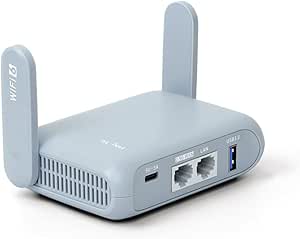 | Best for VPN Throughput and Ports | Wi-Fi generation: Wi-Fi 6 | Bands and wireless speeds: 2.4 GHz at 574 Mbps; 5 GHz at 2402 Mbps | Maximum VPN speed: 150 Mbps OpenVPN; 300 Mbps WireGuard | VIEW LATEST PRICE | See Our Full Breakdown |
| TP-Link Roam 6 AX3000 Dual-Band Wi-Fi 6 Travel Router (TL-WR3002X) |  | Best for App-Led Setup | Wi-Fi standard: Wi-Fi 6, AX3000 | Bands and wireless speeds: 2.4 GHz at up to 574 Mbps; 5 GHz at up to 2402 Mbps | VPN protocols: OpenVPN, WireGuard, PPTP, L2TP | VIEW LATEST PRICE | See Our Full Breakdown |
| GL.iNet GL-MT300N-V2 Mango Portable Mini Travel Wi-Fi Router |  | Best for Lightweight, Low-Bandwidth VPN Travel | Wi-Fi: 802.11b/g/n (Wi-Fi 4), 2.4 GHz, up to 300 Mbps | Ethernet: 2 ports, up to 100 Mbps | VPN: OpenVPN client; compatible with 30+ VPN providers | VIEW LATEST PRICE | See Our Full Breakdown |
| TP-Link Roam 7 BE3600 Wi-Fi 7 Dual-Band Portable Travel Router |  | Best for Multi-Device Wi-Fi 7 Travel | Wi-Fi: Wi-Fi 7, dual-band 2.4 GHz and 5 GHz | Maximum wireless rates: Up to 2882 Mbps on 5 GHz and 688 Mbps on 2.4 GHz | Device capacity: Up to 90 devices | VIEW LATEST PRICE | See Our Full Breakdown |
| TP-Link Roam 6 AX1500 Wi-Fi 6 Travel Router (TL-WR1502X) |  | Best for Straightforward Dual-Band Travel | Wi-Fi: Wi-Fi 6 (802.11ax), dual-band 2.4 GHz and 5 GHz | Maximum wireless rate: Up to 1500 Mbps: 1201 Mbps on 5 GHz and 300 Mbps on 2.4 GHz | Operating modes: Router, hotspot, access point, repeater, and client | VIEW LATEST PRICE | See Our Full Breakdown |
| GL.iNet GL-MT3600BE Beryl 7 Dual-Band Wi-Fi 7 Travel Router |  | Best for Advanced VPN Performance | Wi-Fi: Wi-Fi 7, dual-band 2.4 GHz and 5 GHz | Maximum wireless rates: 688 Mbps on 2.4 GHz and 2882 Mbps on 5 GHz | Ethernet: 2 × 2.5G ports: 1 WAN and 1 LAN | VIEW LATEST PRICE | See Our Full Breakdown |
| GL.iNet GL-BE3600 Slate 7 Wi-Fi 7 Travel Router with Touchscreen and Dual 2.5G Ethernet |  | Best for On-Device VPN Controls | Wi-Fi: Wi-Fi 7, dual-band 2.4 GHz and 5 GHz | Maximum wireless rates: 688 Mbps on 2.4 GHz and 2882 Mbps on 5 GHz | Ethernet: 2 × 2.5G ports: 1 WAN and 1 LAN | VIEW LATEST PRICE | See Our Full Breakdown |
| GL.iNet GL-SFT1200 Opal AC1200 Dual-Band Travel Router | 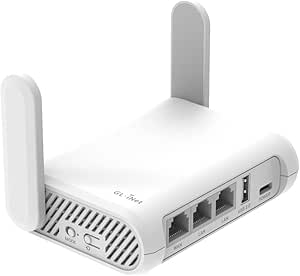 | Best Lightweight VPN Pick | Wi-Fi standard: Wi-Fi 5 (802.11a/b/g/n/ac) | Bands: Dual-band, 2.4 GHz and 5 GHz | Maximum wireless data rate: Up to 1200 Mbps | VIEW LATEST PRICE | See Our Full Breakdown |
| GL.iNet GL-AXT1800 Slate AX Wi-Fi 6 Travel Router with VPN |  | Best for Customization | Wi-Fi generation: Wi-Fi 6 (802.11ax) | Bands and combined speed: Dual-band; up to 1800 Mbps | Maximum connected devices: 120 | VIEW LATEST PRICE | See Our Full Breakdown |
| TP-Link Roam 6 AX1500 Portable Dual-Band Wi-Fi 6 Travel Router |  | Best for Simple Setup | Wi-Fi standard: Wi-Fi 6, AX1500 | Bands and maximum speeds: Dual-band; 1201 Mbps on 5 GHz and 300 Mbps on 2.4 GHz | Maximum connected devices: 60 | VIEW LATEST PRICE | See Our Full Breakdown |
| TP-Link Roam 6 AX3000 Portable Wi-Fi 6 Travel Router |  | Best for Faster Wi-Fi and More Devices | Model: TL-WR3012X | Wi-Fi standard and speed: Wi-Fi 6 AX3000; 2402 Mbps on 5 GHz and 574 Mbps on 2.4 GHz | Maximum connected devices: 80 | VIEW LATEST PRICE | See Our Full Breakdown |
| GL.iNet MUDI 7 5G Tri-Band Wi-Fi 7 Travel Router with eSIM |  | Best Premium All-in-One | Cellular connectivity: 5G and LTE; eSIM and two nano-SIM slots | Wi-Fi generation and bands: Wi-Fi 7, tri-band: 2.4 GHz, 5 GHz, and 6 GHz | Maximum 5G download speed: Up to 4.67 Gbps | VIEW LATEST PRICE | See Our Full Breakdown |
| portable VPN router | Power |
|---|---|
| ASUS RT-BE58 Go WiFi 7 Dual-Ba | USB-C Power Delivery, 18 W |
| GL.iNet GL-A1300 Slate Plus Po | — |
| TP-Link N300 Wireless Portable | Micro USB, 5 V/1 A, or AC adapter |
| GL.iNet GL-MT3000 Beryl AX Wi- | 5 V |
| TP-Link Roam 6 AX3000 Dual-Ban | USB-C; included adapter or 5 V PD power source |
| GL.iNet GL-MT300N-V2 Mango Por | 5 V via USB or 5V/2A adapter |
| TP-Link Roam 7 BE3600 Wi-Fi 7 | USB-C; supports 5V PD power sources |
| TP-Link Roam 6 AX1500 Wi-Fi 6 | USB-C; 5V/3A power source |
| GL.iNet GL-MT3600BE Beryl 7 Du | — |
| GL.iNet GL-BE3600 Slate 7 Wi-F | — |
| GL.iNet GL-SFT1200 Opal AC1200 | — |
| GL.iNet GL-AXT1800 Slate AX Wi | — |
| TP-Link Roam 6 AX1500 Portable | — |
| TP-Link Roam 6 AX3000 Portable | USB-C, 5V/3A PD |
| GL.iNet MUDI 7 5G Tri-Band Wi- | — |
More Details on Our Top Picks
ASUS RT-BE58 Go WiFi 7 Dual-Band Travel Router
The ASUS RT-BE58 Go is the strongest fit here for travelers who want current-generation Wi-Fi alongside a VPN-capable private hotspot. Its Wi-Fi 7 support and up to 3.6 Gbps combined wireless speed give it more headroom than the GL.iNet GL-A1300 Slate Plus, while WISP mode lets it rebroadcast public Wi-Fi as a network for your own devices. USB-C Power Delivery and 4G/5G tethering also offer flexible ways to get online when hotel Wi-Fi is unreliable. The tradeoff is that the headline speed combines both bands, not a single-device throughput promise, and cellular access depends on a compatible phone or dongle. Buyers who need detailed OpenWrt customization may prefer the GL-A1300; this ASUS is the better all-round choice for newer Wi-Fi and varied connection sources.
Pros:- Wi-Fi 7 and dual-band operation provide more wireless capacity than the Wi-Fi 5 GL-A1300.
- WISP mode can turn public Wi-Fi into a private network for personal devices.
- USB-C Power Delivery and 4G/5G tethering allow flexible power and internet sources.
- Multiple operating modes and AiMesh support extend its usefulness beyond hotel travel.
Cons:- The 3.6 Gbps figure combines both bands and is not the speed of either band alone.
- 4G/5G access depends on a compatible phone or mobile dongle.
- Its broad feature set may be more than travelers need for simple, low-demand Wi-Fi sharing.
Best for: Frequent travelers who want a Wi-Fi 7 private hotspot, VPN features, and the option to share a phone or dongle’s 4G/5G connection.
Not ideal for: Travelers who want cellular connectivity built into the router or advanced OpenWrt controls; mobile service requires a separate compatible device.
- Wi-Fi generation:Wi-Fi 7 (802.11be)
- Bands:Dual-band, 2.4 GHz and 5 GHz
- Maximum combined Wi-Fi speed:Up to 3.6 Gbps
- Mobile connectivity:4G LTE and 5G tethering
- Power:USB-C Power Delivery, 18 W
- VPN and security:VPN features, WPA2, WPA3, advanced firewall
- LAN port:1 x 1 Gbps
- Memory:1 GB DDR4 RAM; 256 MB flash
Our verdict“Choose the RT-BE58 Go if you want a flexible Wi-Fi 7 travel router with VPN features and tethering options, and skip it if you need built-in cellular service.”
GL.iNet GL-A1300 Slate Plus Portable Dual-Band Travel Router
The GL-A1300 Slate Plus suits travelers who want to shape how VPN traffic moves, rather than just switch a VPN on. Its OpenWrt-based software supports OpenVPN and WireGuard, configurable routing policies, a kill switch, encrypted DNS, and network storage through SAMBA or WebDAV. That control makes it a more hands-on VPN pick than the TP-Link Roam 6 AX3000, which emphasizes app-based setup and newer Wi-Fi 6 hardware. The Slate Plus’s clear limitation is VPN throughput: its listed maximum is 170 Mbps with WireGuard and 28 Mbps with OpenVPN, so it is less suited to high-speed connections than the GL-MT3000 Beryl AX. Its Wi-Fi 5 radio is also an older generation. Pick it for configurable VPN behavior and useful network tools, not maximum speed.
Pros:- Supports OpenVPN and WireGuard clients with configurable routing policies and a VPN kill switch.
- OpenWrt-based software offers network storage and additional customization options.
- Guest Wi-Fi and encrypted DNS add useful control for shared or public-network travel.
- Includes three ports and a gigabit LAN connection for wired devices.
Cons:- Maximum listed VPN speeds are 28 Mbps with OpenVPN and 170 Mbps with WireGuard.
- Wi-Fi 5 is an older standard than the Wi-Fi 6 in the GL-MT3000 Beryl AX and TP-Link Roam 6 AX3000.
- The physical toggle switch has no default function and must be configured.
Best for: Technically confident travelers who want configurable VPN routing, a kill switch, and network storage features in a compact router.
Not ideal for: Buyers with fast internet plans or several demanding devices who want newer Wi-Fi and higher VPN throughput.
- Wi-Fi standard:Wi-Fi 5 (802.11a/b/g/n/ac)
- Bands and wireless speeds:2.4 GHz at 400 Mbps; 5 GHz at 867 Mbps
- VPN protocols:OpenVPN and WireGuard
- Maximum VPN speed:28 Mbps OpenVPN; 170 Mbps WireGuard
- Operating system:OpenWrt 21.02
- Ports:3 ports, including 1 Gbps LAN
- Storage protocols:SAMBA and WebDAV
- Dimensions and weight:118 × 84 × 33 mm; 429 g
Our verdict“Choose the Slate Plus for VPN routing control and OpenWrt features, but choose a newer Wi-Fi 6 model if speed is the priority.”
TP-Link N300 Wireless Portable Nano Travel Router TL-WR802N
The TP-Link TL-WR802N is the simplest and smallest-style option in this group, built for travelers who mainly need to share an existing connection across a few devices. Its router, access point, client, repeater, and WISP modes give it practical flexibility in hotels and other places with wired or wireless internet. But this is not a strong choice for buyers seeking a modern portable VPN router: the supplied details do not list VPN support, and its Wi-Fi 4 radio is limited to 2.4 GHz. Compared with the dual-band GL.iNet GL-A1300 Slate Plus, it gives up 5 GHz performance and VPN-specific controls for a simpler, pocket-oriented design. The 10/100 Mbps Ethernet port also limits wired throughput. Choose it for basic hotspot sharing, not VPN protection or bandwidth-heavy use.
Pros:- Compact design suits travelers who want a small, uncomplicated network device.
- Router, access point, client, repeater, and WISP modes cover several basic travel setups.
- Can draw power from micro USB or the included wall adapter.
- The 300 Mbps 2.4 GHz link is adequate for modest browsing and basic device sharing.
Cons:- Product data does not list VPN support, limiting its fit for a VPN-router roundup.
- Single-band 2.4 GHz Wi-Fi lacks the extra band available on the GL-A1300 Slate Plus.
- Its 10/100 Mbps Ethernet port and Wi-Fi 4 standard restrict performance for faster connections.
Best for: Light packers who need a basic router or repeater for simple browsing and device sharing, and do not require router-level VPN support.
Not ideal for: Travelers who need a VPN client, 5 GHz Wi-Fi, gigabit wired speeds, or reliable capacity for several bandwidth-heavy devices.
- Wi-Fi generation:Wi-Fi 4 (802.11n/g/b)
- Frequency band:2.4–2.4835 GHz
- Maximum data rate:300 Mbps
- Ethernet port:1 x 10/100 Mbps WAN/LAN
- Power:Micro USB, 5 V/1 A, or AC adapter
- Operating modes:Router, AP, client, repeater, WISP
- RAM:32 MB
- Antennas:2 onboard antennas
Our verdict“Choose the TL-WR802N for basic, compact connection sharing, but skip it if router-level VPN protection is a requirement.”
GL.iNet GL-MT3000 Beryl AX Wi-Fi 6 Travel Router
The GL-MT3000 Beryl AX is a strong fit for travelers who need more wired flexibility and faster VPN performance than the GL-A1300 Slate Plus provides. Its listed WireGuard VPN speed reaches 300 Mbps, compared with 170 Mbps on the Slate Plus, while a 2.5G WAN port, gigabit LAN, and USB 3.0 make it easier to connect hotel Ethernet, wired devices, or storage. OpenWrt-based software, VPN client and server support, and encrypted DNS give technically confident users room to tune the setup. The tradeoff is a less beginner-focused experience: its physical switch needs configuration, and VPN use requires an active service subscription. Compared with the TP-Link Roam 6 AX3000, it emphasizes software customization and VPN flexibility over app-led setup. It is a better match for users who value control and connection options over simplicity.
Pros:- Listed WireGuard throughput of up to 300 Mbps exceeds the GL-A1300 Slate Plus’s 170 Mbps figure.
- 2.5G WAN, gigabit LAN, and USB 3.0 provide useful wired and peripheral connections.
- Supports OpenVPN and WireGuard clients and servers.
- OpenWrt, WPA3, and encrypted DNS offer substantial configuration and security options.
Cons:- A VPN service requires an active subscription.
- The physical switch must be configured before it can control a chosen feature.
- Actual network speeds depend on the connection and network configuration.
Best for: Travelers with a VPN subscription who want stronger listed VPN throughput, OpenWrt customization, and multi-gigabit wired connectivity.
Not ideal for: Beginners seeking a fully straightforward setup or buyers who do not want to configure controls and VPN services themselves.
- Wi-Fi generation:Wi-Fi 6
- Bands and wireless speeds:2.4 GHz at 574 Mbps; 5 GHz at 2402 Mbps
- Maximum VPN speed:150 Mbps OpenVPN; 300 Mbps WireGuard
- VPN protocols:OpenVPN and WireGuard; client and server support
- Ports:2.5G WAN, 1G LAN, USB 3.0
- Firmware:OpenWrt 21.02
- Security:WPA2-PSK, WPA3, DNS over HTTPS, DNS over TLS
- Power:5 V
Our verdict“Choose the Beryl AX if you want a customizable travel VPN router with fast listed WireGuard throughput and capable ports.”
TP-Link Roam 6 AX3000 Dual-Band Wi-Fi 6 Travel Router (TL-WR3002X)
The TP-Link Roam 6 AX3000 brings Wi-Fi 6 and VPN support to a travel router managed through the Tether app or a web interface. Its 2.5 Gbps WAN/LAN port, separate gigabit LAN, and USB 3.0 make it more connection-flexible than the basic TP-Link TL-WR802N, while USB tethering and public-Wi-Fi sharing offer several ways to use an external internet connection. OpenVPN and WireGuard support suit travelers who want VPN options without choosing the more configurable OpenWrt approach of the GL.iNet GL-MT3000 Beryl AX. That simpler software path comes with limits: it cannot use a SIM card, does not support OpenWrt, and needs an outside internet source. This is a practical choice for app-oriented setup, but not for cellular independence or extensive firmware customization.
Pros:- Tether app and web interface give buyers two ways to manage the router.
- Supports OpenVPN and WireGuard alongside public Wi-Fi, Ethernet, and USB internet sources.
- 2.5 Gbps WAN/LAN, gigabit LAN, and USB 3.0 support varied travel setups.
- USB-C power can work with a compatible 5 V power source, including suitable power banks.
Cons:- Requires an external internet connection and does not accept SIM cards.
- Does not support OpenWrt, unlike the GL.iNet GL-MT3000 Beryl AX.
- The product data does not provide a maximum VPN speed figure.
Best for: Travelers who prefer app-based management and want Wi-Fi 6, VPN support, and flexible Ethernet or USB internet connections.
Not ideal for: People who need built-in SIM connectivity, OpenWrt customization, or a router that can provide internet without an external source.
- Wi-Fi standard:Wi-Fi 6, AX3000
- Bands and wireless speeds:2.4 GHz at up to 574 Mbps; 5 GHz at up to 2402 Mbps
- VPN protocols:OpenVPN, WireGuard, PPTP, L2TP
- Ethernet ports:1 x 2.5 Gbps WAN/LAN; 1 x 1 Gbps LAN
- USB:USB 3.0
- Management:TP-Link Tether app or web interface
- Power:USB-C; included adapter or 5 V PD power source
- Internet and firmware limits:Requires an external internet source; no SIM-card support or OpenWrt
Our verdict“Choose the Roam 6 AX3000 for app-managed Wi-Fi 6 and flexible wired or USB connections, but skip it if you need SIM service or OpenWrt.”
GL.iNet GL-MT300N-V2 Mango Portable Mini Travel Wi-Fi Router
The Mango is the smallest, simplest pick here for travelers who want a portable router with an OpenVPN client and OpenWrt without carrying a faster, more complex device. At just 39 g, it can turn hotel Ethernet or public Wi-Fi into a private network, while two Ethernet ports add flexibility that the pocket-sized TP-Link Roam 6 AX1500 does not match in quite the same minimalist package. The tradeoff is its single-band Wi-Fi 4: 2.4 GHz congestion and a 100 Mbps Ethernet limit make it a poor fit for large downloads or several bandwidth-heavy devices. I’d choose it for basic browsing and VPN access, not speed. Its adapter is sold separately, so plan on USB power from another source.
Pros:- Very light 39 g design is easy to pack.
- OpenWrt and an OpenVPN client are included.
- Can create a private Wi-Fi network from wired or wireless internet.
- Two Ethernet ports and USB disk expandability add connection options.
Cons:- Single-band 2.4 GHz Wi-Fi can be congested and limits performance.
- Ethernet ports are limited to 100 Mbps.
- Power adapter is sold separately.
Best for: Solo travelers who want a very light OpenWrt router for VPN-protected browsing on hotel or public networks.
Not ideal for: Travelers streaming or moving large files across several devices, since it has only 2.4 GHz Wi-Fi and 100 Mbps Ethernet.
- Wi-Fi:802.11b/g/n (Wi-Fi 4), 2.4 GHz, up to 300 Mbps
- Ethernet:2 ports, up to 100 Mbps
- VPN:OpenVPN client; compatible with 30+ VPN providers
- Operating system:OpenWrt
- Memory and storage:128 MB RAM; 16 MB flash
- Power:5 V via USB or 5V/2A adapter
- Weight:39 g (1.41 oz)
- Security:WPA2-PSK
Our verdict“Choose the Mango for a light, customizable VPN router for basic travel use, but skip it if you need dual-band speed.”
TP-Link Roam 7 BE3600 Wi-Fi 7 Dual-Band Portable Travel Router
The Roam 7 suits travelers who need modern Wi-Fi and broad connection options without configuring OpenWrt. It can build a private network from public Wi-Fi, Ethernet, or USB tethering, and its 90-device capacity gives it more headroom for a group than the Mango. VPN client and server support, including WireGuard and OpenVPN, makes it a stronger fit for flexible VPN setups, while a 2.5 Gbps WAN port can accommodate fast wired internet. Unlike the GL.iNet Beryl 7, though, it does not offer OpenWrt, and its advertised Wi-Fi speeds do not include a 6 GHz band. It also needs an existing internet source: there is no SIM or eSIM support. This is a capable travel hub, not a standalone mobile hotspot.
Pros:- Creates a private network from public Wi-Fi, Ethernet, or USB tethering.
- Supports up to 90 connected devices.
- Includes WireGuard and OpenVPN client and server support.
- 2.5 Gbps WAN, 1 Gbps LAN, and USB 3.0 offer useful wired flexibility.
Cons:- Requires an external internet source; there is no SIM or eSIM support.
- Does not support the 6 GHz band.
- Does not support OpenWrt.
Best for: Families or work groups that need a Wi-Fi 7 travel network for many devices and want VPN client and server options without OpenWrt.
Not ideal for: Travelers who need cellular internet built into the router or want OpenWrt customization and 6 GHz Wi-Fi.
- Wi-Fi:Wi-Fi 7, dual-band 2.4 GHz and 5 GHz
- Maximum wireless rates:Up to 2882 Mbps on 5 GHz and 688 Mbps on 2.4 GHz
- Device capacity:Up to 90 devices
- Ethernet:1x 2.5 Gbps WAN and 1x 1 Gbps LAN
- USB:USB 3.0
- VPN protocols:OpenVPN, WireGuard, PPTP, and L2TP
- Operating modes:Router, Hotspot, Access Point, Range Extender, and Client
- Power:USB-C; supports 5V PD power sources
Our verdict“Pick the Roam 7 for a high-capacity Wi-Fi 7 travel network with multiple VPN protocols, provided you can supply the internet connection.”
TP-Link Roam 6 AX1500 Wi-Fi 6 Travel Router (TL-WR1502X)
The Roam 6 AX1500 is a practical middle ground for travelers who want dual-band Wi-Fi and several ways to connect without paying the complexity cost of a Wi-Fi 7 router like the Roam 7. Router, hotspot, access point, repeater, and client modes let it adapt to different hotel or temporary-network setups; USB phone tethering can also provide internet when Ethernet is unavailable. Its Wi-Fi 6 support and two gigabit Ethernet ports make it a better everyday travel fit than the single-band Mango for mixed devices and wired connections. The limitation for this VPN roundup is that the provided product details do not specify a VPN client or OpenWrt support, so I would not choose it as the clear VPN-first option over the GL.iNet Beryl 7. It also relies on an external internet source and has no SIM support.
Pros:- Compact design and USB-C power suit travel use.
- Dual-band Wi-Fi 6 is more versatile than the Mango’s 2.4 GHz-only Wi-Fi.
- Five operating modes cover common travel and temporary-network setups.
- Two gigabit Ethernet ports and USB phone tethering provide connection flexibility.
Cons:- Requires an external internet connection and does not support SIM cards.
- OpenWrt is not supported.
- VPN client support is not specified in the supplied product details.
Best for: Travelers who want an easy-to-place dual-band router for hotel Wi-Fi, Ethernet, or phone tethering, with multiple operating modes.
Not ideal for: VPN-focused buyers who need documented VPN client support or OpenWrt customization, or anyone needing built-in cellular service.
- Wi-Fi:Wi-Fi 6 (802.11ax), dual-band 2.4 GHz and 5 GHz
- Maximum wireless rate:Up to 1500 Mbps: 1201 Mbps on 5 GHz and 300 Mbps on 2.4 GHz
- Operating modes:Router, hotspot, access point, repeater, and client
- Ethernet:2 gigabit Ethernet ports
- USB:1 USB 2.0 port; supports USB phone tethering
- Power:USB-C; 5V/3A power source
- Security:WPA-PSK, WPA2-Enterprise, and WPA3
- Dimensions:4.09 × 3.54 × 1.10 in.
Our verdict“Choose the Roam 6 AX1500 for flexible dual-band travel networking, but opt for the Beryl 7 if VPN configuration is your main priority.”
GL.iNet GL-MT3600BE Beryl 7 Dual-Band Wi-Fi 7 Travel Router
The Beryl 7 is my pick for VPN-first travelers who want fast wireless, substantial wired capacity, and room to customize. It runs OpenWrt and supports WireGuard and OpenVPN, including simultaneous VPN client and server operation—more control than the TP-Link Roam 7 offers without OpenWrt. Its two 2.5G Ethernet ports and stated VPN throughput of up to 1,100 Mbps for WireGuard give it a strong profile for fast hotel connections or a small work group. It also supports up to 120 devices, though that capacity does not remove the limits of the internet connection feeding it. The tradeoff is a more hands-on setup: the configurable physical switch needs to be assigned in the admin panel before use, and actual speeds depend on network conditions. VPN service requires a separate active subscription.
Pros:- OpenWrt supports customization and plugin installation.
- Supports WireGuard and OpenVPN client and server use at the same time.
- Two 2.5G Ethernet ports support fast wired connections.
- WPA3 and encrypted DNS options add network security controls.
Cons:- VPN services require an active subscription.
- The physical toggle switch must be configured in the admin panel before use.
- Real-world speeds depend on the network and configuration.
Best for: Technically confident travelers who want OpenWrt customization, strong WireGuard performance, and VPN client/server flexibility.
Not ideal for: Buyers seeking a simple, cellular-enabled hotspot or a router that works without configuring VPN services and controls.
- Wi-Fi:Wi-Fi 7, dual-band 2.4 GHz and 5 GHz
- Maximum wireless rates:688 Mbps on 2.4 GHz and 2882 Mbps on 5 GHz
- Ethernet:2 × 2.5G ports: 1 WAN and 1 LAN
- VPN protocols:WireGuard and OpenVPN
- Maximum VPN speeds:Up to 1,100 Mbps WireGuard; 1,000 Mbps OpenVPN-DCO
- Device capacity:Up to 120 connected devices
- Operating system:OpenWrt 21.02, Kernel 5.4.281
- Security:WPA3, DNS over HTTPS, and DNS over TLS
Our verdict“Choose the Beryl 7 if you want an advanced, customizable travel VPN router with fast wired ports, and skip it if you prefer a hands-off setup.”
GL.iNet GL-BE3600 Slate 7 Wi-Fi 7 Travel Router with Touchscreen and Dual 2.5G Ethernet
The Slate 7 pairs Wi-Fi 7 and OpenWrt customization with a touchscreen that can show network status and give access to VPN controls. That on-device interface is the main distinction from the Beryl 7: it may suit travelers who want to check or manage network functions without relying only on an app or admin panel. Both offer dual 2.5G Ethernet, USB 3.0, and OpenVPN and WireGuard client/server support, but their stated VPN speeds differ: the Slate 7 lists up to 540 Mbps WireGuard and 100 Mbps OpenVPN, below the Beryl 7’s listed maxima. Its touchscreen also needs setup for some controls, including configuring the button, so the interface does not make it a completely hands-off choice. I’d favor it for visible status and quick access, not maximum VPN throughput.
Pros:- Touchscreen provides network monitoring and access to VPN controls.
- OpenWrt 23.05 supports customization and plugin installation.
- Two 2.5G Ethernet ports and USB 3.0 support wired connections and peripherals.
- Supports OpenVPN and WireGuard client and server operation.
Cons:- Listed VPN speeds are lower than the Beryl 7’s, particularly for OpenVPN.
- The touchscreen button needs configuration before it can control features.
- Real-world performance varies with network conditions and setup.
Best for: Travelers who want an OpenWrt-based VPN router with a touchscreen for checking network status and controlling features on-device.
Not ideal for: VPN users prioritizing the highest listed throughput, especially for OpenVPN, or buyers who want every physical control ready without configuration.
- Wi-Fi:Wi-Fi 7, dual-band 2.4 GHz and 5 GHz
- Maximum wireless rates:688 Mbps on 2.4 GHz and 2882 Mbps on 5 GHz
- Ethernet:2 × 2.5G ports: 1 WAN and 1 LAN
- VPN support:OpenVPN and WireGuard client and server
- Maximum VPN speeds:100 Mbps OpenVPN; 540 Mbps WireGuard
- Operating system:OpenWrt 23.05, Kernel 5.4.213
- Memory and storage:2 GB RAM; 512 MB storage
- Security:WPA3, DNS over HTTPS, and DNS over TLS
- Features:Touchscreen, access point mode, guest mode, QoS, and internet security
Our verdict“Choose the Slate 7 for touchscreen access to VPN and network controls, but pick the Beryl 7 if VPN throughput matters more than the display.”
GL.iNet GL-SFT1200 Opal AC1200 Dual-Band Travel Router
At 145 g, the Opal is a straightforward choice for travelers who want VPN capability without carrying a larger router. It supports OpenVPN and WireGuard and can turn hotel or other public Wi-Fi into a private network, giving multiple devices one connection to manage. Three gigabit Ethernet ports also make it more useful for wired hotel setups than a simple pocket access point. Compared with the Wi-Fi 6 GL.iNet Slate AX, though, the Opal uses Wi-Fi 5 and offers less headroom for busy networks or faster local transfers. Its physical VPN switch needs to be configured in the admin panel before it works, and it lacks EasyTethering. I’d choose it for light, compact travel rather than demanding VPN throughput or phone-tethering flexibility.
Pros:- Lightweight 145 g design with retractable antennas.
- Supports both OpenVPN and WireGuard.
- Three gigabit Ethernet ports provide flexible wired connections.
- Can repeat public Wi-Fi to create a private network.
Cons:- The physical VPN toggle needs admin-panel configuration before use.
- Wi-Fi 5 has less capacity than the Wi-Fi 6 Slate AX and newer options.
- Does not support EasyTethering.
Best for: Light-pack travelers who want a low-weight router for public Wi-Fi, basic VPN use, and occasional wired connections.
Not ideal for: Travelers who rely on phone tethering through EasyTethering or want Wi-Fi 6 performance and higher VPN capacity.
- Wi-Fi standard:Wi-Fi 5 (802.11a/b/g/n/ac)
- Bands:Dual-band, 2.4 GHz and 5 GHz
- Maximum wireless data rate:Up to 1200 Mbps
- Ethernet:2 LAN and 1 WAN; gigabit
- Weight:145 g
- VPN support:OpenVPN and WireGuard
- Operating system:OpenWrt
Our verdict“Choose the Opal if minimizing carry weight matters more than Wi-Fi 6 speed or phone-tethering options.”
GL.iNet GL-AXT1800 Slate AX Wi-Fi 6 Travel Router with VPN
The Slate AX makes more sense than the Opal for travelers who want a small router with newer wireless standards and room to tune its software. Its Wi-Fi 6 radios support up to 120 connected devices, while built-in OpenVPN and WireGuard make it a capable hub for a group’s devices on hotel Wi-Fi. The listed VPN ceilings—up to 500 Mbps for OpenVPN and 550 Mbps for WireGuard—give a more useful guide to encrypted traffic than its 1800 Mbps combined Wi-Fi figure alone. Running OpenWrt 21.02 also opens up customization, and USB storage can be shared through SAMBA or WebDAV. Compared with the simpler TP-Link Roam 6 AX1500, it offers more software control and device capacity, but that flexibility brings a more involved setup. Its physical switch also needs configuration before use.
Pros:- Wi-Fi 6 and capacity for up to 120 connected devices.
- Supports OpenVPN and WireGuard with stated maximum VPN speeds.
- OpenWrt supports router customization and application installation.
- USB storage sharing supports SAMBA and WebDAV.
Cons:- The physical toggle switch must be configured in the admin panel.
- Maximum VPN speeds are lower than the combined Wi-Fi rate.
- OpenWrt options may add setup work for less technical users.
Best for: Technically comfortable travelers, remote workers, or small groups who want Wi-Fi 6, VPN choices, and OpenWrt customization in one travel router.
Not ideal for: Buyers who want a minimal, app-led setup or who expect VPN throughput to match the advertised combined Wi-Fi speed.
- Wi-Fi generation:Wi-Fi 6 (802.11ax)
- Bands and combined speed:Dual-band; up to 1800 Mbps
- Maximum connected devices:120
- VPN protocols:OpenVPN and WireGuard
- Maximum VPN speeds:OpenVPN up to 500 Mbps; WireGuard up to 550 Mbps
- Operating system:OpenWrt 21.02
- File sharing:SAMBA and WebDAV
Our verdict“Pick the Slate AX if software flexibility and high device capacity matter more than the simpler operation of the Roam 6 AX1500.”
TP-Link Roam 6 AX1500 Portable Dual-Band Wi-Fi 6 Travel Router
The Roam 6 AX1500 is aimed at travelers who want a private network without taking on an OpenWrt learning curve. It can take internet from public Wi-Fi, wired service, or a USB-tethered phone, then share it over dual-band Wi-Fi 6. The Tether app or web interface gives buyers two ways to manage setup, and support for OpenVPN and WireGuard covers common VPN choices. Compared with the GL.iNet Slate AX, this TP-Link is the more approachable pick, but it gives up OpenWrt support and the Slate’s higher stated device capacity. It also tops out at 60 devices, so it suits solo travelers, couples, or modest work setups better than a large group. Actual wireless speeds depend on the connection and surroundings, not just the AX1500 label.
Pros:- Creates a private network from public Wi-Fi, wired internet, or USB phone tethering.
- Supports OpenVPN and WireGuard.
- Wi-Fi 6 with up to 60 connected devices.
- Tether app and web management offer accessible setup options.
Cons:- Does not support OpenWrt customization.
- Device capacity is lower than the Slate AX’s stated maximum of 120.
- Real-world Wi-Fi speeds vary with bandwidth, distance, and obstacles.
Best for: Travelers who want app-managed VPN and private Wi-Fi from hotel access or a USB-tethered phone, without customizing router firmware.
Not ideal for: OpenWrt enthusiasts or larger groups that need more than 60 connected devices.
- Wi-Fi standard:Wi-Fi 6, AX1500
- Bands and maximum speeds:Dual-band; 1201 Mbps on 5 GHz and 300 Mbps on 2.4 GHz
- Maximum connected devices:60
- Ethernet ports:1 Gbps WAN/LAN and 1 Gbps LAN
- VPN protocols:OpenVPN and WireGuard
- Power input:USB-C, 5V/3A
- Management:Tether app or web interface
Our verdict“Choose the Roam 6 AX1500 if you want accessible app or browser setup and do not need OpenWrt or high device capacity.”
TP-Link Roam 6 AX3000 Portable Wi-Fi 6 Travel Router
For travelers who want more wireless headroom than the AX1500 Roam 6, this AX3000 model pairs Wi-Fi 6 speeds up to 3000 Mbps with capacity for up to 80 devices. Its OpenVPN and WireGuard support lets it serve as a VPN-equipped private network for hotel or rental-home stays, while two gigabit Ethernet ports provide wired options. Compared with the GL.iNet Slate AX, the Roam 6 AX3000 has a higher stated combined Wi-Fi rate, but it does not offer OpenWrt for firmware customization. Its USB-C power requirement is also specific: the supplied information calls for a 5V/3A source for optimal performance, so buyers should plan around a suitable adapter. This is a stronger fit for a busy household or remote-work group than for someone whose priority is the lightest, simplest travel kit.
Pros:- Wi-Fi 6 AX3000 with stated speeds up to 3000 Mbps.
- Supports OpenVPN and WireGuard.
- Handles up to 80 devices.
- Two gigabit Ethernet ports and USB 3.0 add connection flexibility.
Cons:- Does not support OpenWrt firmware.
- Requires a 5V/3A power source for optimal performance.
- Its higher wireless capacity may be unnecessary for solo travelers with light usage.
Best for: Remote-work households and travel groups that want higher Wi-Fi capacity, VPN support, and wired ports in a compact router.
Not ideal for: Travelers who want OpenWrt customization or who cannot reliably carry a compatible 5V/3A power source.
- Model:TL-WR3012X
- Wi-Fi standard and speed:Wi-Fi 6 AX3000; 2402 Mbps on 5 GHz and 574 Mbps on 2.4 GHz
- Maximum connected devices:80
- Ports:2 gigabit Ethernet and 1 USB 3.0
- VPN support:OpenVPN and WireGuard
- Power:USB-C, 5V/3A PD
- Dimensions and weight:4.7 x 3.6 x 1.3 inches; 0.4 lbs
Our verdict“Choose this Roam 6 over the AX1500 version when your travel group needs more Wi-Fi headroom and device capacity.”
GL.iNet MUDI 7 5G Tri-Band Wi-Fi 7 Travel Router with eSIM
The MUDI 7 is the most self-contained option here: unlike the Opal, Slate AX, and TP-Link Roam models, it can connect through 5G cellular rather than relying solely on hotel Wi-Fi or wired internet. An eSIM and two nano-SIM slots add carrier flexibility, while multi-WAN failover can switch among cellular, Ethernet, Wi-Fi repeater, and USB tethering. Its Wi-Fi 7 tri-band radios, touchscreen, and battery rated for up to 13.5 hours make it better suited to mobile work than a basic travel router. It also runs OpenWrt and lists VPN ceilings of up to 700 Mbps for OpenVPN-DCO and 600 Mbps for WireGuard. That versatility brings more complexity, and advertised cellular speeds and battery life depend on conditions. The eSIM also occupies one SIM position when active.
Pros:- Combines 5G, eSIM, two nano-SIM slots, and multi-WAN failover.
- Wi-Fi 7 tri-band connectivity supports up to 64 devices.
- OpenVPN-DCO and WireGuard support with stated VPN speed ceilings.
- Battery rated for up to 13.5 hours, plus a touchscreen and 2.5 Gbps Ethernet.
Cons:- The active eSIM uses one of the SIM positions.
- Battery life and advertised cellular speeds vary with conditions and usage.
- Its cellular features and multiple connection options may be unnecessary complexity for hotel-only travel.
Best for: Frequent mobile workers who need cellular internet, multiple WAN options, built-in VPN, and battery-powered connectivity in one device.
Not ideal for: Occasional travelers who only need a compact Wi-Fi repeater, or buyers who do not want to manage SIMs, cellular plans, and a more capable router.
- Cellular connectivity:5G and LTE; eSIM and two nano-SIM slots
- Wi-Fi generation and bands:Wi-Fi 7, tri-band: 2.4 GHz, 5 GHz, and 6 GHz
- Maximum 5G download speed:Up to 4.67 Gbps
- Maximum connected devices:64
- VPN speeds:OpenVPN-DCO up to 700 Mbps; WireGuard up to 600 Mbps
- Ethernet:2.5 Gbps WAN/LAN
- Battery:5150 mAh; rated up to 13.5 hours
- Operating system:OpenWrt 23.05.4
Our verdict“Choose the MUDI 7 if you need a battery-powered 5G hotspot and VPN router, not merely a portable way to repeat hotel Wi-Fi.”

How We Picked
I ranked these portable VPN routers around the needs that shape travel use: VPN support and control, wireless capability, portability, connection options, and the effort required to set up and maintain the device. A fast Wi-Fi generation matters less if a router cannot handle the buyer’s VPN needs, while a compact body is less useful if its limited connections do not fit the trip. I also treated cellular access, Ethernet, and newer Wi-Fi standards as benefits only for travelers likely to use them.
The order favors models that offer a credible balance of privacy features, everyday usability, and travel-friendly design. More specialized picks rank lower as general recommendations when their strengths serve a narrower buyer, such as someone who needs 5G or the newest wireless standard. The lineup includes several similar TP-Link Roam 6 variants and multiple GL.iNet models; I distinguish them by their stated wireless class and intended role rather than treating familiar names as interchangeable. Actual VPN throughput depends on the VPN protocol, service, and network conditions, so I do not infer it from Wi-Fi branding alone.
Factors to Consider When Choosing Portable VPN Routers
Before choosing a router, I would start with the networks and devices it needs to support, not the largest number printed on its box. A travel router can simplify VPN use, but it does not create internet access by itself unless it has a cellular connection. These checks help separate a useful travel setup from features that may add bulk or complexity without improving your trip.
Match VPN support to your service and setup
Check that the router supports the VPN service and protocol you plan to use, and confirm whether it can run as a VPN client rather than only passing traffic to a VPN app on another device. Client support lets several connected devices use the same tunnel, but it can also make configuration more involved. A router’s advertised wireless speed does not tell you how quickly it can encrypt VPN traffic. If you need a particular protocol, custom configuration, or split tunneling, verify those details in the model’s current documentation before buying. Travelers who only need occasional protection on one phone may find a router-based VPN setup more work than a device app. For households or work trips with several devices, centralized control can be worth that setup effort.
Choose the right internet source for the trip
Most portable travel routers share an existing connection from hotel Ethernet, Wi-Fi, or a phone hotspot; they do not supply internet on their own. That distinction is easy to miss when comparing travel routers with cellular hotspots. A model with 5G or eSIM support can offer more independence, but cellular coverage, data plans, roaming rules, and local network compatibility still shape whether it works abroad. If you mostly stay in hotels, a standard router that can join captive or shared Wi-Fi may suit you better. For road trips or locations with unreliable public Wi-Fi, cellular capability can be worth extra cost and setup. Decide on the connection source first, then narrow the router list.
Treat Wi-Fi generation as a device-and-network match
Wi-Fi 7 can be appealing, but its benefit depends on compatible client devices and a connection fast enough to use it. Many travel connections are limited by hotel internet, crowded public Wi-Fi, or a phone hotspot before the router’s wireless capacity becomes the bottleneck. Older devices can still connect to newer routers, though they will not gain the full advantages of the newest standard. A Wi-Fi 6 model may be a more practical balance for travelers with mixed devices and ordinary broadband access. Paying for newer Wi-Fi makes more sense when you regularly share large files locally or carry compatible devices. Avoid choosing by generation alone when VPN performance and internet source matter more to your use.
Balance pocket size against ports and controls
A tiny router is easier to pack, but smaller models may offer fewer Ethernet ports, less flexibility, or simpler controls. Ethernet can be useful in hotel rooms with wired internet or when a work device needs a wired connection, while USB and cellular options can support different travel setups. Physical switches or touch controls may make common changes easier, but they do not replace checking whether the software supports your needs. Think through the devices you will connect and the places you tend to stay before accepting a minimal port selection. Frequent flyers may prefer a compact model they will actually carry, while longer stays can justify a larger unit with more connectivity. Portability is a balance between bag space and fewer workarounds.
Plan for captive portals, public Wi-Fi, and setup
Hotels and public venues often require a browser sign-in before internet access begins, and a travel router may need to complete that process before sharing the connection with your devices. This can be awkward when the login page behaves differently on a router than on a phone or laptop. Check the manufacturer’s setup guidance for captive portals and decide whether you are comfortable managing the router’s admin interface. Once connected, a router can save repeated sign-ins across multiple devices, but it cannot bypass a venue’s access rules or guarantee a stable connection. Beginners should favor a clear setup flow over advanced controls they are unlikely to use. Experienced users may prefer greater configuration freedom, provided they are prepared to troubleshoot on the road.
Account for power, updates, and long-term upkeep
A travel router adds another device to charge, pack, and keep updated, so check how it is powered and whether that arrangement fits your trip. Running a VPN, sharing a connection, or using cellular features can affect power needs compared with occasional basic routing. Firmware updates matter for security and compatibility, but updating immediately before a trip can introduce avoidable setup stress. I recommend configuring the VPN and testing the expected connection at home before relying on the router abroad. Keep a backup plan, such as a phone VPN app, for outages or captive-portal problems. The best travel setup is one you can maintain without needing a complicated recovery process far from home.
Frequently Asked Questions
Will a portable VPN router protect every device connected to it?
It can route connected devices through a VPN when the router is configured as a VPN client and the tunnel is active. That can simplify protection for devices that do not support VPN apps, but it does not make every connection automatically secure if the router is misconfigured or the tunnel drops. Check whether the model offers a kill switch or another way to block traffic when the VPN disconnects. Devices connected to a different network, such as a phone using cellular data directly, may not use the router’s VPN. Test each device and connection path before travel rather than assuming all traffic follows the same route.
Can I use a portable VPN router with hotel Wi-Fi that requires a sign-in page?
Often, but the router generally needs to join the hotel network and complete its captive-portal sign-in before it can share access. Some login pages work smoothly; others rely on pop-ups, device registration, or terms that are awkward to handle from a router interface. Read the setup instructions for captive portals and consider whether you can temporarily connect a laptop or phone to finish authorization. The router cannot provide internet until the venue grants access, and it cannot remove restrictions imposed by the hotel. Keep a direct device connection as a fallback if the sign-in process proves incompatible.
Should I choose Wi-Fi 7 if I mainly want VPN privacy while traveling?
Not automatically. Wi-Fi 7 may benefit compatible devices on suitable networks, but it does not guarantee faster VPN traffic, since encryption speed and the internet connection can be limiting factors. Many hotel and public networks are slower than the router’s wireless capacity, making Wi-Fi generation less important than reliable VPN support and an easy setup. A Wi-Fi 6 model can be a sensible choice for mixed-age devices or ordinary travel connections. Pay for Wi-Fi 7 when you have compatible equipment and a real use for its added wireless capacity, not only for the newest label.
Do portable travel routers provide internet without hotel Wi-Fi or a hotspot?
Most do not; they share an internet connection supplied by Ethernet, Wi-Fi, or another device’s hotspot. A router with cellular hardware, such as a 5G model, is a different case, though it still needs compatible service, coverage, and a suitable data plan. eSIM support can simplify access in some locations but does not mean mobile data is included. Check which cellular bands and provisioning methods are supported for the countries you visit. If you expect to rely on mobile data, compare coverage and roaming terms alongside the router itself.
How can I tell whether a router’s VPN speed will be enough for my trip?
Look for independent measurements of VPN throughput using the protocol you plan to run, rather than relying on the router’s Wi-Fi speed class. VPN speed can vary with protocol, encryption settings, the VPN provider, and the upstream network, so a single headline number may not reflect your setup. Think about your actual tasks: messaging and browsing need less bandwidth than video calls or large downloads. If the manufacturer does not publish useful VPN figures, treat performance as uncertain and avoid assuming that a newer Wi-Fi generation solves it. Testing the router with your own VPN service before leaving is the most practical way to find out.
Conclusion
For most travelers seeking a capable balance of portability, Wi-Fi 6, and VPN-focused controls, I would start with the GL.iNet GL-MT3000 Beryl AX as the best overall choice. For a value-minded setup, compare the GL.iNet GL-A1300 Slate Plus and GL.iNet GL-SFT1200 Opal around the VPN features and connections you actually need; the simpler Opal makes more sense when basic travel routing is enough. Beginners may prefer a TP-Link Roam 6 model if straightforward travel use matters more than advanced VPN configuration, while the ASUS RT-BE58 Go and GL.iNet GL-BE3600 Slate 7 suit buyers who specifically want Wi-Fi 7 features. For cellular independence, the GL.iNet MUDI 7 is the specialized pick, not the default choice for hotel-only travel. I would choose the router that matches your internet source and VPN workload first, then treat speed class and extra features as tie-breakers.