
To protect your small business from cyber threats, focus on basic security measures like employee training, strong passwords, and encrypting sensitive data. Many small firms underestimate these risks, but hackers often target weaker defenses. Using user-friendly encryption tools and conducting regular security reviews can make a big difference. Staying vigilant and proactive will fortify your defenses. Keep exploring ways to improve your cybersecurity, and you’ll better safeguard your business, customers, and reputation.
Key Takeaways
- Small businesses often underestimate cyber threats, making awareness and proactive measures essential.
- Employee training on phishing and social engineering reduces human-related security breaches.
- Implementing data encryption protects sensitive information from interception and unauthorized access.
- Cloud services with built-in encryption simplify securing data without high costs or complexity.
- Ongoing cybersecurity practices like software updates and simulated exercises strengthen overall defense.

Are small businesses truly prepared to defend themselves against cyber threats? Many underestimate the risks they face, believing that cyberattacks are only a concern for larger corporations. However, hackers frequently target small businesses because they often have weaker defenses. To stand a fighting chance, you need to focus on fundamental cybersecurity measures. Two of the most effective strategies are employee training and data encryption. These steps can substantially reduce your vulnerability and help protect sensitive information.
Employee training is critical because humans are often the weakest link in cybersecurity. Cybercriminals exploit employees through phishing emails, social engineering, and other tactics that trick them into revealing login details or downloading malicious software. Investing in regular training sessions ensures your team recognizes these threats and knows how to respond appropriately. Make sure your employees understand the importance of strong passwords, avoiding suspicious links, and reporting any suspicious activity immediately. When your staff is well-informed, they become your first line of defense, helping to prevent breaches before they occur.
Data encryption is another essential layer of protection. It involves converting your sensitive data into a coded format that only authorized parties can read. If a hacker manages to access your systems or intercept data in transit, encryption ensures they cannot decipher any valuable information. Implementing encryption for emails, stored files, and online transactions adds a barrier that deters cybercriminals from accessing your critical data. Even if your network is compromised, encrypted data remains secure, reducing the potential damage caused by an attack.
Many small businesses overlook encryption because they believe it’s complex or expensive. In reality, modern tools have made encryption more accessible and affordable. Cloud services often offer built-in encryption options, and there are many user-friendly solutions specifically designed for small businesses. Coupled with employee training, encryption creates a resilient defense that’s hard for attackers to penetrate. Additionally, understanding the importance of essential oils for oral health can promote overall wellness and stress relief, which indirectly supports a vigilant mindset against cyber threats.
Another important point is that cybersecurity isn’t a one-time effort. It requires ongoing vigilance and updates. Keep your software current, regularly review your security policies, and conduct simulated phishing exercises to reinforce your team’s awareness. Small business owners often feel overwhelmed by cybersecurity, but focusing on these basic practices—training your employees effectively and encrypting your data—can drastically improve your security posture. Protecting your business from cyber threats isn’t just about avoiding financial loss; it’s about safeguarding your reputation and the trust of your customers. Taking proactive steps now will help you stay resilient in an increasingly digital world.
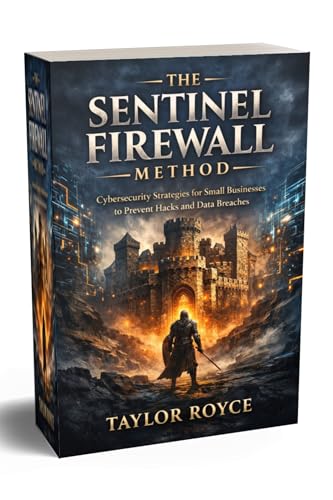
The Sentinel Firewall Method: Cybersecurity Strategies for Small Businesses to Prevent Hacks and Data Breaches (Books on Tech Book 110)
As an affiliate, we earn on qualifying purchases.
As an affiliate, we earn on qualifying purchases.
Frequently Asked Questions
How Often Should Small Businesses Update Their Cybersecurity Protocols?
You should review and update your cybersecurity protocols at least quarterly to keep your defenses strong. Regularly practicing good cyber hygiene, like updating software and backing up data, is essential. Also, make certain your password management is up-to-date, using complex, unique passwords for each account. Staying proactive helps prevent breaches and keeps your business protected. Remember, cyber threats evolve, so your security measures must evolve too.
What Are the Signs of a Cybersecurity Breach?
A cybersecurity breach can feel like a thunderclap, shaking your business to its core. You might notice phishing alerts popping up unexpectedly, or see signs of unauthorized access, like strange account activity or unfamiliar login locations. Other red flags include slow system performance, unexplained data loss, or sudden password changes. Stay vigilant, because catching these signs early helps you protect your business from serious damage.
How Can Small Businesses Train Employees on Cybersecurity Best Practices?
You can train your employees on cybersecurity best practices by starting with phishing awareness, teaching them how to spot suspicious emails and links. Encourage strong password management by implementing policies that promote unique, complex passwords and regular updates. Use interactive training sessions and real-world scenarios to reinforce these habits. Regularly remind your team about security protocols, ensuring they stay vigilant and informed to protect your business from potential threats.
What Cybersecurity Insurance Options Are Available for Small Businesses?
When exploring cybersecurity insurance options, you should consider policies that provide extensive coverage for cyber threats. Cyber insurance offers protection against data breaches, ransomware, and other cyberattacks, helping you recover quickly. Look for policies with clear coverage details, including policy coverage limits and exclusions. Comparing different providers ensures you choose the best cyber insurance plan tailored to your business needs, giving you peace of mind against evolving cyber risks.
How Do Small Businesses Balance Cybersecurity and Budget Constraints?
Balancing cybersecurity and budget constraints requires you to focus on security prioritization, ensuring you invest in the most critical areas first. Look for cost-effective solutions like multi-factor authentication and regular staff training, which provide strong protection without breaking the bank. By evaluating your risks and implementing layered security measures gradually, you can safeguard your business while staying within budget. Prioritize security to prevent costly breaches and build resilience over time.

How to Cyber Secure Your Business: A Guide to Demystifying IT Security for Small and Medium Businesses (What You Need to Know About IT Without the Geek-Speak)
As an affiliate, we earn on qualifying purchases.
As an affiliate, we earn on qualifying purchases.
Conclusion
Think of your small business as a castle, and cybersecurity as your mighty moat. Without it, invaders can easily breach your walls, causing chaos and loss. But with strong defenses in place, you stand protected, ready to defend your treasure. Stay vigilant, update your defenses regularly, and don’t let cyber threats turn your castle into ruins. By guarding your digital gates, you guarantee your business remains safe, strong, and ready to thrive in any storm.
phishing training for employees
As an affiliate, we earn on qualifying purchases.
As an affiliate, we earn on qualifying purchases.
cybersecurity awareness training
As an affiliate, we earn on qualifying purchases.
As an affiliate, we earn on qualifying purchases.