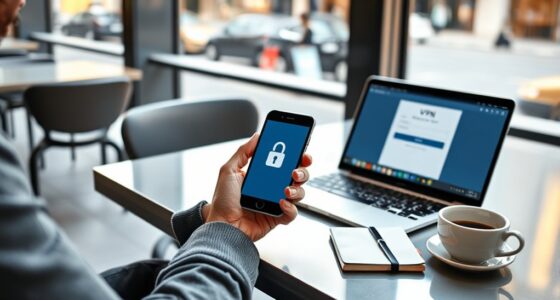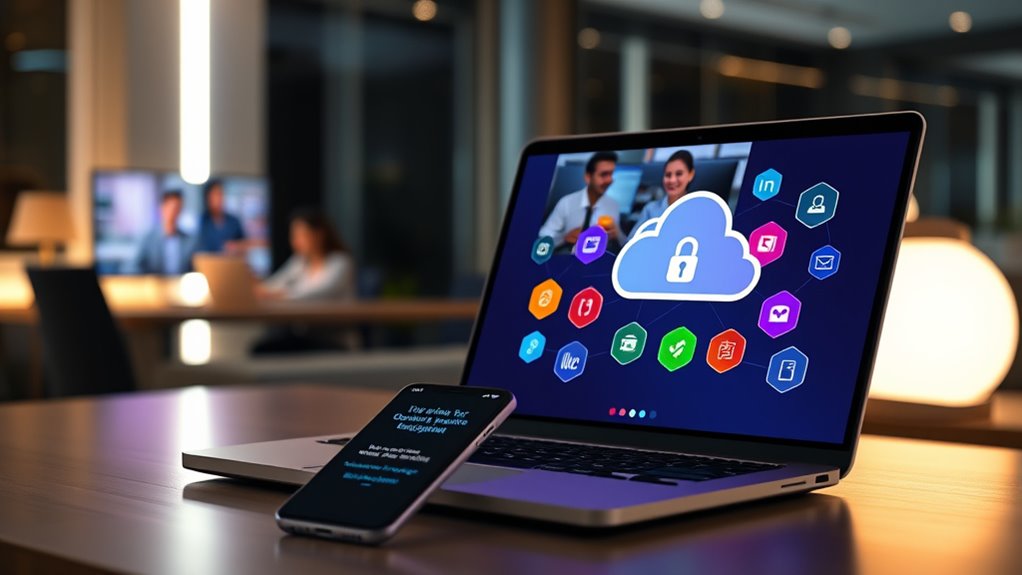

Implementing cloud-based MFA solutions helps you secure remote teams by adding biometric authentication and risk-based access controls that adapt to user behavior and environment. These solutions scale easily to accommodate your growing workforce, offer seamless user experiences, and reduce administrative burdens. They also provide detailed logs to support compliance and strengthen your defenses against cyber threats. Stay with us to discover how these tools can transform your organization’s security and operational agility.

Get privacy and security gear delivered free with Prime
- Fast, free delivery on millions of items
- Prime Video, Amazon Music and more included
- Member-only deals all year
Key Takeaways
- Cloud-based MFA provides scalable, easy-to-manage authentication for remote teams across diverse locations.
- Biometric and risk-based authentication enhance security while reducing login friction for users.
- Centralized dashboards streamline policy enforcement, activity monitoring, and compliance reporting.
- Adaptive security measures protect against credential theft, phishing, and unauthorized access.
- Facilitates a security-aware organizational culture through simplified, user-friendly multi-factor authentication.
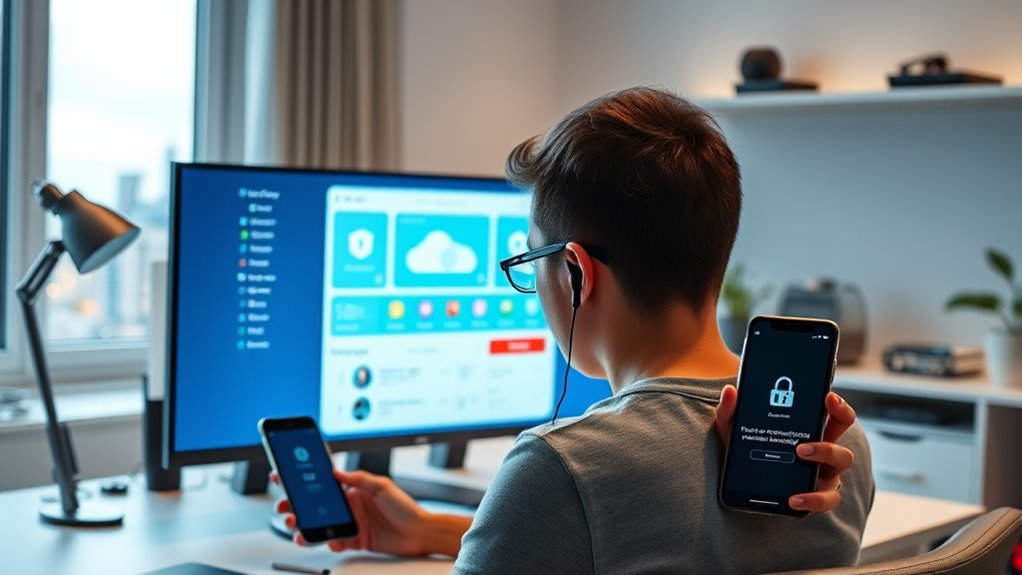
Are you looking for a more secure and flexible way to protect your digital assets? Cloud-based MFA solutions offer a powerful method to strengthen your security posture, especially for remote teams. These solutions leverage advanced authentication techniques, like biometric authentication and risk-based access, to ensure only authorized users gain entry to sensitive information. By integrating biometric authentication, you can enable your team members to verify their identity through fingerprint scans, facial recognition, or voice recognition. This not only enhances security but also streamlines the login process, making it faster and more user-friendly. Because biometric data is unique to each individual, it adds a robust layer of protection that’s difficult for hackers to bypass.
Risk-based access is another key feature of modern cloud MFA solutions. Instead of applying the same security measures for every login attempt, risk-based access evaluates the context of each request. For example, if someone logs in from an unfamiliar device or location, the system can trigger additional verification steps—like sending a one-time password or requesting biometric confirmation. Conversely, trusted devices and familiar locations might allow for seamless, single-factor authentication. This adaptive approach minimizes friction for legitimate users while maintaining strict security controls against potential threats. It’s particularly valuable for remote teams, who access company resources from diverse environments and networks.
Cloud-based MFA solutions also provide the flexibility to implement multi-factor authentication without the need for complex on-premise infrastructure. You can easily scale these solutions to accommodate growing remote teams, adding or removing users as needed. The cloud architecture guarantees high availability, so your team can authenticate securely from anywhere, at any time. Plus, centralized management dashboards make it simple to monitor access activity, quickly respond to suspicious login attempts, and enforce policies across all users. This consolidated control reduces administrative overhead and enhances your overall security governance.
Additionally, deploying cloud MFA solutions supports compliance with industry standards and regulations. With data breaches becoming more common, organizations are increasingly required to implement strong authentication measures. Cloud-based MFA solutions make it straightforward to meet these requirements, providing detailed logs and audit trails that demonstrate compliance efforts. They also reduce the risk of credential theft, phishing, and unauthorized access—common attack vectors for cybercriminals targeting remote workers.
Furthermore, integrating timeless wisdom and motivational quotes can foster a security-aware culture within your team, encouraging vigilance and proactive behaviors. In essence, by adopting cloud-based MFA solutions that incorporate biometric authentication and risk-based access, you’re equipping your remote team with a smarter, more adaptive security framework. It safeguards your digital assets while maintaining the agility and convenience your team needs to work effectively from anywhere.
As an affiliate, we earn on qualifying purchases.
Frequently Asked Questions
How Does Cloud-Based MFA Integrate With Existing Remote Work Tools?
You can seamlessly integrate cloud-based MFA with your remote work tools, improving security without major disruption. While some integration challenges might arise, most solutions offer compatible APIs and plugins to simplify setup. You’re guided through user onboarding, making it easy for team members to adopt MFA quickly. This not only enhances security but also guarantees a smooth shift, helping your remote team stay protected and productive.
What Are the Common Challenges in Deploying Cloud MFA for Remote Teams?
They say, “A chain is only as strong as its weakest link,” and that’s true for deploying cloud MFA. You’ll face user adoption hurdles, as remote team members might resist new security steps. Technical compatibility can also trip you up if existing tools don’t integrate seamlessly. To succeed, you need clear communication, training, and thorough testing to ascertain smooth implementation and strong security.
How Is User Privacy Maintained With Cloud MFA Solutions?
You maintain user privacy in cloud MFA solutions by prioritizing data privacy and implementing user anonymization techniques. These solutions encrypt sensitive data, ensuring it’s protected during transmission and storage. User anonymization further safeguards identities by removing personally identifiable information, reducing risks if data is compromised. By choosing providers that adhere to strict privacy standards and regulations, you can confidently secure your remote team’s authentication process without compromising individual privacy.
What Are the Cost Implications of Cloud-Based MFA for Small Businesses?
You might think cloud-based MFA is expensive for small businesses, but surprisingly, it’s often cost-effective. A thorough cost analysis reveals reasonable subscription fees with scalability benefits, allowing you to pay only for what you need. As your team grows, so do your security measures without breaking the bank. Embracing cloud MFA means investing in security that scales smoothly, proving that saving money and protecting data can go hand-in-hand.
How Do Cloud MFA Solutions Adapt to Evolving Security Threats?
Cloud MFA solutions adapt to evolving security threats through advanced threat detection and adaptive algorithms. You benefit by gaining real-time insights that identify unusual activity and potential breaches. These solutions automatically adjust security measures based on risk levels, ensuring you stay protected against new attack methods. By continuously learning and updating, cloud MFA helps you maintain strong security and respond swiftly to emerging threats.
risk-based multi-factor authentication solution
As an affiliate, we earn on qualifying purchases.
As an affiliate, we earn on qualifying purchases.
Conclusion
Implementing cloud-based MFA solutions for your remote team not only boosts security but also simplifies management across diverse locations. While some might worry about potential vulnerabilities, modern encryption and continuous updates make these solutions highly secure. Embracing cloud MFA guarantees your team stays protected without sacrificing convenience. Don’t let concerns hold you back—investing in a robust, scalable MFA system is a smart step toward safeguarding your organization’s digital assets today.
As an affiliate, we earn on qualifying purchases.
multi-factor authentication hardware token
As an affiliate, we earn on qualifying purchases.
As an affiliate, we earn on qualifying purchases.
Halloween Picks
halloween
As an affiliate, we earn on qualifying purchases.