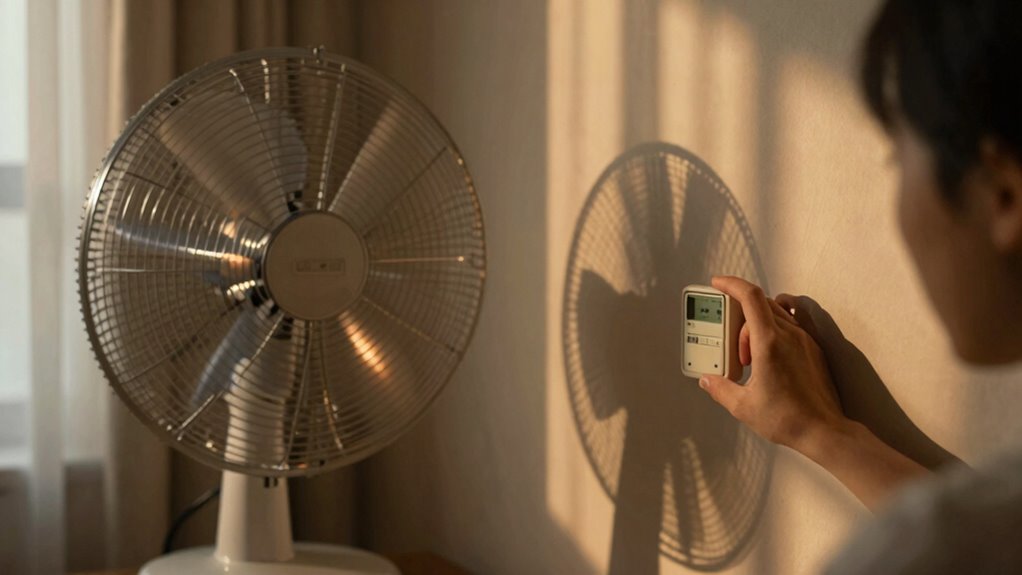

Your preferences for fans, lights, and temperatures reveal more about your emotional needs than you might think. These choices help you create a sense of safety, control, and relaxation, serving as tools for emotional regulation. When your environment matches your internal mood, you feel secure and at ease; mismatches can heighten stress or anxiety. Understanding this hidden psychology can offer deeper insight into your well-being and how to craft spaces that nurture your emotional resilience—keep exploring to learn more.

Get privacy and security gear delivered free with Prime
- Fast, free delivery on millions of items
- Prime Video, Amazon Music and more included
- Member-only deals all year
Key Takeaways
- Preferences for environmental controls reflect subconscious efforts to create feelings of safety, relaxation, and emotional mastery.
- Lighting and temperature choices are linked to mood regulation, influencing feelings of energy, calmness, or anxiety.
- Adjusting fans, lights, and temperature signals control and competence, reducing vulnerability and promoting emotional security.
- Mismatched environmental settings can amplify negative emotions like irritability and stress.
- Understanding these preferences helps craft supportive spaces that bolster emotional resilience and well-being.
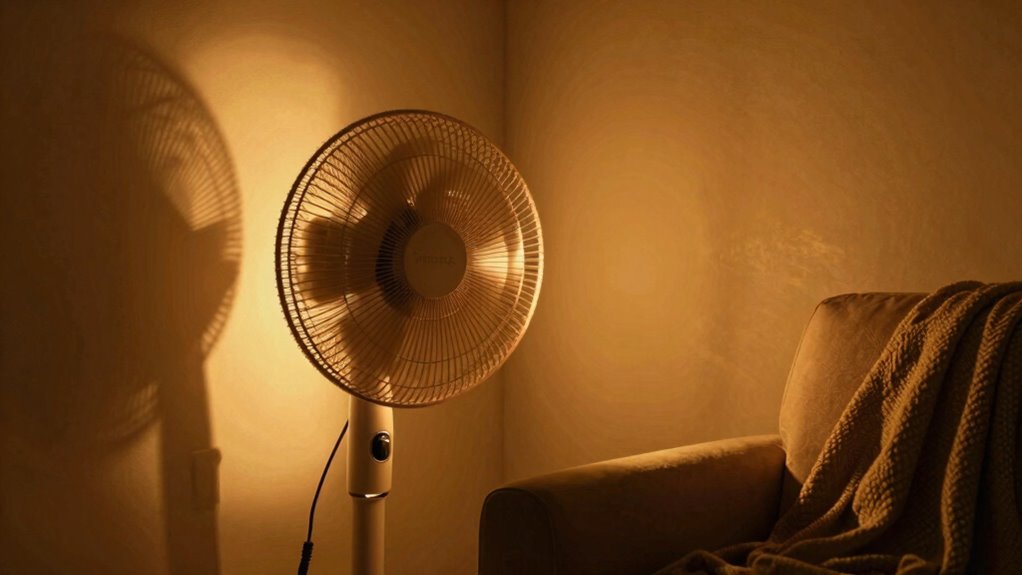
Have you ever wondered why your comfort preferences for fans, lights, and temperatures vary so much from others? It’s not just about personal taste—these choices are deeply connected to your emotional comfort and your desire for environmental control. Your environment plays a pivotal role in how safe, relaxed, and in charge you feel. When you adjust your fan or thermostat, you’re not just tweaking the temperature; you’re actively managing your emotional state. For some, a gentle breeze soothes anxiety, while for others, a cooler room helps ease stress. Similarly, lighting preferences can influence your mood—bright lights energize you, while dim lighting fosters calm. These choices serve as tools to create a space where you feel emotionally secure.
Your environment shapes your emotional comfort—adjusting lights, fans, and temperature helps you feel safe, relaxed, and in control.
The need for environmental control stems from our innate desire to regulate our surroundings to match our internal states. When you have control over temperature or lighting, it’s like you’re signaling to your brain that you’re capable of managing your environment. This sense of mastery reduces feelings of vulnerability and boosts emotional comfort. If your room is too warm or too dim, you might experience discomfort that isn’t purely physical but emotional—heightening irritability or anxiety. By adjusting these elements, you’re actively responding to your emotional needs. Your preferences become a reflection of how you want to feel in a space, whether it’s cozy, energized, or tranquil. Recognizing this connection helps explain why people’s comfort choices can seem so unpredictable. Some might crank up the fan to feel more alert, while others prefer a quiet, cooler space to unwind. These decisions are less about physical temperature and more about emotional regulation.
You might seek a certain environment because it provides a sense of control, safety, or familiarity. When your surroundings align with your emotional state, you experience a sense of harmony that enhances overall well-being. Conversely, a mismatch—like a cold room when you’re feeling anxious—can amplify negative feelings. Understanding the emotional regulation behind these preferences can help you better appreciate the significance of your surroundings. For example, the psychology of comfort reveals how environmental choices are often subconscious efforts to feel more in control. Additionally, the environmental influence on mood can be powerful, affecting how you perceive and react to your daily experiences. Ultimately, your preferences for fans, lights, and temperature aren’t arbitrary. They’re deeply rooted in your emotional comfort and your need for environmental control. Recognizing this can make you more aware of how your surroundings influence your mood and behavior. It’s not just about comfort; it’s about creating a space that supports your emotional resilience. When you understand the psychology behind these choices, you gain insight into your own needs and how to craft environments that nurture your mental and emotional health.
adjustable fan for anxiety relief
As an affiliate, we earn on qualifying purchases.
As an affiliate, we earn on qualifying purchases.
Frequently Asked Questions
How Do Cultural Backgrounds Influence Personal Comfort Preferences?
Your cultural background shapes your comfort perceptions and influences your preferences for fan, light, and temperature settings. Cultural norms dictate what’s considered polite or appropriate, like the desire for a cooler environment or higher lighting levels. These norms can make you feel more comfortable when your surroundings align with your cultural expectations. Understanding these influences helps you recognize why you might prefer certain settings over others, depending on your cultural upbringing.
Can Personality Traits Predict Fan, Light, or Temperature Choices?
You might think personality traits are predictable, but surprisingly, they often influence your fan, light, or temperature choices in ironic ways. For instance, extroverts might seek brighter lights or cooler fans to energize themselves, while introverts prefer dimmer, warmer settings for comfort. Your emotional responses shape these preferences, revealing that personality traits can indeed predict your comfort choices—yet, they also leave room for unexpected, individual quirks.
Are There Gender Differences in Environmental Preference Preferences?
Yes, gender differences influence environmental preferences, often shaped by gender stereotypes and emotional responses. You might find women preferring softer lighting and warmer temperatures due to cultural expectations and emotional comfort, while men may favor cooler temperatures and brighter lights. These preferences are not purely biological but are also shaped by societal norms that mold emotional reactions, leading to distinct environmental choices based on gender.
How Do Past Experiences Shape Comfort Device Preferences?
Your past experiences shape your comfort device preferences through sensory adaptation and emotional associations. When you repeatedly use certain devices, your senses adapt, making them feel more natural and comfortable over time. Emotional connections, like positive memories linked to specific lighting or temperature, also influence your choices. These factors create a personalized comfort zone, guiding you toward devices that feel familiar and emotionally satisfying, even subconsciously.
Do Age Groups Have Distinct Environmental Preference Patterns?
Think of age groups as different gardens, each thriving under unique conditions. Younger people often prefer warmer ambient temperatures because their sensory sensitivity is higher, making them more comfortable in cozy environments. Older adults might favor cooler settings, as their sensory sensitivity diminishes with age. Your environmental preferences are shaped by this interplay of age-related changes and ambient temperature, influencing how you react to fans, lights, and temperature adjustments.
As an affiliate, we earn on qualifying purchases.
Conclusion
Understanding your fan, light, and temperature preferences reveals more than comfort; it uncovers your subconscious needs and personality. Just as a fan cools, a light brightens, and a temperature adjusts, your choices reflect your desire for calm, clarity, or control. Recognize these preferences as mirrors of your inner world, guiding you toward environments that nurture your well-being. Embrace this insight, and create spaces that soothe, energize, and support your true self.
smart thermostat for emotional comfort
As an affiliate, we earn on qualifying purchases.
As an affiliate, we earn on qualifying purchases.
personal space climate control device
As an affiliate, we earn on qualifying purchases.
As an affiliate, we earn on qualifying purchases.
Evergreen bestsellers Picks
bestsellers
As an affiliate, we earn on qualifying purchases.