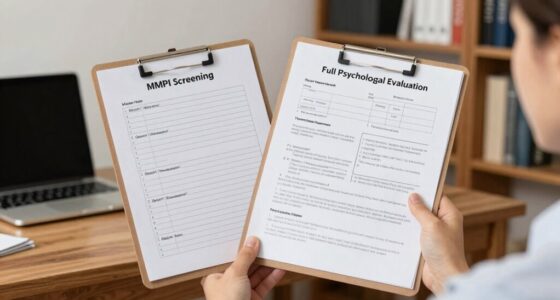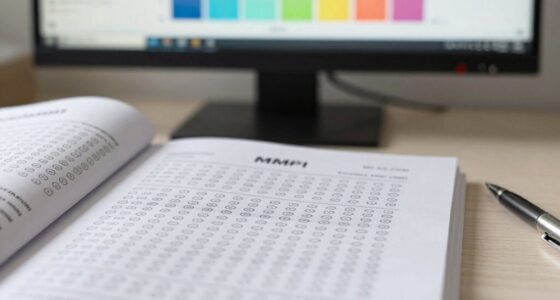

Test anxiety can cause your MMPI results to be misleading by inflating or minimizing certain traits. When you’re overwhelmed or stressed, you might respond inaccurately, exaggerating emotional instability or ignoring important context. Cultural norms and poor test strategies can further distort your answers. This can lead to biased or false conclusions about your personality or emotional state. If you want to understand how to minimize these effects, keep exploring ways to improve your testing experience.
Key Takeaways
- Test anxiety can lead to exaggerated or distorted MMPI responses, misrepresenting true emotional traits.
- Anxiety may cause individuals to overlook the influence of cultural norms on their answers.
- Elevated stress levels can impair response accuracy, producing false indications of emotional instability.
- Poor test-taking strategies under anxiety can result in rushed or impulsive answers, affecting validity.
- Managing anxiety improves response consistency, leading to more accurate and reliable MMPI results.
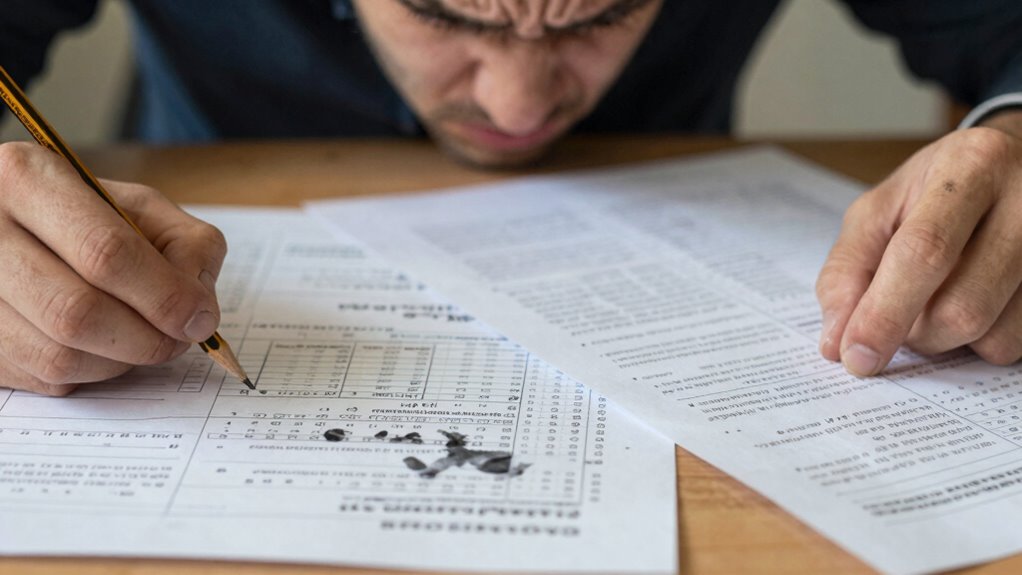
Test anxiety can profoundly impact your performance on exams, often leading to heightened stress and decreased confidence. When you’re feeling overwhelmed, it’s easy to overlook the bigger picture of how your emotional state influences your test results, especially on assessments like the MMPI (Minnesota Multiphasic Personality Inventory). The MMPI is designed to evaluate various psychological traits, but your level of anxiety during testing can distort the results, making it seem like you have certain tendencies or issues that aren’t truly representative of your personality. Cultural influences play a significant role here, shaping how you experience and express anxiety, as well as how you approach test-taking strategies. For example, if your cultural background emphasizes stoicism or discourages open expression of vulnerability, you might underreport feelings of anxiety or distress, skewing your MMPI profile.
On the other hand, certain cultural norms may cause you to overcompensate during tests, leading to results that suggest exaggerated traits. Your cultural environment influences not just your reactions but also your interpretation of test questions, which can impact how you answer and, consequently, how your results are interpreted. If you’re unfamiliar with standard test-taking strategies or haven’t developed effective coping mechanisms, your anxiety levels might spike, further impacting the accuracy of your MMPI results. For instance, poor time management or fear of failure can increase stress, causing you to respond impulsively or inaccurately, which might suggest emotional instability or other issues that aren’t truly reflective of your mental health. Additionally, cultural differences can influence how you perceive and report symptoms, further complicating the interpretation of your results. Recognizing how cultural norms shape your responses can help you better understand the potential biases in your assessment. Moreover, understanding how test environments influence your emotional state can be crucial in preparing for accurate testing conditions. Developing awareness about test conditions and their impact on your anxiety can help you create a more controlled and comfortable testing experience.
Furthermore, understanding the importance of test-taking strategies can help you mitigate some of these effects. Techniques like deep breathing, positive visualization, and time management can reduce anxiety and promote clearer thinking during testing. Recognizing cultural influences can also empower you to adapt your approach, ensuring that your responses are more authentic and representative of your true personality. If you’re aware of how your background shapes your test behaviors, you can work to counteract potential biases, leading to more accurate MMPI results. Ultimately, managing test anxiety isn’t just about feeling better during exams; it’s about ensuring your psychological assessments genuinely reflect your personality and mental health. By applying effective strategies and understanding the influence of culture, you can improve your testing experiences and the accuracy of your results.

Portable Breath Balancer: Quit Smoking Gadget & Anxiety Relief Item. Quick 3-Minute Decompression, Sleep Aid, Focus Enhancer. Sports Recovery & Corporate/Family Wellness Gift (Black)
【Quickly calm down tension, 3-5 minutes to find calm】 Gentle resistance design guides a peaceful breathing rhythm, quickly…
As an affiliate, we earn on qualifying purchases.
As an affiliate, we earn on qualifying purchases.
Frequently Asked Questions
Can Test Anxiety Be Mistaken for a Mental Disorder on the MMPI?
Yes, test anxiety can be mistaken for a mental disorder on the MMPI. Your anxiety symptoms, like restlessness or difficulty concentrating, might be misinterpreted as signs of an underlying mental health issue. This test misinterpretation occurs because some anxiety responses overlap with clinical disorder criteria. It’s important to differentiate between temporary anxiety symptoms caused by testing situations and long-term mental health conditions for accurate diagnosis.
How Long Does Test Anxiety Typically Affect MMPI Results?
Test anxiety usually affects MMPI results during the test, with symptoms like rapid heartbeat or difficulty concentrating lasting only until you finish. The test duration can range from an hour to several hours, and anxiety symptoms may lessen once you’re done. However, if anxiety persists or is severe, it might influence your responses, potentially leading to skewed results. It’s essential to manage anxiety beforehand to guarantee accurate testing outcomes.
Are There Specific MMPI Scales More Impacted by Test Anxiety?
You might think test anxiety impacts all MMPI scales equally, but it often causes specific scale distortion. Anxiety tends to alter response patterns, especially in scales measuring emotional stability or social introversion. These areas are more vulnerable because your heightened stress can lead to inconsistent answers or exaggerated symptoms. Recognizing these distortions helps clinicians interpret results more accurately, understanding that test anxiety can skew certain scales without reflecting true personality traits.
Can Treatment for Test Anxiety Improve MMPI Test Outcomes?
Yes, treatment for test anxiety can improve your MMPI results during psychological assessment. When you address your test anxiety through therapy or stress management techniques, it helps reduce the negative impact on your responses. As a result, your MMPI scores become more accurate and reflective of your true personality and mental state. Managing test anxiety guarantees that your assessment results provide a clearer, more reliable picture for clinicians to understand your needs.
How Can Clinicians Differentiate Between Test Anxiety and Genuine Psychological Issues?
You can tell the difference by conducting a thorough anxiety assessment and carefully analyzing test interpretation patterns. If symptoms fluctuate with stress levels and improve with anxiety treatment, it’s likely test anxiety. However, consistent, pervasive issues suggest genuine psychological conditions. Keep in mind, a clinician’s keen eye and an in-depth evaluation are essential to distinguish between temporary test anxiety and underlying mental health concerns. Don’t put all your eggs in one basket.

Mindfulness Breathing Necklace Stress Relief Pendant Stainless Steel Anxiety Breathe Necklace for Women Men (Rotundity, Steel)
HELP STRESS RELIEF: Designed as both breathing necklace and fidget spinner, just take deep breaths to relieve stress,…
As an affiliate, we earn on qualifying purchases.
As an affiliate, we earn on qualifying purchases.
Conclusion
Understanding how test anxiety impacts your MMPI results is essential, as it can lead to misinterpretations of your true personality or mental health. Did you know that approximately 20% of students experience significant test anxiety, which can skew their test outcomes? By managing your anxiety, you guarantee your results genuinely reflect who you are, rather than your stress levels. Don’t let anxiety distort your self-assessment—take steps to stay calm and accurate.

Test Strategy: Winning Multiple Choice Strategy for any test
As an affiliate, we earn on qualifying purchases.
As an affiliate, we earn on qualifying purchases.

Little Feminist Board Book Set
LEARN ABOUT INSPIRING WOMEN: The books include colorful yet simple illustrations of Maya Angelou, Josephine Baker, Ella Fitzgerald,…
As an affiliate, we earn on qualifying purchases.
As an affiliate, we earn on qualifying purchases.