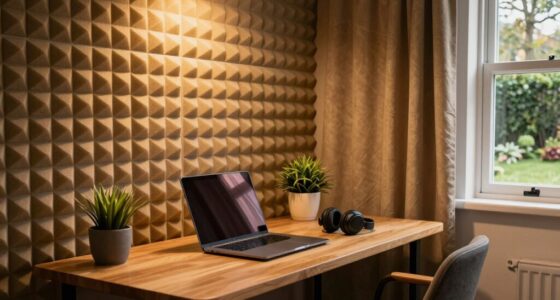

You work better when your workspace encourages spontaneous interactions and open communication. Designing your environment with open-plan layouts and shared spaces helps you energize through quick conversations and teamwork. Using tools like shared documents and digital channels keeps you connected, whether remote or in-office. Balancing social time with focused work boosts productivity. Keep exploring how workplace shifts can maximize your natural strengths; more insights await that can help you thrive even further.
Key Takeaways
- Transition to open-plan layouts that facilitate spontaneous interactions and quick idea exchanges.
- Incorporate flexible, collaborative tools like real-time messaging and shared digital workspaces.
- Design designated collaboration zones for easy access to team discussions and brainstorming sessions.
- Schedule regular team meetings and informal social breaks to boost engagement and communication.
- Minimize physical barriers, such as cubicles, to enhance natural conversation flow and social energy.

As workplaces evolve to prioritize collaboration and social interaction, extroverts find themselves uniquely positioned to thrive in these environments. You naturally excel in team collaboration because you’re energized by interaction and group discussions. This shift emphasizes the importance of open communication styles, which play directly into your strengths. When workspaces foster constant interaction—whether through shared desks, open-plan layouts, or regular team meetings—you can leverage your outgoing nature to build stronger relationships and contribute more effectively.
The key to working better as an extrovert is to embrace spaces that facilitate spontaneous conversations and quick exchanges of ideas. These environments allow you to voice your thoughts freely, share feedback, and stay engaged with your team. When communication styles are flexible and encourage informal chats or brainstorming sessions, you thrive because you’re able to process information aloud and gather insights from others in real time. This immediate feedback loop often leads to more innovative solutions, as your energy and enthusiasm inspire colleagues to participate actively. Incorporating collaborative tools can further enhance your ability to communicate effectively and keep the team aligned.
However, while your social skills give you an advantage, it’s important to be mindful of balancing your need for interaction with focus. In a work environment that promotes team collaboration through open communication, it’s easy to get distracted or interrupted. To work optimally, consider designating specific times for deep focus, even within a collaborative setting. This way, you can contribute fully during group discussions while still maintaining the ability to concentrate on complex tasks without constant interruptions. Recognizing communication styles that support your working preferences can help you navigate these environments more efficiently. Additionally, understanding how workplace dynamics influence team effectiveness can help you adapt your approach to different situations. Being aware of office layout and its impact on collaboration can also help you select or advocate for spaces that suit your working style.
Your natural aptitude for communication makes it easier to adapt to various team collaboration tools and methods. You’re likely to excel in environments that use real-time messaging platforms, video calls, and collaborative documents. These tools support your dynamic communication style and allow you to jump into conversations effortlessly. As workplaces continue to favor remote or hybrid models, your ability to connect through digital channels becomes a valuable asset, enabling you to keep the team’s momentum going regardless of physical location.
Additionally, understanding projector technology and its role in creating engaging visual presentations can help you foster more interactive discussions during meetings or brainstorming sessions. Ultimately, the workspace shift that benefits extroverts most is one that champions openness, continuous interaction, and fluid communication styles. By actively seeking environments that promote these elements, you can maximize your strengths, foster stronger team bonds, and contribute more meaningfully to your organization. Embracing this shift not only enhances your productivity but also affirms your natural ability to energize and inspire those around you.
open plan office desk setup
As an affiliate, we earn on qualifying purchases.
As an affiliate, we earn on qualifying purchases.
Frequently Asked Questions
How Do Introverts Benefit From the Same Workspace Shift?
You benefit from this workspace shift by finding it easier to focus and recharge during your workday. Reduced social interaction allows you to concentrate better, especially in collaborative environments where constant chatter can be overwhelming. This change supports your need for solitude and quiet, helping you to think deeply and work efficiently. Embracing a quieter, less socially intense space boosts your productivity and mental well-being, making your work experience more balanced.
What Are the Potential Downsides of This Workspace Shift?
You might face privacy concerns and increased social anxiety with this workspace shift. Open layouts can reduce your sense of privacy, making it harder to focus or have confidential conversations. If you’re prone to social anxiety, the constant noise and lack of personal space could heighten stress levels. You may find it difficult to concentrate or relax, potentially lowering productivity and overall job satisfaction.
How Can Managers Support Extroverts During Transitions?
You should support extroverts during shifts by fostering open communication and encouraging team collaboration. Did you know that extroverts thrive on social interaction, which boosts their productivity? To assist them, create opportunities for real-time conversations and group activities. Understanding their communication styles helps you address concerns quickly, making the changeover smoother. By actively engaging with extroverts, you help them adapt faster and maintain their motivation during workplace changes.
Does This Shift Impact Productivity Levels Long-Term?
This shift can positively impact long-term productivity by enhancing team collaboration, especially for extroverts who thrive on interaction. However, if noise levels increase too much, it might hinder focus for some team members. You should monitor these factors closely, encouraging open communication and adjusting noise levels as needed. When managed well, the shift can foster better collaboration and sustained productivity, benefiting your entire team.
Are There Specific Industries Where This Shift Is More Effective?
Imagine a world where your work environment sparks your best ideas—that’s true in industries like sales, marketing, and entertainment, where industry adaptation thrives. Extroverts find this shift especially effective because it aligns with cultural differences that value social interaction. These industries benefit from dynamic, collaborative spaces, making the shift a game-changer for productivity. So, if your industry leans toward collaboration, this workspace change could boost your performance markedly.
collaborative digital workspace tools
As an affiliate, we earn on qualifying purchases.
As an affiliate, we earn on qualifying purchases.
Conclusion
So, next time you’re feeling stuck in your quiet corner, remember—sometimes, a simple shift to a lively workspace might just be what you need. Ironically, what extroverts thrive on could be the very thing that turns a dull day into a burst of energy. Embrace the chaos, let the conversations flow, and watch your productivity soar. After all, who knew that a little noise could be the secret ingredient to working better?
shared team collaboration desk
As an affiliate, we earn on qualifying purchases.
As an affiliate, we earn on qualifying purchases.
office communication and collaboration devices
As an affiliate, we earn on qualifying purchases.
As an affiliate, we earn on qualifying purchases.