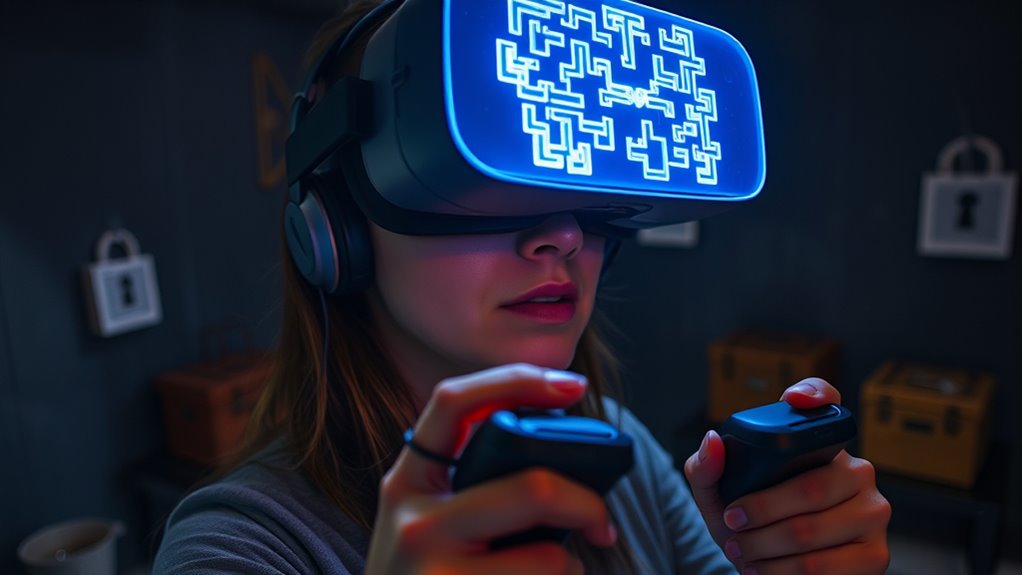

VR escape rooms immerse you in digitally created worlds with rich storytelling, visual effects, and interactive elements that respond instantly to your actions. They rely on advanced technology, which offers stunning visuals but can sometimes cause motion sickness or technical issues. Physical escape rooms, on the other hand, focus on tangible objects and handcrafted sets, providing a genuine sensory experience with hands-on puzzles. To uncover more about how these experiences compare, keep exploring the key differences.

Get privacy and security gear delivered free with Prime
- Fast, free delivery on millions of items
- Prime Video, Amazon Music and more included
- Member-only deals all year
Key Takeaways
- VR escape rooms provide immersive digital environments with dynamic visuals and sound, while physical rooms rely on tangible sets and props.
- VR offers complex storytelling and visual effects that adapt to player actions, unlike the handcrafted, real-world focus of physical escape rooms.
- Physical escape rooms emphasize tactile, hands-on interactions with real objects, whereas VR relies on virtual interactions through controllers.
- VR can cause motion sickness or discomfort in some users, which is less common in physical escape rooms with real-world physicality.
- Physical rooms are limited by space and design constraints, while VR can simulate expansive or fantastical environments beyond physical limitations.

Escape rooms have become a popular way to challenge your problem-solving skills and enjoy immersive experiences, but you might wonder whether to try a VR escape room or stick with the traditional physical one. Both formats aim to test your ingenuity and teamwork, yet they deliver very different experiences. When it comes to immersion, VR escape rooms excel in creating rich storytelling environments that transport you to fantastical worlds or intricate scenarios. The technology allows for dynamic visuals, sound effects, and interactive elements that can adapt to your actions instantly. This immersive storytelling keeps you engaged, making you feel as if you’re truly part of the story rather than just solving puzzles within a confined space. Additionally, the high refresh rates of VR hardware can provide smoother visual experiences, reducing motion sickness and enhancing comfort during extended gameplay.
However, VR escape rooms also face technological limitations that can influence your experience. For instance, the quality of graphics and motion tracking depends heavily on the hardware used. If the equipment is outdated or malfunctioning, it can break the sense of immersion and cause frustration. Additionally, some users experience motion sickness or discomfort from extended VR sessions, which might hinder their ability to fully enjoy the game. This dependence on technology introduces variables that are out of your control, unlike traditional escape rooms where the environment is physically tangible and less prone to technical issues.
Physical escape rooms, on the other hand, rely on real-world objects and tangible environments to immerse players. They often feature handcrafted sets, props, and puzzles that create a sense of realism and tangibility. This sensory engagement can make the experience feel more authentic, especially for those who prefer hands-on interaction. Yet, the storytelling in physical escape rooms tends to be more limited compared to VR, which can craft complex narratives through digital means. While physical rooms excel in creating atmospheric environments, they are constrained by physical space and the designers’ creativity, which may limit the scope of immersive storytelling.
In essence, VR escape rooms leverage cutting-edge technology to craft highly immersive stories but are hampered by hardware limitations and potential discomfort. Physical escape rooms provide a tactile, real-world experience that fosters genuine engagement with handcrafted settings but may lack the narrative depth achievable through digital means. Your choice ultimately depends on what kind of immersion you seek—whether it’s the visually spectacular, story-driven worlds of VR or the tangible, hands-on challenge of a physical escape room.
As an affiliate, we earn on qualifying purchases.
Frequently Asked Questions
Can VR Escape Rooms Be Played Solo or Only in Groups?
You can definitely enjoy VR escape rooms solo or with friends. For a solo experience, you can immerse yourself alone in solving puzzles and exploring challenges at your own pace. Many VR escape rooms also offer multiplayer options, allowing you to team up with others for a collaborative adventure. Whether you prefer flying solo or playing with friends, VR escape rooms provide flexible options to suit your style.
What Are the Hardware Requirements for VR Escape Rooms?
You’ll need VR hardware compatible with your device, such as Oculus Rift, HTC Vive, or PlayStation VR, to jump into an escape room. Keep in mind, the cost comparison analysis shows that while initial setup can be pricey, it often pays off with endless adventures. Make sure your PC or console meets the minimum specs for smooth gameplay—otherwise, you’re just throwing good money after bad.
Are VR Escape Rooms Suitable for People With Motion Sickness?
VR escape rooms might not be ideal if you’re prone to motion sickness or sensory overload. The immersive experience can sometimes trigger discomfort due to rapid movements or intense visuals. If you’re sensitive, start with shorter sessions or choose experiences designed to minimize motion. Taking breaks and adjusting headset settings can also help reduce symptoms, making the experience more comfortable for those with motion sickness.
How Do VR Escape Rooms Handle Physical Safety Concerns?
VR escape rooms handle physical safety concerns by prioritizing virtual safety, ensuring your movements won’t cause harm. They implement strict equipment sanitation protocols, regularly disinfecting headsets and controllers to prevent germs. Clear instructions are provided to help you avoid accidents, and the virtual environment minimizes physical risks. Staff also monitor your experience, ready to assist if you feel uncomfortable or unsafe, making your virtual adventure both fun and secure.
What Is the Average Cost Difference Between VR and Physical Escape Rooms?
You’ll find that VR escape rooms generally cost less than physical ones, with the average price difference around 10-20%. This cost comparison depends on pricing factors like equipment, technology, and space. VR setups often require a one-time investment, while physical escape rooms involve ongoing expenses like props and space maintenance. Ultimately, your choice might hinge on budget, desired experience, and the scalability of the escape room setup.
As an affiliate, we earn on qualifying purchases.
Conclusion
Both VR and physical escape rooms offer unique experiences, but VR escape rooms excel in accessibility and cost-effectiveness. Did you know that over 70% of players find VR escape rooms more convenient, since you can enjoy them anytime from home? Whether you prefer the immersive digital world or the tactile challenges of a physical room, both options deliver exciting puzzles. Ultimately, your choice depends on what kind of adventure you’re craving—digital or real-world fun.
As an affiliate, we earn on qualifying purchases.
As an affiliate, we earn on qualifying purchases.
Halloween Picks
halloween
As an affiliate, we earn on qualifying purchases.