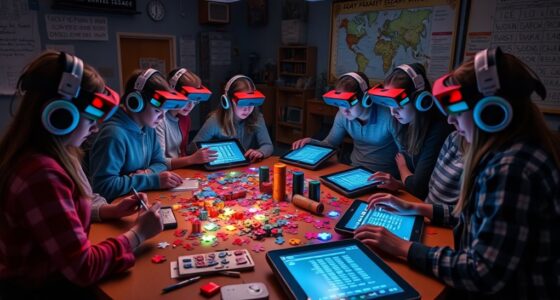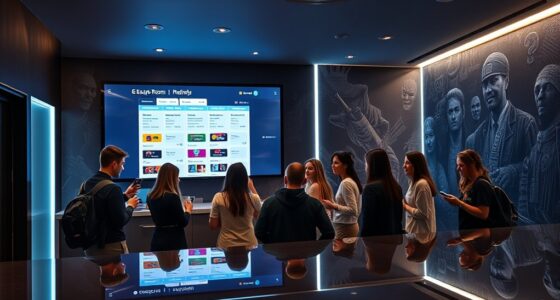

You’ve seen escape rooms go from simple puzzles to fully immersive adventures that deeply engage you through storytelling, realistic environments, and advanced technology. Modern experiences use detailed set pieces, atmospheric effects, and interactive elements like AR and VR to make you feel like you’re part of a story. These innovations create emotional connections and personalizes your journey. If you want to discover how these stories keep evolving, keep exploring what’s next in immersive escapades.
Key Takeaways
- Transition from simple puzzles to fully immersive, story-rich environments enhances participant engagement.
- Incorporation of detailed set pieces, props, and atmospheric effects creates realistic, believable worlds.
- Use of advanced technologies like AR, VR, and AI enables interactive, personalized storytelling experiences.
- Nonlinear narratives and role-playing deepen emotional investment and allow exploration of multiple story paths.
- Continuous technological and design innovations blur the line between fiction and reality, elevating immersion and storytelling complexity.

Story-driven escape rooms have rapidly evolved from simple puzzle challenges into immersive experiences that captivate your imagination. Today, these adventures are more than just solving riddles; they’re crafted with interactive narratives that draw you deeply into their worlds. The shift from basic lock-and-key puzzles to complex storytelling means you’re no longer just figuring out clues—you’re becoming part of a story, living it firsthand. This transformation is driven by a focus on immersive design, which employs detailed set pieces, realistic props, and carefully crafted environments to make you feel like you’ve stepped into another universe. Every detail, from the lighting to sound effects, works together to create an atmosphere that pulls you in, blurring the line between fiction and reality.
Experience immersive storytelling through detailed set design, realistic props, and atmosphere to fully engage your imagination.
The integration of interactive narratives is what truly sets modern escape rooms apart. Instead of linear puzzles that are disconnected from a story, you now follow a plot woven through multiple layers of clues and challenges. You might find yourself unraveling a mystery as a detective, escaping from a dystopian future, or solving a supernatural enigma. These stories are often nonlinear, giving you the freedom to explore different paths and make choices that influence the outcome. This interactivity keeps you engaged on a deeper level, making every decision feel meaningful and heightening your emotional investment in the experience.
Immersive design plays a vital role in making these stories believable and compelling. Designers spend significant effort creating authentic environments that match the narrative. For example, if you’re in a haunted mansion, every creaking floorboard, flickering light, and dusty antique helps to build a chilling atmosphere. The use of authentic props and thematic décor makes the setting feel real, encouraging you to forget about the outside world. This meticulous attention to detail turns a simple puzzle room into a fully realized storybook where you’re not just solving clues—you’re living the story.
As technology advances, so does the potential for storytelling in escape rooms. Augmented reality (AR), virtual reality (VR), and interactive multimedia elements are becoming more common, adding layers of depth and interactivity. These innovations allow you to engage with the environment in new ways, such as scanning objects for hidden clues or experiencing virtual characters that guide or challenge you. Additionally, the integration of AI technology can personalize narratives and adapt challenges in real time, further enhancing immersion. The goal remains the same: to craft an experience where storytelling, immersive design, and player agency work together seamlessly, making each escape room adventure uniquely captivating. This evolution ensures that story-driven escape rooms continue to surprise and delight, immersing you in stories that are as dynamic as your imagination allows.

Escape Room The Game, Version 2 – with 4 Thrilling Escape Rooms | Solve The Mystery Board Game for Adults and Teens
LIVE THE MYSTERY: Master your next games night by creating an escape room at home. Choose your challenge…
As an affiliate, we earn on qualifying purchases.
As an affiliate, we earn on qualifying purchases.
Frequently Asked Questions
How Do Story-Driven Escape Rooms Influence Player Engagement?
You’re drawn into a vivid world where virtual immersion makes the story come alive, heightening your emotions and curiosity. As narrative complexity increases, you become more invested, piecing together clues like a detective unraveling a layered mystery. This deep engagement keeps you focused, enthusiastic to solve puzzles and explore the storyline’s twists. Ultimately, story-driven escape rooms transform passive players into active participants, making each experience memorable and emotionally resonant.
What Are the Key Technological Advancements Shaping Escape Room Narratives?
You’ll find that virtual integration and augmented reality dramatically shape escape room narratives today. Virtual integration allows seamless blending of digital and physical elements, immersing you deeper into the story. Augmented reality overlays digital clues onto your real-world environment, enhancing interactivity. These advancements make the experience more engaging, realistic, and dynamic, pushing you to solve puzzles in ways that feel intuitive and innovative, ultimately elevating the storytelling and immersion in escape rooms.
How Do Cultural Differences Impact Escape Room Storytelling Styles?
You’ll notice that cultural differences shape escape room storytelling styles through cultural symbolism and storytelling traditions. These elements influence themes, puzzles, and narratives, making experiences more authentic and engaging for diverse audiences. By incorporating local myths, customs, and symbols, creators craft immersive stories that resonate deeply. Adapting storytelling traditions guarantees players connect emotionally, enriching their escape room journey and providing a unique cultural perspective that enhances the overall experience.
What Role Does Character Development Play in Story-Driven Escape Rooms?
Sure, because who doesn’t want a character arc that rivals soap operas, right? In escape rooms, character development adds emotional depth, making you care about the story and its players. It turns puzzles into personal journeys, keeping you engaged and invested. When characters grow or reveal secrets, you feel more connected, transforming a simple game into a memorable adventure where every twist hits home.
How Are Story-Driven Escape Rooms Integrated Into Educational Settings?
You can integrate story-driven escape rooms into educational settings by applying history evolution and innovative design strategies. These rooms engage students actively, encouraging critical thinking and teamwork. By crafting compelling narratives tied to curriculum topics, you make learning immersive and memorable. Using design strategies like puzzles aligned with educational goals guarantees students stay motivated while exploring historical concepts, making escape rooms a powerful, interactive teaching tool that enhances understanding and retention.

Brain Games – Sticker by Number: Animals (28 Images to Sticker)
Now you can create beautiful animal images with this fun sticker-by-number art book. This exciting new activity lets…
As an affiliate, we earn on qualifying purchases.
As an affiliate, we earn on qualifying purchases.
Conclusion
As you step into the world of story-driven escape rooms, you realize they’re more than just puzzles—they’re journeys woven with narratives that captivate your soul. Like a master storyteller, they’ve evolved to pull you deeper, transforming mere challenges into unforgettable adventures. So, next time you enter one, remember: you’re not just solving riddles; you’re living a story. Are you ready to become the hero of your own escape?

Escape Room Props 5 Different Colors Buttons Mechanism Press It In Order To Control 12V Magnet Lock For Exit Game Owner Player Adventurer (4 Button, With Audio)
5 DIFFERENT COLORS LIGHT TO OPERATE. There are red, yellow, blue, green and white 5 color buttons to…
As an affiliate, we earn on qualifying purchases.
As an affiliate, we earn on qualifying purchases.
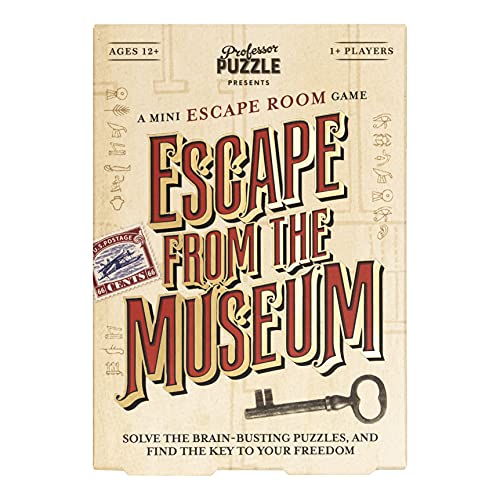
Escape From the Museum Escape Room Game
DECIPHER CLUES & SOLVE PUZZLES: Solve the brain-busting puzzles and find the key to your freedom. Locked in…
As an affiliate, we earn on qualifying purchases.
As an affiliate, we earn on qualifying purchases.