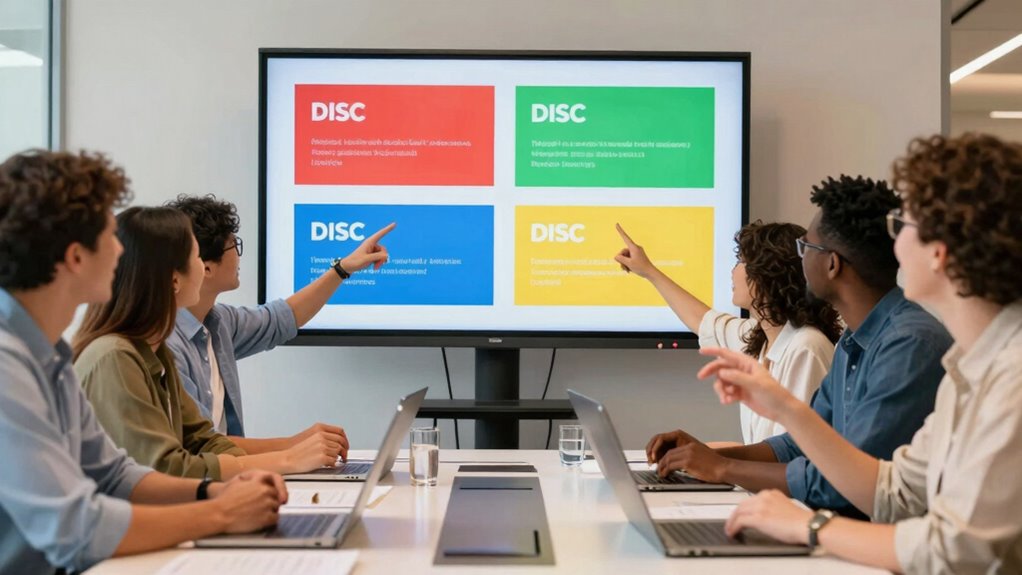

You find DISC popular in workplaces and coaching because it offers an easy way to understand different personality styles, which helps improve communication and teamwork. It highlights your strengths and areas for growth, making it practical for managing teams and developing leadership skills. By understanding how others perceive you, you can adapt your behavior to create a healthier, more productive environment. If you keep exploring, you’ll discover how this simple tool can transform your interactions and success.

Get privacy and security gear delivered free with Prime
- Fast, free delivery on millions of items
- Prime Video, Amazon Music and more included
- Member-only deals all year
Key Takeaways
- Its simple, four-style model makes it easy to understand and apply in diverse workplace settings.
- It enhances self-awareness, improving communication and teamwork among employees.
- Leaders use DISC to better align roles and management styles with individual strengths.
- It fosters inclusive environments by promoting empathy and understanding of different personality types.
- The practical, straightforward framework supports personal development and effective coaching strategies.

Understanding your own behavior and how others perceive you can profoundly improve workplace dynamics. When you recognize your natural tendencies and how they influence your interactions, you become better equipped to navigate team dynamics effectively. DISC assessments are popular in workplaces and coaching because they offer clear insights into personality styles, helping you understand the diverse ways people communicate and work. This understanding allows you to adapt your communication strategies, making collaboration smoother and more productive. Acknowledging the importance of Free Floating concepts can also help you develop a more flexible approach to team interactions and environment setups.
Recognizing your behavior and others’ perceptions enhances teamwork and communication effectiveness.
One reason DISC is so widely used is its straightforward approach. It breaks down personality traits into four primary types—Dominance, Influence, Steadiness, and Conscientiousness—making it easy for you to grasp and remember. When you know which style you predominantly exhibit, you can identify your strengths and areas for growth. This self-awareness enables you to communicate more effectively, especially when managing conflicts or giving feedback. For example, if you’re a high-D (Dominance) person, you might tend to be direct and results-oriented, but understanding this helps you avoid coming across as overly aggressive or impatient. Conversely, if you’re high in S (Steadiness), you may be more patient and supportive, but you might need to work on assertiveness when necessary.
In coaching contexts, DISC provides a practical framework for personal development. It helps individuals recognize how their behavior impacts team dynamics and learn targeted strategies to improve their interactions. Coaches often use DISC to tailor communication strategies that resonate with each style, fostering better understanding and reducing misunderstandings. When you approach team members with this knowledge, you create a more inclusive environment where everyone feels understood and valued. This understanding of personality styles can also enhance empathy and patience among team members, contributing to a healthier workplace culture. This not only boosts morale but also enhances overall productivity.
Employing DISC in the workplace also benefits leadership development. Leaders who understand DISC profiles can assign roles that align with each team member’s strengths, leading to more cohesive and efficient teams. They can also adapt their management style to meet individual needs, improving engagement and motivation. As a result, team members feel more supported and understood, which enhances collaboration and drives success.
Ultimately, DISC’s popularity stems from its simplicity and practical application. It provides you with a clear language to describe behaviors, a foundation for improving communication strategies, and a way to foster healthier team dynamics. By understanding yourself and your colleagues better, you can create a more harmonious and productive workplace where everyone’s strengths are recognized and leveraged. That’s why DISC remains a valuable tool in both workplace settings and coaching environments—it equips you with insights that lead to meaningful, lasting improvements in how you connect and collaborate with others.
As an affiliate, we earn on qualifying purchases.
Frequently Asked Questions
How Does DISC Compare to Other Personality Assessments?
You’ll find DISC stands out because of its straightforward personality measurement and high assessment reliability. Compared to other assessments, DISC emphasizes observable behaviors, making it easy to understand and apply. Its simplicity helps you quickly identify strengths and areas for growth, unlike more complex tools. While some assessments offer deeper insights, DISC’s practicality and consistent results make it a popular choice in workplaces and coaching.
Can DISC Be Customized for Different Industries?
Did you know that over 70% of Fortune 500 companies use DISC assessments? You can customize DISC for different industries through industry-specific adaptations and customizable profiles, making it highly versatile. This allows you to tailor the assessment to reflect unique workplace dynamics, roles, and challenges. By doing so, you gain more relevant insights, improve team synergy, and foster better communication, regardless of your industry.
Is DISC Suitable for All Employee Levels?
Yes, DISC suits all employee levels. You’ll find it helps improve employee adaptability by revealing individual communication styles, making teamwork smoother. It’s especially useful in leadership development, as it helps leaders understand their strengths and areas for growth. Whether you’re coaching entry-level staff or senior managers, DISC provides practical insights that foster better understanding, collaboration, and overall workplace effectiveness across all levels.
How Long Does a Typical DISC Assessment Take?
A typical DISC assessment takes about 10 to 20 minutes, depending on the version used. The assessment duration is relatively short, making it easy to fit into your schedule. The time commitment is minimal, so you can complete it without much disruption. This quick process helps you gain valuable insights into your behavior and communication style efficiently, making it a popular choice for workplaces and coaching sessions.
What Are Common Misconceptions About DISC?
Many believe DISC assessments reveal fixed personality traits, but that’s a personality myth. You might think the assessment isn’t accurate, but it provides valuable insights when understood properly. People often assume DISC labels limit growth, yet it actually highlights strengths and areas for development. Remember, assessment accuracy depends on honest answers and context. So, don’t let misconceptions hinder you from using DISC to better understand yourself and others.
As an affiliate, we earn on qualifying purchases.
Conclusion
Just as Hercules relied on his strengths to conquer challenges, understanding DISC helps you harness your natural traits to excel in the workplace and coaching. By embracing these insights, you can navigate relationships with the finesse of Odysseus and build stronger, more effective teams. When you tap into DISC, you’re not just working harder—you’re working smarter, creating a path to success that’s as legendary as the heroes of old.
As an affiliate, we earn on qualifying purchases.
As an affiliate, we earn on qualifying purchases.
Halloween Picks
halloween
As an affiliate, we earn on qualifying purchases.