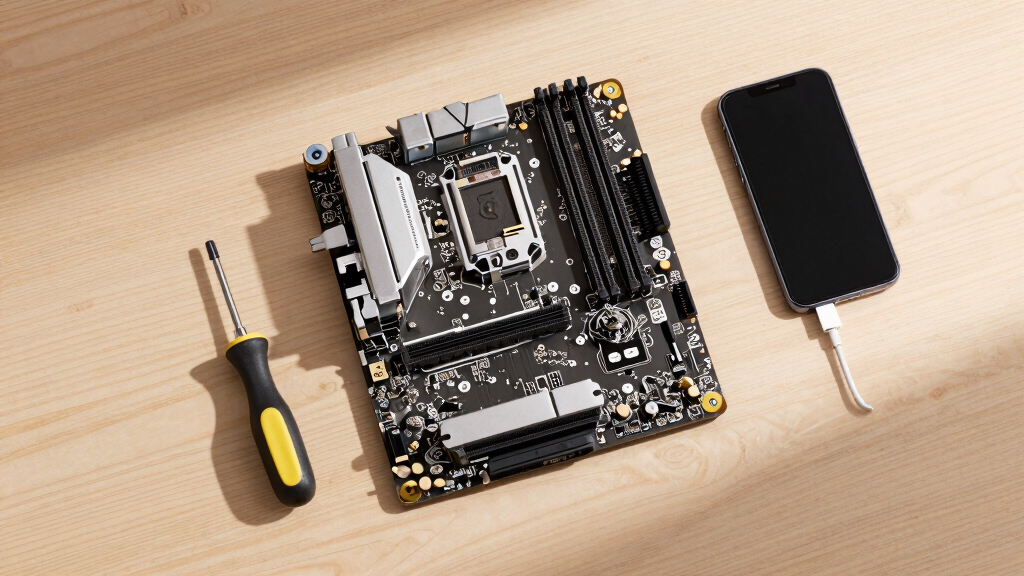

TL;DR
Researchers have developed BareMetal RAM Dumper, a bare-metal x86 tool designed for Cold Boot Attack experiments. This development allows direct hardware testing, potentially impacting data security practices.
Researchers have introduced BareMetal RAM Dumper, a bare-metal x86 tool specifically designed for conducting Cold Boot Attack experiments directly on hardware. This tool allows memory dumping without relying on an operating system, which could enhance the effectiveness of security testing and potentially expose new vulnerabilities.

Get privacy and security gear delivered free with Prime
- Fast, free delivery on millions of items
- Prime Video, Amazon Music and more included
- Member-only deals all year
Implications for Hardware Security and Data Privacy
The release of the BareMetal RAM Dumper raises important questions about hardware security and the effectiveness of existing protections against Cold Boot Attacks. By enabling more direct and potentially more effective memory dumping, it could help security researchers identify vulnerabilities in systems that were previously difficult to test. This development underscores the need for stronger hardware-based safeguards, such as memory encryption and secure boot processes, to prevent unauthorized data extraction. For organizations and individuals, it highlights the ongoing challenge of protecting sensitive data against physical attacks.
Products Worth Considering

Ledger Flex + Folio Crypto Hardware Wallet

Apple MacBook Pro 16.2-inch with M5 Pro, 18-core CPU, 20-core GPU, 24GB Memory, 1TB SSD, Wi-Fi 7, Space Black

Apple MacBook Air 15-inch Laptop with M5 Chip, 16GB Memory, 512GB SSD, Liquid Retina Display, and Touch ID (Midnight)
As an affiliate, we earn on qualifying purchases.
Advances in Cold Boot Attack Techniques and Hardware Testing
Cold Boot Attacks, first demonstrated publicly in 2008, exploit residual data in RAM after a system is powered down. Traditionally, attackers or researchers use software tools within an operating system to dump memory contents. The new BareMetal RAM Dumper shifts this paradigm by providing a hardware-level tool that bypasses OS restrictions, allowing for more precise and potentially more comprehensive memory extraction. Its emergence follows ongoing research into hardware vulnerabilities and the development of more sophisticated attack methods. Prior to this, most testing relied on software-based tools, which could be limited by OS security measures or system configurations.
“The BareMetal RAM Dumper represents a significant step forward in hardware-level security testing, enabling us to evaluate how well systems can resist physical memory attacks.”
— Dr. Jane Smith, cybersecurity researcher
Unclear Aspects of the Tool’s Capabilities and Risks
It is not yet confirmed how widely available the BareMetal RAM Dumper will become or whether it will be integrated into existing security testing frameworks. The full extent of its capabilities, such as whether it can bypass all hardware protections or how easily it can be detected during use, remains to be seen. Additionally, there are concerns about potential misuse by malicious actors, but these risks are still being evaluated by security experts.
Next Steps in Research and Security Policy Development
Researchers are expected to conduct further testing and validation of the BareMetal RAM Dumper across different hardware platforms. Security organizations and hardware manufacturers may begin developing countermeasures to mitigate risks associated with such tools. Policymakers might also consider regulations or guidelines for hardware-level security testing tools to prevent misuse. Public disclosure of vulnerabilities uncovered using this tool could influence security standards and best practices.
Key Questions
What is the main purpose of the BareMetal RAM Dumper?
The tool is designed for conducting Cold Boot Attack experiments directly on hardware, allowing researchers to dump system memory at the firmware level without relying on an operating system.
Could this tool be used maliciously?
Yes, because it operates at the hardware level and can bypass OS protections, it has the potential for misuse by attackers. However, it is primarily intended for security research and testing.
How does this development affect hardware security?
It highlights vulnerabilities in hardware and memory protections, emphasizing the need for stronger security measures such as memory encryption and secure boot protocols.
Is the BareMetal RAM Dumper publicly available?
It is currently being tested by researchers; widespread availability or commercial release details have not been disclosed.
What are Cold Boot Attacks?
Cold Boot Attacks involve rebooting a machine and extracting residual data from RAM, often used to recover sensitive information like encryption keys.
Source: hn