
Decentralized identity puts you in control of your personal information by using blockchain-based identifiers called DIDs, which you create and manage yourself. These digital identities are stored securely and are tamper-proof, allowing for safe, private, and portable access across platforms. You can share only the necessary details through cryptographically signed credentials, reducing risks like identity theft. To learn how this innovative system works and improves your online privacy, continue exploring its core concepts and implementation details.
Key Takeaways
- Decentralized identity uses blockchain technology to give users control over their digital identities without relying on centralized authorities.
- Core components include Decentralized Identifiers (DIDs), which are user-controlled, tamper-proof, and stored on distributed ledgers.
- Verifiable credentials enable trusted, privacy-preserving sharing of digital certificates issued by reputable entities.
- Implementation involves digital wallets for managing DIDs and credentials, with cryptographic authentication enhancing security.
- Benefits include increased privacy, portability, user empowerment, and improved trust in online interactions.
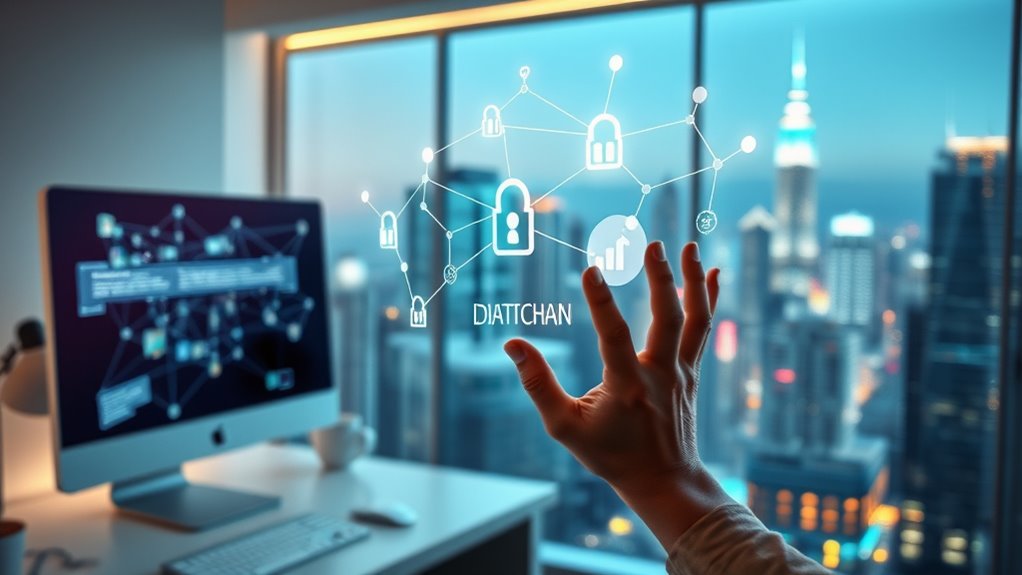
Have you ever wondered how you can control your personal information in a digital world? Today’s online environment makes it easy for your data to be collected, stored, and shared without much oversight. That’s where decentralized identity comes in, offering a way to put you back in charge of your digital presence. Instead of relying on centralized authorities like social media platforms or government agencies, decentralized identity leverages blockchain technology and cryptographic standards to give you control over your personal data. This approach guarantees that you decide what information to share, with whom, and when, substantially reducing risks like identity theft or unauthorized data use.
Decentralized identity puts you in control of your personal data, enhancing privacy and security online.
A core component of decentralized identity is the use of Decentralized Identifiers (DIDs). Unlike traditional identifiers, which are issued and managed by centralized authorities, DIDs are created and controlled directly by you. These identifiers are stored on a blockchain or distributed ledger, making them tamper-proof and universally verifiable. With DIDs, you can establish a digital identity that’s portable, persistent, and independent of any single institution. For example, if you change jobs or move to a new country, your DID remains consistent, giving you continuity and control over your identity across different platforms and services.
Alongside DIDs, Verifiable Credentials play an essential role in empowering users. Think of them as digital equivalents of traditional certificates, diplomas, or licenses. These credentials are issued by trusted entities—like universities, employers, or government agencies—and cryptographically signed to guarantee their authenticity. When you present a Verifiable Credential, the recipient can verify its validity without needing to contact the issuer directly. This process enhances privacy because you can selectively disclose only the necessary information. For instance, you might prove you’re of legal drinking age without revealing your full birthdate or address. This selective disclosure protects your privacy while satisfying the verifier’s needs.
Implementing decentralized identity involves setting up a framework where you generate your DIDs and manage Verifiable Credentials securely. You might use a digital wallet app designed for decentralized identities, which stores your identifiers and credentials locally on your device or in a secure cloud. When interacting with services, you can authenticate using cryptographic signatures tied to your DID, ensuring the service recognizes your identity without exposing unnecessary personal information. This setup not only enhances privacy but also reduces reliance on a single point of failure, making your digital identity more resilient against hacking or data breaches.
In essence, decentralized identity offers a future where you’re the master of your personal information. With tools like Verifiable Credentials and Decentralized Identifiers, you gain a secure, private, and portable digital identity that aligns with your control and privacy preferences. It’s a game-changer for digital trust, giving you confidence that your identity is not just stored but actively managed by you.

Self-Sovereign Identity: Decentralized digital identity and verifiable credentials
As an affiliate, we earn on qualifying purchases.
As an affiliate, we earn on qualifying purchases.
Frequently Asked Questions
How Does Decentralized Identity Enhance User Privacy?
Decentralized identity enhances your privacy preservation by giving you control over your personal data, reducing reliance on centralized authorities. You’re empowered to selectively share only necessary information, which minimizes exposure and potential misuse. This system guarantees your data stays private and secure, allowing you to manage your identity confidently. By putting you in charge, decentralized identity strengthens your privacy and promotes a safer, more transparent digital experience.
What Are the Main Challenges in Implementing Decentralized Identity Systems?
You might face challenges like establishing effective governance models to ensure trust and security while implementing decentralized identity systems. Making reliable identity verification without centralized control can be complex, requiring robust protocols to prevent fraud. Additionally, gaining user adoption and steering regulatory compliance pose hurdles. Overcoming these issues involves designing flexible governance frameworks and strong verification methods to create a secure, user-centric decentralized identity ecosystem.
How Do Decentralized Identities Differ From Traditional Centralized Identities?
You’ll find that decentralized identities differ from traditional centralized ones because you maintain control over your identity verification and credential management. Unlike centralized systems where a single authority holds your data, decentralized identities let you manage credentials directly and selectively share information. This approach enhances privacy and security, giving you more ownership and confidence in how your personal data is used and verified across different platforms.
What Role Do Blockchain Technologies Play in Decentralized Identity?
Blockchain technologies play a vital role in decentralized identity by enhancing digital sovereignty and credential management. You use blockchain to securely store and verify credentials without relying on a central authority, giving you greater control over your identity data. This distributed ledger ensures transparency and tamper resistance, allowing you to manage your digital identity confidently, share credentials selectively, and maintain privacy while participating in various digital interactions.
How Can Decentralized Identity Solutions Ensure Data Security and Integrity?
You can guarantee data security and integrity in decentralized identity solutions by employing strong cryptographic protocols that protect your information from unauthorized access. These systems also implement rigorous access control, so only verified parties can view or modify your data. By combining encryption, digital signatures, and decentralized consensus mechanisms, you maintain trustworthiness and prevent tampering, giving you confidence that your identity data remains secure and unaltered.

Blockchain Lingo: A tool for self-certifying your blockchain literacy
As an affiliate, we earn on qualifying purchases.
As an affiliate, we earn on qualifying purchases.
Conclusion
Decentralized identity is like a sturdy bridge connecting you directly to your digital world, removing middlemen and empowering your control. As you’ve seen, implementing it involves innovative concepts and secure technologies that put you in the driver’s seat. Embracing this shift means stepping into a future where your identity is truly yours—solid, resilient, and built on trust. So, take the wheel and navigate your digital journey with confidence, knowing you’re steering toward greater freedom and security.
Self-Sovereign Identity: Decentralized digital identity and verifiable credentials
As an affiliate, we earn on qualifying purchases.
As an affiliate, we earn on qualifying purchases.

Digital Shield Hardware Wallet – 100% Open Source, Air-Gapped with EAL6+ Chip. Offline Storage for Bitcoin, Ethereum, Solana & 5000+ Coins
[100% Open Source & Audited] Every line of code is open for verification, regularly audited by firms like…
As an affiliate, we earn on qualifying purchases.
As an affiliate, we earn on qualifying purchases.