Cryptographic algorithms like CRYSTALS-Kyber and FALCON are designed to secure data against future threats from quantum computers. CRYSTALS-Kyber offers strong, efficient key exchanges, while FALCON provides fast, reliable digital signatures. Both rely on lattice-based math, making them resistant to quantum attacks. These advancements are shaping the future of cybersecurity, ensuring your data stays protected. Continuing with this topic will give you a deeper understanding of how these innovative algorithms work and their importance.
Key Takeaways
- CRYSTALS-Kyber is a lattice-based key encapsulation mechanism designed for quantum-resistant secure communication.
- FALCON is a lattice-based digital signature scheme emphasizing speed, efficiency, and quantum security.
- Both algorithms leverage advanced mathematical problems that are resistant to quantum computing attacks.
- They are part of the evolving landscape of post-quantum cryptography aimed at future-proofing digital security.
- These algorithms are integral to developing standardized, secure cryptographic protocols for the quantum era.
Cryptographic algorithms are essential tools that protect your digital information by transforming data into secure formats. As technology advances, so do the methods hackers use to breach security. That’s why modern cryptography constantly evolves, especially with the rise of quantum computing. Quantum resistant signatures are gaining attention because they’re designed to withstand attacks from quantum computers, which threaten traditional cryptographic systems. These signatures rely on mathematical problems that quantum algorithms can’t solve efficiently, ensuring your data remains safe even in a post-quantum world. Alongside these, hash-based encryption stands out as a promising approach for creating secure, quantum-resistant encryption schemes. Hash functions, which convert data into fixed-size hashes, form the backbone of many cryptographic protocols and can be adapted to develop encryption methods resistant to quantum attacks.
Modern cryptography evolves with quantum-resistant signatures and hash-based encryption to safeguard data against future computational threats.
When you consider the future of cryptography, algorithms like CRYSTALS-Kyber and FALCON come into focus. CRYSTALS-Kyber is a lattice-based key encapsulation mechanism, offering strong security and efficiency suitable for real-world applications. It’s designed to be resistant to attacks from quantum computers, making it a popular choice for secure communications. FALCON, on the other hand, is a lattice-based digital signature scheme that emphasizes both speed and security. Its design incorporates advanced mathematical structures that make it resistant to quantum-based attacks, providing a reliable method for verifying identities and ensuring message integrity in a quantum-era. Both algorithms reflect a shift toward cryptographic solutions that can withstand the next generation of computational power.
You might wonder how these algorithms impact everyday security. As organizations prepare for the quantum age, adopting quantum-resistant signatures like FALCON or CRYSTALS-Kyber ensures your data stays protected against future threats. Hash-based encryption, in particular, offers a straightforward yet robust way to secure communications, especially since it builds on well-understood hash functions. The development of these algorithms also influences the standards and protocols you rely on daily, from secure messaging to financial transactions. The ongoing research and implementation of quantum-resistant algorithms aim to future-proof your digital life by ensuring that even the most sophisticated computational threats can’t compromise your information. Additionally, understanding the evolution of cryptographic methods helps in making informed decisions about cybersecurity.
In the end, understanding the evolution from traditional cryptography to quantum-resistant algorithms helps you appreciate the importance of staying ahead of potential risks. As new algorithms like CRYSTALS-Kyber and FALCON emerge, they promise to secure your data in ways that current systems can’t, providing peace of mind as technology progresses. Whether through quantum resistant signatures or hash-based encryption, these innovations are shaping a safer digital future for everyone.

The Bitcoin Economy: Sovereignty for the Quantum Era
As an affiliate, we earn on qualifying purchases.
As an affiliate, we earn on qualifying purchases.
Frequently Asked Questions
How Do Quantum Computers Threaten Current Cryptographic Algorithms?
Quantum computers pose a significant threat to current cryptographic algorithms because they can quickly solve problems like factoring large integers and discrete logarithms, which traditional computers struggle with. This quantum threat compromises the cryptography resilience of many systems, making encrypted data vulnerable. To stay secure, you need to adopt quantum-resistant algorithms, such as those from the CRYSTALS‑Kyber to FALCON family, ensuring your information remains protected against future quantum attacks.
What Are the Main Differences Between Lattice-Based and Code-Based Cryptography?
You’ll find that lattice-based cryptography relies on complex lattice structures, making it resistant to quantum attacks, while code-based cryptography depends on code constructions, such as error-correcting codes, which offer strong security but often result in larger keys. Lattice-based schemes tend to be more versatile and efficient for various applications, whereas code-based cryptography has a long history of use and proven security but can be less practical due to larger key sizes.
How Do FALCON and Crystals‑Kyber Compare in Performance?
You’ll find that FALCON excels in lattice efficiency and offers faster signing times, making it suitable for constrained environments. CRYSTALS‑Kyber, on the other hand, provides strong encryption with high algorithm scalability, ensuring robustness across diverse applications. While FALCON focuses on efficient signatures, Kyber emphasizes efficient key exchange. Your choice depends on whether you prioritize signature speed or scalable encryption, both leveraging lattice-based principles for security.
Are These Algorithms Suitable for Real-Time Communication?
Imagine you’re in the year 3000, and quantum resilience is a must. These algorithms, like CRYSTALS‑Kyber and FALCON, are designed to be fast enough for real-time communication, but implementation challenges remain. While FALCON offers low latency, it can be complex to implement, whereas Kyber is more straightforward. Overall, both are promising, but you’ll need to contemplate your specific use case and hardware capabilities for ideal performance.
What Future Cryptographic Standards Are Being Developed Using These Algorithms?
You should know that future post-quantum standards are being developed with algorithms like CRYSTALS-Kyber and FALCON, aiming to secure communication against quantum threats. However, you might face implementation challenges, such as optimizing these algorithms for practical use and ensuring compatibility. These standards will likely shape the next generation of cryptography, requiring you to stay informed and adapt your systems as these standards are finalized and widely adopted.
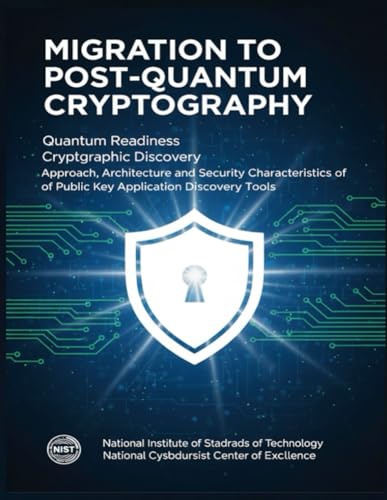
Migration to Post-Quantum Cryptography: Cryptographic Discovery – Approach, Architecture, and Security Characteristics of Public Key Application Discovery Tools
As an affiliate, we earn on qualifying purchases.
As an affiliate, we earn on qualifying purchases.
Conclusion
You’ve seen how cryptographic algorithms craft a clever cloak of security, from the crystalline confidence of Crystals-Kyber to the formidable finesse of Falcon. By mastering these modern marvels, you empower your encryption essentials, ensuring your data remains protected and private. Immerse yourself in this dynamic domain, driven by dedication and daring innovations. Remember, in the world of cryptography, continuous curiosity and clever coding keep your information safe, secure, and strongly sealed.

Lattice-Based Public-Key Cryptography in Hardware (Computer Architecture and Design Methodologies)
As an affiliate, we earn on qualifying purchases.
As an affiliate, we earn on qualifying purchases.
![Free Fling File Transfer Software for Windows [PC Download]](https://m.media-amazon.com/images/I/41Vq6ZqHfjL._SL500_.jpg)
Free Fling File Transfer Software for Windows [PC Download]
Intuitive interface of a conventional FTP client
As an affiliate, we earn on qualifying purchases.
As an affiliate, we earn on qualifying purchases.