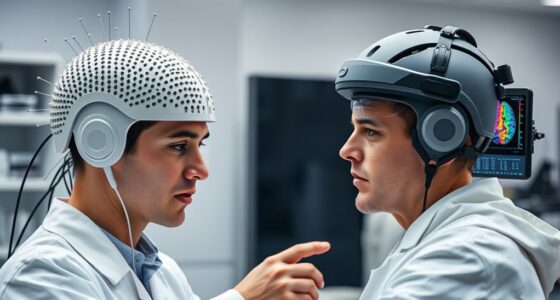

To boost your cognitive health, engage in neuroscience-based exercises like learning new skills, challenging your brain with complex tasks, or picking up a new language or instrument. Incorporate regular physical activity to increase blood flow and release growth factors that support neuron growth. Practice mindfulness to reduce stress and enhance brain rewiring. Combining these methods creates a powerful way to strengthen your neural networks and promote lifelong mental resilience—keep exploring to discover more effective strategies.
Key Takeaways
- Engaging in novel, challenging activities like learning a new language or instrument stimulates neural networks and promotes neurogenesis.
- Regular physical exercise, especially aerobic activities, increases blood flow and releases neurotrophic factors supporting brain growth.
- Mindfulness and meditation reduce stress, creating an optimal environment for neuroplasticity and cognitive resilience.
- Combining cognitive, physical, and mindfulness exercises enhances overall brain adaptability and mental health.
- Consistent mental challenges and lifelong learning foster sustained neurogenesis and help prevent cognitive decline.

Neuroscience-based exercises are designed to harness the brain’s natural plasticity to improve cognitive function, memory, and mental health. Your brain remains adaptable throughout life, capable of forming new connections and rewiring existing ones. When you engage in specific exercises, you stimulate this brain plasticity, enabling you to enhance learning, problem-solving, and emotional regulation. These exercises often incorporate neurogenesis techniques, which focus on promoting the growth of new neurons, especially in areas like the hippocampus responsible for memory and learning. By intentionally challenging your brain with novel and complex tasks, you activate pathways that support neurogenesis, strengthening your mental resilience over time.
Engage in complex, novel tasks to stimulate neurogenesis and strengthen your brain’s resilience over time.
One effective way to tap into brain plasticity is by practicing activities that push you beyond your usual routine. For example, learning a new language or instrument not only stimulates your existing neural networks but also encourages neurogenesis by creating a rich environment for new neuron growth. When you consistently challenge yourself with these activities, your brain adapts, making connections faster and more efficient. This process, driven by neurogenesis techniques, helps combat cognitive decline and enhances your ability to retain information. The key is to focus on tasks that require active engagement, problem-solving, and creativity, as these are most effective at promoting brain rewiring and growth.
Furthermore, physical exercise plays a crucial role in supporting neuroplasticity and neurogenesis. Aerobic activities like running, swimming, or cycling increase blood flow to the brain, delivering oxygen and nutrients that facilitate neuron growth and repair. Regular exercise also releases neurotrophic factors—proteins that encourage neuron development and connectivity. As you incorporate these exercises into your routine, you’re not only improving your physical health but actively fostering an environment where your brain can adapt and thrive. Combining physical activity with cognitive challenges amplifies these benefits, creating a powerful synergy that enhances overall mental health.
In addition to physical and mental challenges, mindfulness practices such as meditation can influence neuroplasticity. These techniques help reduce stress, which is known to hinder neurogenesis, and promote a calmer state conducive to brain growth. When you dedicate time to mindfulness, you’re supporting the brain’s ability to rewire itself positively, making it more resilient to age-related decline and mental health issues. Overall, by consistently engaging in neuroscience-based exercises that target brain plasticity and neurogenesis techniques, you actively shape your cognitive landscape, opening up new pathways for learning, memory, and emotional well-being.
Frequently Asked Questions
Can These Exercises Reverse Existing Cognitive Decline?
These exercises can’t fully reverse existing cognitive decline, but they can considerably slow it down. By stimulating brain plasticity and promoting neurogenesis, you encourage your brain to repair and form new connections. Consistently engaging in these activities boosts your cognitive reserve, helping you maintain sharper thinking and memory. While they may not completely reverse decline, they empower you to improve your brain’s resilience and overall cognitive health over time.
How Long Before I See Noticeable Cognitive Improvements?
Imagine your brain like a vintage radio, waiting to tune into better signals. With consistent exercise, you might notice improvements in memory and focus within a few weeks. Because of brain plasticity, your brain adapts quickly to new challenges, but the key is exercise consistency. Keep at it daily, and you’ll likely see gradual cognitive enhancements, especially after a month or two. Patience and perseverance are your best allies.
Are These Exercises Effective for All Age Groups?
Yes, these exercises are effective across all age groups because they offer age adaptability and promote lifelong benefits. Whether you’re young or elderly, engaging in neuroscience-based activities improves cognitive function, memory, and mental flexibility. You may notice benefits within weeks, but consistency is key. By regularly practicing these exercises, you guarantee ongoing brain health and resilience, making them a valuable tool for lifelong cognitive wellness regardless of your age.
Do They Require Special Equipment or Training?
You might be surprised, but neuroscience‑based exercises like brainwave entrainment and neurofeedback training often don’t need special equipment or extensive training. Usually, all you require is access to a device or program designed for these techniques. While some guidance can boost results, many programs are user-friendly. So, with a bit of initial instruction, you can seamlessly incorporate these exercises into your routine for cognitive health.
Can They Be Combined With Medication for Better Results?
Yes, combining neuroscience-based exercises with medication can enhance your cognitive health through treatment integration. The medication synergy may boost neural plasticity, making exercises more effective. Always consult your healthcare provider before starting this combo to guarantee safe and personalized treatment. Together, they can work in tandem, optimizing your cognitive function and potentially slowing decline more effectively than either approach alone.
Conclusion
Don’t let doubts hold you back—these neuroscience-based exercises are simple, effective ways to boost your cognitive health. Even if you think you’re too busy or not tech-savvy, you can easily integrate them into your daily routine. Just a few minutes each day can sharpen your memory, improve focus, and keep your brain healthy as you age. Start today; your future self will thank you for taking this proactive step toward better mental wellness.