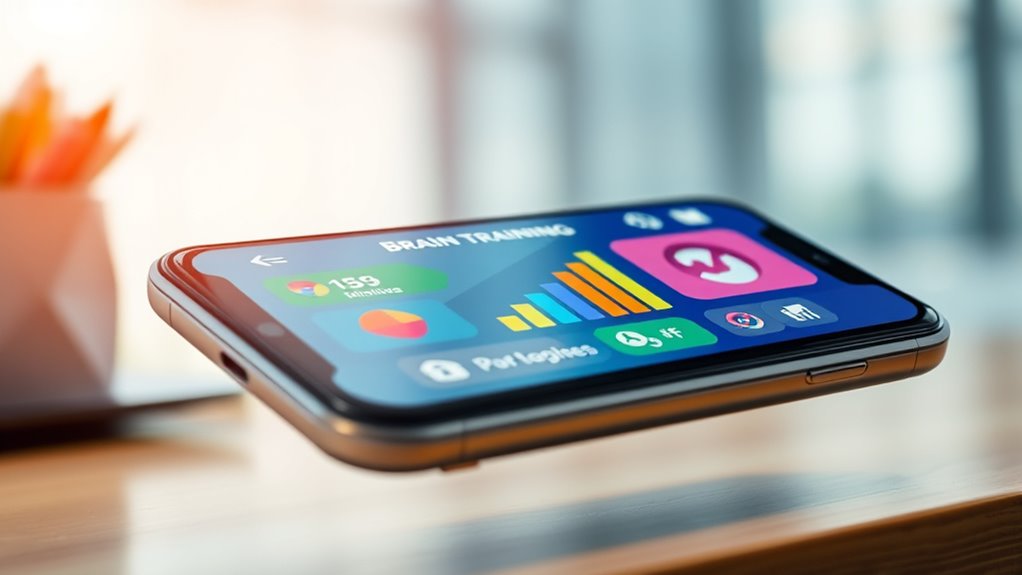

To make brain training apps engaging, developers use gamification strategies like rewarding effort with points, badges, and levels that show your progress. Interactive challenges and personalized feedback keep you motivated and prevent boredom. Features like daily tasks and leaderboards encourage ongoing participation while adapting to your skill level guarantees the right level of challenge. By combining these elements, you stay committed longer—if you want tips on optimizing your experience, there’s more to discover ahead.
Key Takeaways
- Incorporate points, badges, and levels to motivate users and provide tangible progress indicators.
- Use challenges, leaderboards, and personalized feedback to foster engagement and social comparison.
- Balance reward difficulty to maintain motivation without causing frustration or boredom.
- Design tasks that adapt to user skill levels, promoting continuous challenge and mastery.
- Combine rewards with interactive features to create immersive experiences that sustain long-term commitment.
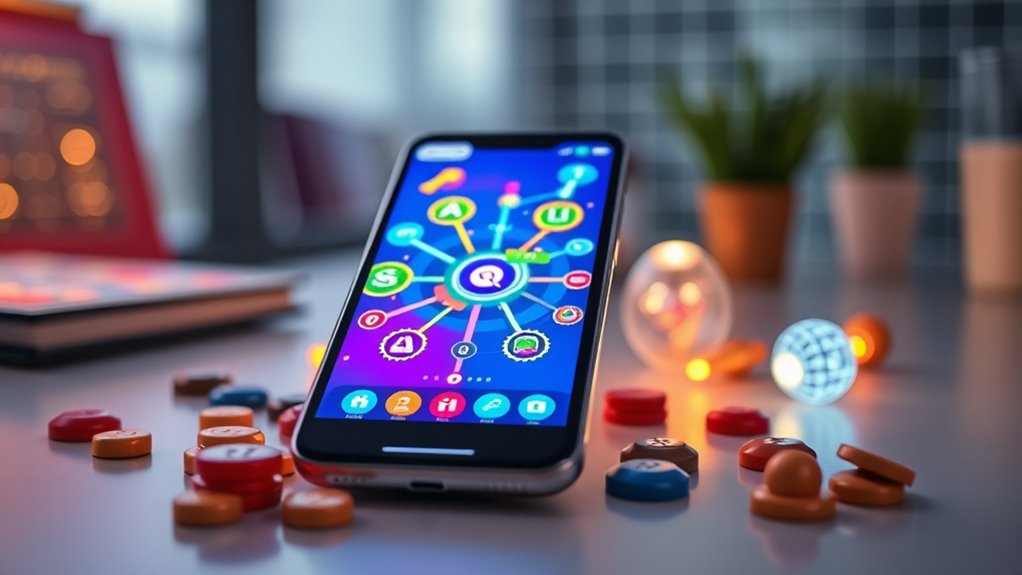
Gamification has become a key element in making brain training apps engaging and effective. When you use these apps, reward systems play a pivotal role in keeping you motivated and focused. By incorporating rewards like points, badges, or levels, the app taps into your natural desire for achievement. These rewards serve as tangible evidence of your progress, giving you a sense of accomplishment with each challenge you complete. As a result, your user engagement deepens because you’re more likely to return and continue training when you’re consistently rewarded for your efforts. The key is to design these reward systems thoughtfully so they’re neither too easy nor too difficult, maintaining a balance that encourages ongoing participation. When you hit milestones or access new features, it triggers positive reinforcement, making the training feel less like a chore and more like a game. This approach leverages the psychology of reward, transforming routine brain exercises into rewarding experiences that you look forward to.
Beyond just offering rewards, effective gamification strategies focus on boosting user engagement through interactive elements. When you’re actively involved in the app’s activities, you’re more likely to stay committed over the long term. Features like daily challenges, competitive leaderboards, or personalized feedback create a dynamic environment that keeps you engaged. These elements tap into your desire for social comparison and personal growth, making the experience more compelling. The app might also adapt to your skill level, guaranteeing that tasks remain challenging yet achievable, which helps prevent boredom and frustration. When challenges are tailored to your abilities, you’re encouraged to push yourself further, fueling a sense of progress and mastery. This ongoing cycle of challenge and achievement keeps you coming back, fostering a habit that enhances your cognitive training and overall engagement.
In essence, successful brain training apps use reward systems and engaging features to create an immersive experience. They recognize that motivation isn’t just about the content but also about how it’s delivered. By rewarding effort and progress and designing interactive experiences that resonate with your intrinsic drives, these apps turn brain training into an enjoyable pursuit. This strategic combination ensures you stay motivated, engaged, and committed to your cognitive development, transforming what could be a tedious task into an exciting, rewarding journey. The result is a more effective training process that keeps you hooked and steadily improves your mental skills over time.
![Brain Age 2: More Training in Minutes A Day [Nintendo DS]](https://m.media-amazon.com/images/I/51xWx1xAurL._SL500_.jpg)
Brain Age 2: More Training in Minutes A Day [Nintendo DS]
As an affiliate, we earn on qualifying purchases.
As an affiliate, we earn on qualifying purchases.
Frequently Asked Questions
How Do Gamification Elements Improve User Engagement Long-Term?
Gamification elements act as motivation boosters, encouraging you to stay committed to your brain training routine. Reward systems, like badges or points, make the experience more enjoyable and give you a sense of achievement. These features keep you engaged long-term by providing continuous incentives, making it easier to form habits and maintain progress. As a result, you’re more likely to stick with your training and see lasting cognitive improvements.
What Are the Challenges in Designing Effective Gamification for Brain Training?
Designing effective gamification in brain training is like charting a maze—motivation barriers can make users lose their way, while cognitive overload risks overwhelming them. You need to balance challenge and fun, ensuring activities are engaging without causing frustration. To succeed, you must craft rewards and levels that motivate without overcomplicating, helping users stay focused and committed, much like a guiding light through a complex but rewarding maze.
How Is User Feedback Integrated Into Gamification Strategy Adjustments?
You gather user feedback through surveys, app reviews, and usage analytics to understand their preferences and challenges. You then analyze this data to identify patterns that inform strategy refinement, making gamification more engaging and effective. By continuously integrating user insights, you can adapt game elements, rewards, and difficulty levels, ensuring the experience stays motivating and aligned with user needs, ultimately enhancing overall engagement and outcomes.
Are There Any Negative Effects of Gamification on Learning Outcomes?
You might think gamification always boosts learning, but it can backfire. Ironically, it sometimes causes motivation decline when rewards lose their appeal, leaving you distracted and less focused. Instead of enhancing cognitive function, it might lead to cognitive distraction, making it harder to retain information. So, while gamification can be fun, overdoing it risks undermining actual learning outcomes, turning motivation into a fleeting illusion.
How Do Demographics Influence Gamification Preferences in Brain Apps?
Your demographic preferences and cultural influences profoundly shape how you respond to gamification in brain apps. Younger users might prefer competitive elements, while older users often favor straightforward, less flashy features. Cultural backgrounds influence what rewards or visuals resonate with you, affecting engagement. By understanding these factors, developers can tailor experiences that better align with your preferences, making the app more effective and enjoyable across diverse user groups.
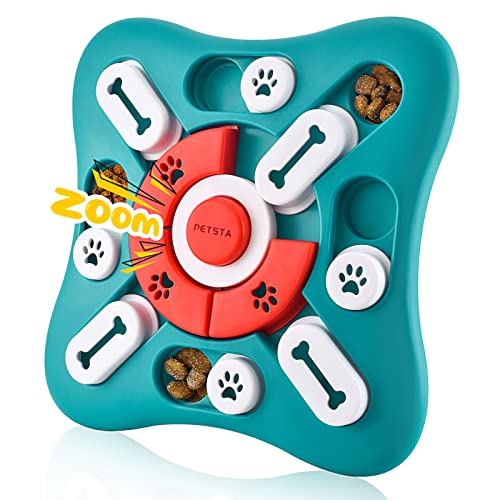
PETSTA Dog Puzzle Toys, Treat Dispensing Dog Enrichment Toys for IQ Training and Brain Stimulation, Interactive Mentally Stimulating Toys as Gifts for Puppies, Cats, Dogs
【PRODUCT SIZE】10 inch*10 inch*1.3 inch.
As an affiliate, we earn on qualifying purchases.
As an affiliate, we earn on qualifying purchases.
Conclusion
So, next time you get hooked on a brain training app, remember—those clever gamification tricks are designed to keep you playing, not necessarily to boost your brainpower. You might think you’re genuinely improving, but really, you’re just chasing the next badge or leaderboard. Ironically, the very strategies meant to enhance your cognition often turn into just another addictive game. So, enjoy the mental workout—just don’t forget, it’s all a cleverly crafted game.

Guide To Food Training The Brain On Photo Imagery: AI at the Table: Revolutionizing Nutrition with Smart Technology
As an affiliate, we earn on qualifying purchases.
As an affiliate, we earn on qualifying purchases.

GoCube Edge, The Connected Electronic Bluetooth Cube – Award-Winning 3×3 Magnetic Speed Cube – App Enabled Interactive Smart Cube – Best Gift for Kids & Adults – STEM Brain Teaser Puzzles – Free App
A NEW GENERATION OF CONNECTED CUBES – This smart, Bluetooth-enabled speed cube 3×3 combines technology with mind puzzles,…
As an affiliate, we earn on qualifying purchases.
As an affiliate, we earn on qualifying purchases.