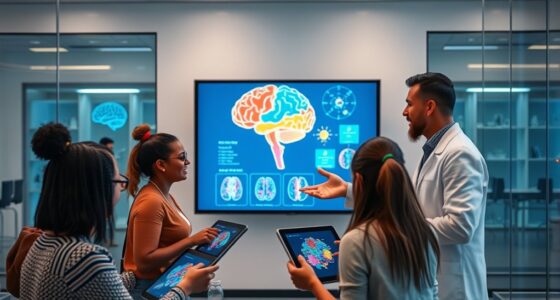

AI personalization enhances brain training apps by creating customized exercises that adapt as you progress, ensuring tasks stay challenging but achievable. It analyzes your responses in real time to modify difficulty levels, preventing boredom or frustration. This tailored approach keeps you motivated and engaged, helping you improve more efficiently. By focusing on your individual strengths and weaknesses, it makes your training sessions more effective and enjoyable—if you stay tuned, you’ll uncover how these features work together to boost your brainpower.
Key Takeaways
- AI personalizes difficulty levels in real-time to keep exercises challenging yet achievable, preventing boredom and frustration.
- It analyzes user responses instantly to adapt tasks, ensuring training remains aligned with individual skill levels.
- AI incorporates user preferences and learning styles, making exercises more engaging and relevant.
- It identifies weaker skills and focuses training on targeted areas for more efficient cognitive development.
- AI creates an immersive experience by continuously tailoring sessions, boosting motivation and accelerating progress.
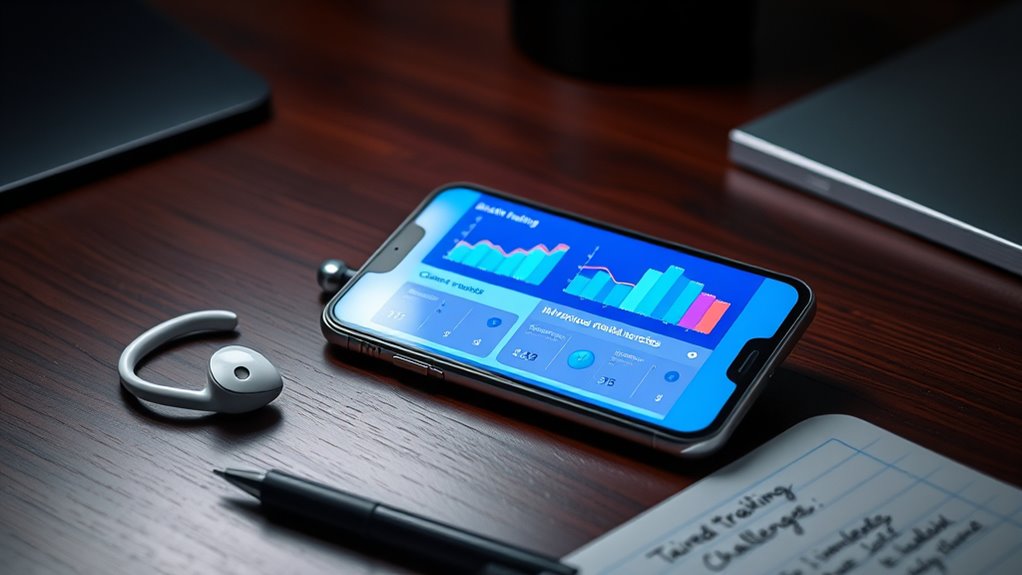
As brain training apps become more popular, AI personalization is transforming how these tools adapt to your unique needs. At the core of this change are adaptive algorithms, which analyze your performance in real-time and adjust the difficulty and types of exercises accordingly. Instead of offering a one-size-fits-all experience, these algorithms learn from your responses, ensuring that each session remains challenging yet achievable. This dynamic adjustment keeps you engaged, preventing boredom from repetitive tasks and frustration from tasks that are too difficult. The result is a more tailored experience that responds to your evolving skill level, making your training sessions more effective and enjoyable.
AI-driven algorithms personalize brain training by adapting exercises in real-time, keeping sessions challenging and engaging.
AI-driven personalization also enhances user engagement by maintaining the right level of challenge throughout your training. When exercises are too easy, you might lose interest; when they’re too hard, you can become discouraged. Adaptive algorithms strike a balance by continuously monitoring your progress and fine-tuning exercises to match your current capabilities. This personalized approach helps sustain motivation, making it easier for you to stick with your training routine over time. It’s this constant responsiveness that creates a sense of accomplishment and progress, reinforcing your commitment to improving your brain skills.
Moreover, AI personalization goes beyond just adjusting difficulty. It considers your preferences, learning style, and cognitive strengths, customizing content to better suit how you learn best. For instance, if you respond well to visual cues, the app might prioritize exercises with images and diagrams. If you excel in pattern recognition, it might introduce more tasks that challenge that skill. This tailored approach boosts your engagement because the training feels more relevant and aligned with your personal learning preferences. As a result, you’re more likely to stay motivated and committed, seeing tangible improvements that keep you invested in the process.
In addition, AI personalization can identify areas where you need the most improvement and focus on those, making your training more efficient. Instead of spending time on exercises you already excel at, the app emphasizes weaker areas, helping you develop a balanced set of cognitive skills. This targeted approach maximizes the benefits of each session, making your training more productive. Overall, adaptive algorithms and personalized content create a more immersive, responsive experience that keeps your interest high and your brain steadily challenged. This continual adaptation not only enhances user engagement but also accelerates your progress, ensuring that your brain training journey is both enjoyable and effective.
Furthermore, understanding cybersecurity vulnerabilities associated with digital tools, including brain training apps, is crucial to protect your personal data and privacy.

Guide To Food Training The Brain On Photo Imagery: AI at the Table: Revolutionizing Nutrition with Smart Technology
As an affiliate, we earn on qualifying purchases.
As an affiliate, we earn on qualifying purchases.
Frequently Asked Questions
How Does AI Personalize Training for Individual Cognitive Goals?
AI personalizes your training by analyzing your neural mapping and conducting cognitive assessments to identify your strengths and weaknesses. It then adjusts exercises in real-time, focusing on areas needing improvement, ensuring your goals are met efficiently. This tailored approach keeps you engaged, challenges you appropriately, and optimizes your brain training progress based on your unique cognitive profile, making your experience more effective and personalized.
Can AI Adapt in Real-Time During Brain Exercises?
Imagine you’re doing a memory game, and suddenly, the app detects you’re struggling. It uses neural adaptation and algorithm responsiveness to instantly adjust difficulty, challenging you just enough to keep your brain engaged. AI can adapt in real-time during exercises by analyzing your performance, dynamically modifying tasks to optimize learning. This ensures your training stays effective, personalized, and responsive, maximizing cognitive benefits with each session.
What Data Is Used to Tailor Brain Training Programs?
You provide data such as your performance metrics, response times, and difficulty preferences, which AI uses to tailor your brain training program. It respects data privacy by anonymizing your info and following strict security protocols. This personalized approach keeps you engaged by adjusting challenges in real-time, ensuring the exercises remain stimulating and effective. As a result, your training stays relevant, motivating you to improve continuously.
How Secure Is Personal Data in Ai-Powered Apps?
Your personal data in AI-powered brain training apps is generally secure, thanks to data encryption that protects your information from unauthorized access. Developers prioritize user consent, ensuring you’re aware of how your data is used and giving you control over it. While no system is completely foolproof, these apps aim to maintain high security standards, so you can confidently enjoy personalized training without worrying about your data’s safety.
Are AI Personalizations Effective for All Age Groups?
Think of AI personalization as a tailored suit—effective when it fits well, but not one-size-fits-all. You’ll find that age-specific strategies address generational differences, making training more relevant. While AI adapts to various ages, its effectiveness varies; younger users thrive with quick, engaging tasks, whereas older adults benefit from slower, memory-focused exercises. So, it’s not universal, but with the right customization, AI can support all age groups.

Sammons Preston Multi-Colored Beaded Pegs, 300 Multi-Colored Pegs, Cognitive Exercise Game for Training Coordination, Perception, and Motor Sensory Control, Ideal for Young Children
Education training game for pediatric and youth to develop motor sensory control, fine motor skills, coordination, and perception
As an affiliate, we earn on qualifying purchases.
As an affiliate, we earn on qualifying purchases.
Conclusion
You’ll be amazed to learn that personalized brain training apps can boost cognitive performance by up to 40%. By harnessing AI, these apps adapt to your unique needs, keeping you motivated and engaged. This tailored approach not only makes training more effective but also helps you see real progress faster. Embracing AI personalization could be the game-changer in your mental fitness journey, making brain training smarter, more fun, and truly customized to you.
brain training app with real-time difficulty adjustment
As an affiliate, we earn on qualifying purchases.
As an affiliate, we earn on qualifying purchases.

How to Build Your Personalized Holistic Digital Health Companion: Using ChatGPT to Manage Symptoms, Emotions, and Life with 24/7 Support (How to use ChatGPT for Health and Life)
As an affiliate, we earn on qualifying purchases.
As an affiliate, we earn on qualifying purchases.