Building a custom AI model gives you full control over its design, training data, and features, allowing you to create tailored solutions that fit your specific needs and guarantee ethical standards. It requires resources, technical expertise, and ongoing monitoring to manage biases and maintain transparency. On the other hand, buying a pre-built model saves time, offers tested performance, and is easier to deploy. To decide what’s best for your goals and resources, explore more detailed insights ahead.
Key Takeaways
- Building offers tailored control over design, data, and ethical standards, ideal for organizations with specific needs and resources.
- Buying provides faster deployment, tested performance, and cost savings, suitable for organizations prioritizing efficiency and simplicity.
- Custom models require ongoing monitoring, ethical management, and technical expertise, whereas pre-built models may lack transparency and full customization.
- The choice depends on organizational priorities: building favors customization and ethics; buying emphasizes speed and cost-effectiveness.
- Both options demand understanding of AI ethics and interpretability to ensure responsible and trustworthy AI deployment.

Custom AI models are transforming how businesses and developers tailor technology to their specific needs. When deciding whether to build or buy a custom AI model, you need to weigh several factors, including your organization’s goals, technical expertise, and resource availability. Building a model from scratch offers the advantage of complete control over its design, training data, and features. This approach allows you to align the AI closely with your unique use case, ensuring that the model addresses your specific challenges and integrates seamlessly into your existing systems. However, it also comes with significant responsibilities, especially around AI ethics and model interpretability. You must guarantee that your model adheres to ethical standards, avoiding biases and unfair outcomes, which requires careful data curation and ongoing monitoring. Additionally, model interpretability becomes critical; understanding how your AI makes decisions is essential for transparency, building trust with users, and complying with regulations. When you develop your own AI, you have the ability to fine-tune these aspects, making sure your model is both ethical and explainable.
On the other hand, buying a pre-built AI model can save you time and resources, especially if your needs align with existing solutions. These models are typically trained on large datasets and tested for performance, reducing your initial development effort. Many providers now offer customizable pre-trained models, allowing you to adapt them to your specific use case without starting from zero. However, you might face limitations in model interpretability, as many off-the-shelf solutions operate as black boxes—making it harder to explain decisions or ensure fairness. If AI ethics are a priority for your organization, you’ll need to verify that the vendor’s model adheres to responsible AI practices and that they provide transparency into how the model operates. Using a pre-built model also means relying on the vendor’s data and design choices, which can impact how well the model aligns with your ethical standards and interpretability requirements.
Ultimately, the decision hinges on your organization’s priorities. If you have the resources, technical expertise, and a need for tailored, transparent, and ethically sound solutions, building your own AI model might be the best route. But if speed, cost-efficiency, and ease of deployment are more critical, buying a ready-made model could serve you better. Either way, understanding AI ethics and model interpretability is crucial to ensure your AI deployment is responsible, trustworthy, and aligned with your organizational values.
AI Unleashed: Transform Your Organization into an INTELLIGENT POWERHOUSE
As an affiliate, we earn on qualifying purchases.
As an affiliate, we earn on qualifying purchases.
Frequently Asked Questions
How Long Does It Take to Develop a Custom AI Model?
It typically takes anywhere from a few weeks to several months to develop a custom AI model, depending on your development timeline and resource allocation. If you have a dedicated team and clear goals, you might see results faster. However, complex models or limited resources can extend the timeline. Planning carefully and allocating the right resources guarantees smoother development, so you can achieve your AI goals efficiently.
What Are the Ongoing Maintenance Costs for Custom AI Models?
They say “an ounce of prevention is worth a pound of cure,” and that’s true for custom AI models. Ongoing maintenance costs include regular updates, data management, and troubleshooting, which can be significant. You’ll face cost management and scalability challenges as your model evolves. Expect to invest in hardware, cloud resources, and skilled personnel, making continuous oversight essential to keep your AI efficient and effective over time.
Can Existing AI Models Be Easily Adapted to New Tasks?
Yes, existing AI models can be adapted to new tasks easily through transfer learning and model retraining. You can leverage pre-trained models and fine-tune them with your specific data, saving time and resources. This approach allows you to quickly expand your AI capabilities without building from scratch. Just make certain you have quality data for retraining, and you’ll effectively tailor the model to your new requirements.
How Do Data Privacy Concerns Impact Custom AI Development?
Data security and privacy regulations substantially impact your custom AI development. You need to guarantee sensitive data is protected through encryption and access controls, complying with laws like GDPR or CCPA. These regulations may restrict data sharing or require anonymization, which can complicate your AI project. By prioritizing privacy and security, you build trust with users and avoid legal issues, making your AI solutions both effective and compliant.
What Expertise Is Needed to Build a Custom AI Model Internally?
Did you know that 80% of successful AI projects rely heavily on skilled AI talent? To build a custom AI model internally, you need expertise in machine learning, data science, and software engineering. You also require robust data infrastructure to handle large datasets efficiently. Without these, your project risks failure. So, make certain you have the right talent and data setup, or consider partnering with specialists to bridge gaps.
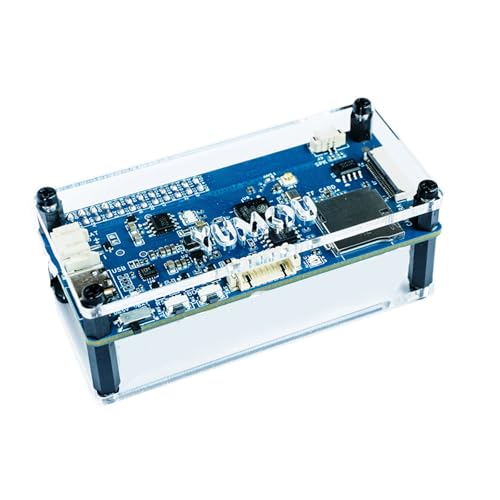
youyeetoo ESP32-S3 AI Large Model(LLM) Development Kit ChatGPT-4o/Llama 3 Voice Assistant Chatbot, Multi-Model Support, ESP32-AIVoice-Z01, TTS
[Powerful ESP32-S3 dual-core controller] Equipped with a 240MHz processor, 8M PSRAM, and 16MB external flash, designed for advanced…
As an affiliate, we earn on qualifying purchases.
As an affiliate, we earn on qualifying purchases.
Conclusion
Ultimately, whether you choose to build or buy your custom AI model, it’s about finding the right fit for your unique needs. Building offers tailored precision, while buying provides quick access and convenience. You might find one approach more comfortable than the other, or even a blend that works best. Whatever you decide, embracing the options available means you’re making a thoughtful step forward—trusting that your choice will subtly support your path to success.

AI and Machine Learning for Coders: A Programmer's Guide to Artificial Intelligence
As an affiliate, we earn on qualifying purchases.
As an affiliate, we earn on qualifying purchases.

Hands-On Generative AI with Transformers and Diffusion Models
As an affiliate, we earn on qualifying purchases.
As an affiliate, we earn on qualifying purchases.