
AI is opening exciting new possibilities in art and creativity by acting as a collaborative tool and source of inspiration. It helps you experiment with styles, generate variations, and push boundaries in your work. While it challenges traditional ideas of originality and raises ethical questions, using AI responsibly can expand your creative horizons. To discover how AI is transforming artistic expression—and how you can harness its potential—continue exploring these innovations.
Key Takeaways
- AI acts as a collaborative partner, enabling rapid experimentation and expanding creative horizons in art.
- Ethical considerations include authorship, ownership, and addressing biases in AI-generated works.
- AI challenges traditional notions of originality, prompting re-evaluation of authenticity and emotional depth.
- Responsible AI use involves transparency, fairness, and active participation in shaping ethical creative practices.
- AI tools inspire new artistic ideas by integrating technology, similar to mechanical components like gears and chains.
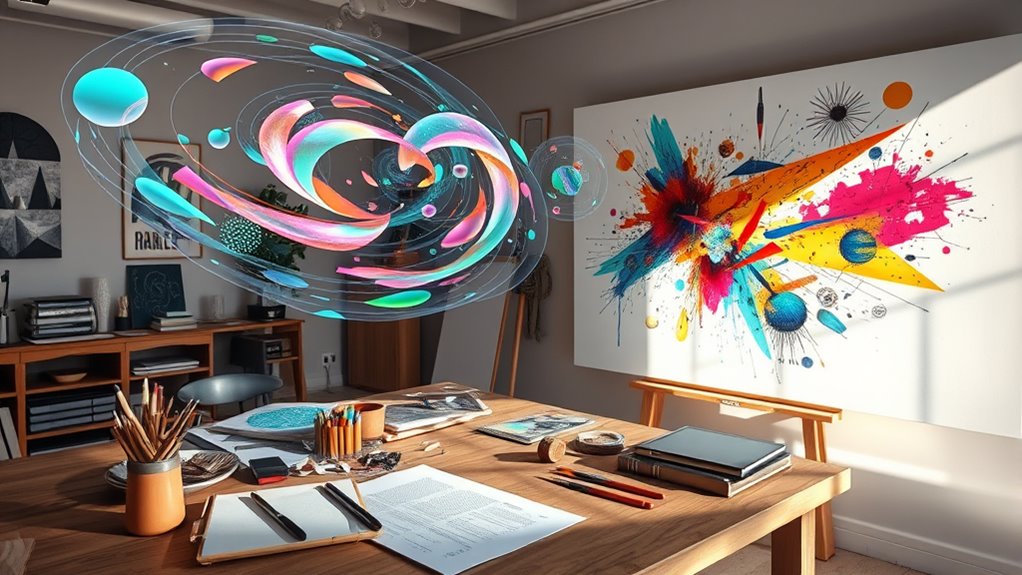
Have you ever wondered how artificial intelligence is transforming the world of art and creativity? It’s revolutionizing the way artists create, collaborate, and push boundaries. One of the most exciting aspects is machine collaboration, where humans and AI work together to produce innovative works that neither could achieve alone. Instead of replacing artists, AI tools serve as partners that inspire new ideas, generate variations, and even assist in technical tasks. Imagine feeding an AI system a rough sketch or a concept, then watching it suggest different color schemes, compositions, or styles. This synergy opens up endless possibilities, allowing you to experiment rapidly and explore creative avenues you might not have considered. But with these advances come important ethical considerations. As AI becomes more involved in art creation, questions arise about authorship, originality, and the value of human input. Who owns a piece generated partly or entirely by an AI? Is it still your work if an algorithm contributed significantly? These are complex issues that artists, technologists, and audiences are grappling with. It’s crucial to establish transparent practices and guidelines that respect intellectual property while fostering innovation. Furthermore, ethical considerations extend beyond ownership. Bias in training data can influence AI-generated art, potentially perpetuating stereotypes or marginalizing certain voices. As a creator, you need to be conscious of these biases and work towards developing responsible AI systems. Another concern is authenticity. When AI can produce artwork that closely mimics human styles, it challenges traditional ideas about creativity and originality. Some may argue that art driven by algorithms lacks the emotional depth or personal touch that human artists bring. Others see it as a new form of expression that expands what’s possible. Ultimately, embracing machine collaboration means balancing technological advances with ethical integrity. You should actively participate in conversations about how AI is used in art, advocating for fair practices and accountability. By doing so, you help shape a future where AI enhances human creativity without compromising ethics. As you explore these new frontiers, remember that AI is a tool—one that can amplify your artistic vision when wielded thoughtfully. The key is to stay informed about the ethical implications and to use AI in ways that respect both the technology and the human spirit behind every creation. This approach ensures that as AI continues to evolve in art and creativity, it does so as a force for positive, responsible innovation that benefits creators and audiences alike. Recognizing the role of drivetrain components such as gears and chains can inspire new ways to think about the mechanics behind creative processes and technology integration.
Artifi.AI Art Generator – Anime Free AI Image Generator – Photo Editor – Picture Background Remover
Artifi.AI Art Generator Key Features
As an affiliate, we earn on qualifying purchases.
As an affiliate, we earn on qualifying purchases.
Frequently Asked Questions
How Does AI Influence Human Artistic Expression?
AI influences your artistic expression by enhancing your creativity through machine learning. It offers new tools and ideas, allowing you to experiment and push boundaries. You can collaborate creatively with AI, merging human intuition with machine-generated insights. This partnership opens fresh perspectives, inspiring you to craft innovative artworks. Ultimately, AI becomes a catalyst for your artistic growth, expanding your possibilities and transforming how you approach and realize your creative visions.
Can AI Create Truly Original Artwork?
Yes, AI can create truly original artwork by combining algorithmic originality with your creative collaboration. While AI generates unique pieces through complex algorithms, your input shapes the final outcome, making the process a partnership. This synergy lets you explore new styles and ideas you might not have considered alone, pushing the boundaries of originality. Ultimately, AI becomes a tool that enhances your creative expression, producing art that feels fresh and innovative.
What Ethical Concerns Arise With Ai-Generated Art?
You face fierce ethical questions with AI art, like copyright dilemmas and authenticity concerns. Can you trust that the work is truly yours or stolen? Creative creations challenge copyright laws, stirring debates about ownership. Authenticity feels fragile when algorithms generate art, raising questions about human touch and originality. As you navigate this new artistic landscape, you must consider these ethical issues, ensuring respect for creators and clarity in the creative process.
How Accessible Is AI Art Technology for Beginners?
AI art technology is becoming quite accessible for beginners thanks to user-friendly interfaces that simplify complex tools. You can start creating without advanced skills, and many platforms offer affordable options, reducing affordability barriers. While some high-end tools may still be costly, numerous free or low-cost options exist, making it easier for you to explore AI-generated art and unleash your creativity without needing extensive technical knowledge.
Will AI Replace Traditional Artists in the Future?
No, AI won’t replace traditional artists. Instead, machine learning fosters creative collaboration, enhancing your skills and opening new possibilities. You can use AI tools to experiment and push boundaries, but your unique vision and human touch remain irreplaceable. AI acts as a partner, not a competitor, so you can leverage it to amplify your creativity rather than fear it will take over your artistic role.

Smart Canvas: AI Tools for Digital Art Creation (AI in Everything Everywhere)
As an affiliate, we earn on qualifying purchases.
As an affiliate, we earn on qualifying purchases.
Conclusion
As you explore AI in art and creativity, you’re opening the door to a world where imagination has no limits. Think of AI as a brush that paints new horizons, blending technology with your unique vision. Embrace these tools, and you’ll find yourself surfing a wave of endless possibilities, transforming ideas into stunning realities. The future of art is a canvas waiting for you to add your splash of innovation.

Digital Painting with Stable Diffusion: AI-Assisted Art Generation For Beginners (Beginner Guides to AI Art Generation for Artists)
As an affiliate, we earn on qualifying purchases.
As an affiliate, we earn on qualifying purchases.

Creating with AI: An Artist’s Journey of Collaboration and Discovery
As an affiliate, we earn on qualifying purchases.
As an affiliate, we earn on qualifying purchases.