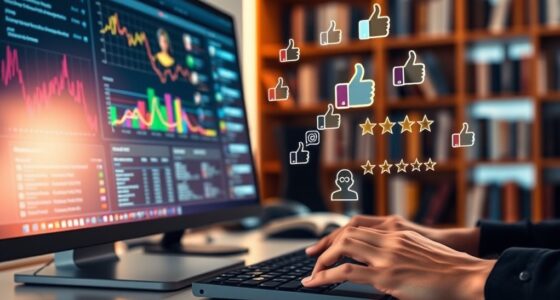

AI transforms your marketing strategy by enabling you to deliver personalized experiences and boost customer engagement. With chatbots handling inquiries instantly, predictive analytics forecasting customer behavior, and dynamic content tailored to individual preferences, you can create seamless interactions that foster loyalty. Automation streamlines routine tasks, freeing your team to focus on building relationships. As AI continues to evolve, it offers even more powerful tools to help you stand out—discover how to leverage these innovations for success.
Key Takeaways
- AI-powered chatbots enable real-time, personalized customer interactions, enhancing engagement and satisfaction.
- Predictive analytics forecast customer behavior, allowing tailored marketing strategies and offers.
- Dynamic content personalization adapts website and email experiences based on user browsing and activity data.
- Automation streamlines routine marketing tasks, freeing resources for targeted, customer-centric campaigns.
- Continuous AI evolution fosters hyper-personalized experiences, boosting loyalty and competitive advantage.

Have you ever wondered how artificial intelligence is transforming marketing strategies today? One of the most impactful ways AI is making a difference is through personalization and customer engagement. With AI-powered tools like chatbot automation, you can create more dynamic and responsive interactions with your audience. Chatbots can handle customer inquiries instantly, providing personalized responses that make users feel valued and understood. Whether it’s answering questions about products, guiding users through purchasing decisions, or offering tailored recommendations, chatbot automation ensures your customers receive timely, relevant assistance around the clock. This not only improves user experience but also helps you gather valuable data on customer preferences and behavior.
AI-driven chatbot automation enhances customer interactions with instant, personalized responses and valuable data collection.
Predictive analytics plays an essential role in refining your marketing efforts by analyzing vast amounts of data to forecast future customer actions. Instead of relying solely on historical data, predictive analytics enables you to anticipate what your customers want before they even ask for it. For instance, it can identify patterns indicating when a customer is likely to make a purchase or churn, allowing you to proactively target them with personalized offers or content. This proactive approach keeps your audience engaged and increases the chances of conversions. By leveraging predictive insights, you can tailor your marketing messages to suit individual needs, making your campaigns more relevant and effective.
AI helps you deliver personalized experiences at every touchpoint. For example, when a customer visits your website, AI algorithms analyze their browsing behavior in real-time. Based on this, your site can dynamically display products, content, or promotions that match their interests. This level of personalization encourages longer engagement, reduces bounce rates, and boosts the likelihood of making a sale. Additionally, AI-driven email marketing campaigns can adapt in real-time, sending personalized messages based on user activity, preferences, and predicted future actions. This continuous personalization fosters stronger customer relationships, making them feel seen and appreciated.
Furthermore, AI tools allow you to automate routine marketing tasks, freeing up your time to focus on strategic initiatives. Chatbot automation handles customer interactions seamlessly, while predictive analytics guides your decision-making process. Together, these technologies ensure your marketing efforts are more targeted, efficient, and customer-centric. As AI continues to evolve, its ability to provide hyper-personalized experiences will only improve, giving you a competitive edge in engaging your audience and fostering loyalty. Incorporating advanced automation techniques can enhance your efficiency and effectiveness in reaching your marketing goals. Embracing these innovations means you can deliver smarter, more meaningful interactions that turn prospects into loyal customers and advocates for your brand.

Beautyrest baselogic Level 1 Adjustable Base Bed Frame - Split Cal King - Head Adjustability, Wired Remote, Removable Legs for Zero-Clearance Design, and Foldable for Convenient Mobility and Storage
*MUST ORDER TWO UNITS FOR SPLIT CAL KING - Price shown is for one unit of the split...
As an affiliate, we earn on qualifying purchases.
Frequently Asked Questions
How Does AI Handle Privacy Concerns in Marketing Personalization?
AI handles privacy concerns in marketing personalization by prioritizing data privacy and implementing robust consent management. You control what data is collected and how it’s used, ensuring customers give explicit consent. AI systems are designed to anonymize data and follow regulations like GDPR, helping you respect user privacy while still delivering personalized experiences. This proactive approach builds trust and keeps your marketing practices transparent and compliant.
What Are the Costs Involved in Implementing AI Marketing Tools?
While it might seem like a hefty investment, implementing AI marketing tools involves manageable implementation costs and technology expenses. You’ll need to budget for software licenses, infrastructure upgrades, and ongoing maintenance. Training your team and integrating new systems can also add to expenses. However, these investments often pay off through improved customer engagement, personalized experiences, and increased efficiency, making the initial costs a worthwhile step toward future growth.
Can Small Businesses Effectively Utilize AI for Customer Engagement?
Yes, small businesses can effectively utilize AI for customer engagement by focusing on AI integration that fits their budget and needs. You can leverage AI tools to gather customer insights, personalize interactions, and improve service. Start small with affordable options, then expand as you see results. This approach helps you build stronger relationships, increase loyalty, and compete more effectively in the market.
How Does AI Adapt to Changing Consumer Preferences Over Time?
Think of AI as a chameleon blending with its environment. It adapts through behavioral analysis and predictive analytics, learning from every customer interaction. As preferences shift, AI updates its understanding, fine-tuning recommendations and messaging. This continuous learning process guarantees your marketing remains relevant, engaging customers like a skilled navigator adjusting course with the changing winds. With AI, you keep pace, turning evolving trends into opportunities for deeper connection.
What Are the Ethical Considerations of Ai-Driven Marketing Strategies?
You should consider ethical issues like data bias and algorithm transparency in AI-driven marketing. Data bias can lead to unfair targeting or exclusion, harming trust. Ensuring transparency helps customers understand how their data is used and prevents manipulation. By addressing these concerns, you promote responsible marketing practices, build trust, and comply with regulations, ultimately fostering a positive relationship with your audience while leveraging AI’s power ethically.

ESHINE Adjustable Bed Frame Smart Bed Split Top King - Electric Upholstered Bed Base with Massage, Wireless Remote, Ergonomic Foot&Head Incline, Zero Gravity, Dual USB Ports, Under Bed Light, Grey
【Independent Dual Adjustment & Multi-Preset Modes】Each side of the bed adjusts independently for head/foot elevation, ideal for couples...
As an affiliate, we earn on qualifying purchases.
Conclusion
You might think AI is just a tool, but it’s actually transforming marketing into a personalized experience that boosts customer engagement. Some say AI can predict your needs before you even realize them, creating a seamless connection. While skepticism exists, the truth is AI’s ability to analyze data fast and accurately makes it a game-changer. Embrace this technology now, and you’ll stay ahead in the ever-evolving world of customer-centric marketing.

ESHINE Adjustable Bed Frame + 14 inch Hybrid Matt, Lumbar Support, Head-Pillow-Tillt, Smart App Control, Wireless Remote, Dual USB Port, 6000 Series, Split King
Multi-Functional Design - Enjoy lumbar support to relieve back pressure, soft under-bed lighting, dual USB ports for daily...
As an affiliate, we earn on qualifying purchases.

Tami Tami T600 Adjustable Bed Frame Split King Size with Remote & Massage - Syncable Electric Beds Bases, Zero Gravity, Dual Side USB, Nightlight, Quiet Motor, 5 Min Easy Assembly
UNMATCHED COMFORT: Head and foot position of this adjustable bed frame can be controlled separately or simultaneously, explore...
As an affiliate, we earn on qualifying purchases.