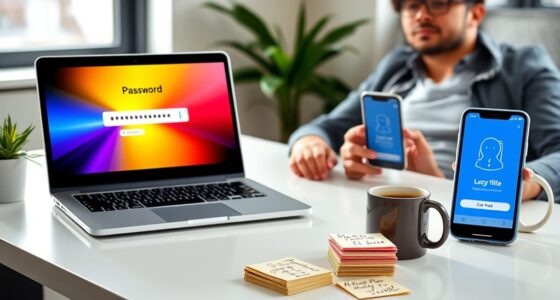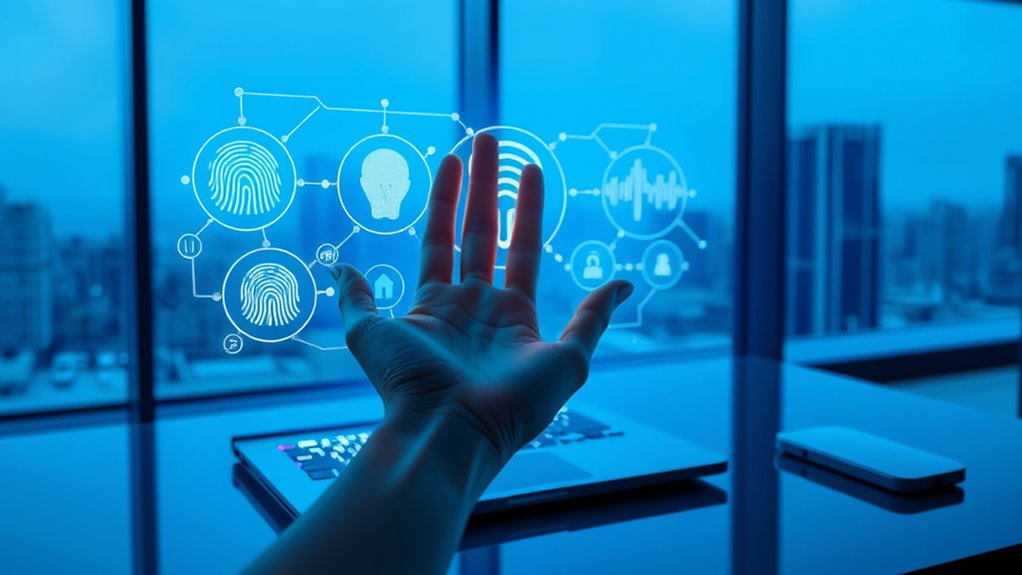

By 2025, passwordless authentication will become the norm, with biometric methods like fingerprint scans, facial recognition, and voice authentication offering faster and more secure access. Decentralized identities will give you greater control over your personal data, reducing reliance on passwords and centralized servers. These new methods will be contactless, intuitive, and harder to compromise. If you stay informed, you’ll discover how these trends shape the future of secure digital interactions.
Listen free for 30 days with Audible
Thousands of audiobooks and originals — cancel anytime.
As an affiliate, we earn on qualifying purchases.
Key Takeaways
- Increased adoption of biometric authentication methods like facial and fingerprint recognition for seamless access.
- Integration of decentralized identity systems to enhance user privacy and control over personal data.
- Shift towards contactless, device-based authentication that reduces reliance on passwords and improves security.
- Use of cryptographic proofs and local biometric verification to minimize data transmission risks.
- Overall trend toward intuitive, secure, and user-centric authentication solutions by 2025.
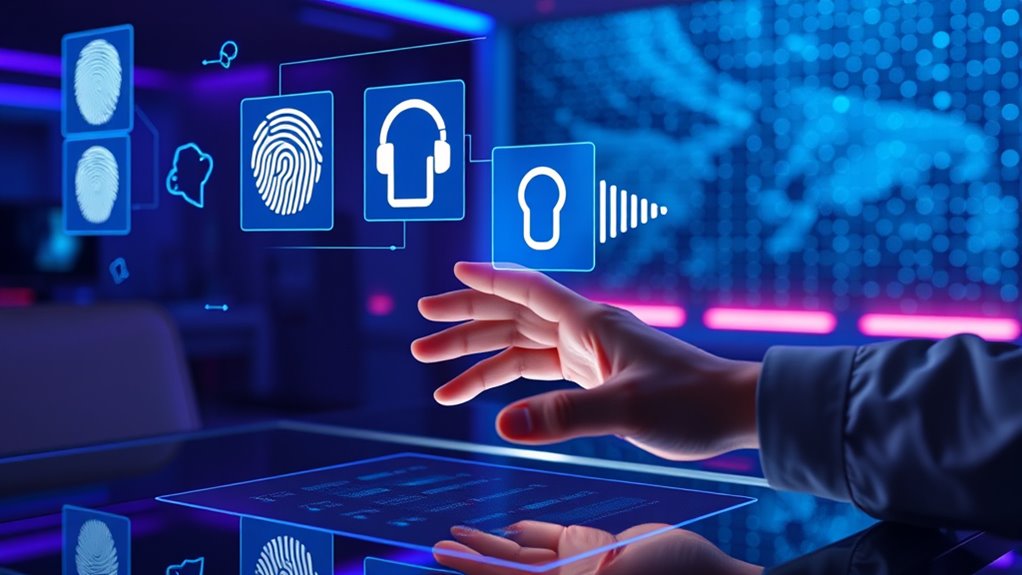
As organizations increasingly prioritize security and user convenience, passwordless authentication is set to revolutionize how we access digital services by 2025. The focus is shifting from traditional passwords to more secure, seamless methods like biometric integration and decentralized identity. With biometric options such as fingerprint scanners, facial recognition, and voice authentication becoming more sophisticated, you’ll find it easier—and safer—to verify your identity without juggling complex passwords. These biometric systems offer quick access, reducing the risk of password theft or reuse, which are common vulnerabilities today. As these technologies mature, they’ll become a standard part of your digital interactions, whether you’re logging into work platforms, banking apps, or social networks.
Decentralized identity plays a significant role in this evolving landscape. Instead of relying on centralized servers that store your personal data, decentralized identity allows you to control your credentials directly. You store your identity data securely on your device or within a blockchain-based system, giving you more privacy and reducing the chances of large-scale data breaches. This approach empowers you to verify your identity across multiple services without repeatedly sharing sensitive information, streamlining your login process while enhancing security. By 2025, expect to see widespread adoption of decentralized identity solutions that make authentication more user-centric and less dependent on traditional password databases.
Decentralized identity gives you control over your credentials, boosting privacy and security by eliminating reliance on centralized data storage.
Integrating biometric data with decentralized identity frameworks creates a robust, user-friendly authentication ecosystem. For instance, you might authenticate a transaction or access a service simply by confirming your fingerprint stored securely on your device, without transmitting the raw biometric data to servers. Instead, cryptographic techniques verify your identity locally and produce a proof that’s accepted by the service provider. This combination not only simplifies the login process but also minimizes the attack surface for cybercriminals. The end result is a more resilient system that balances ease of use with advanced security measures.
As these trends unfold, you’ll notice a shift toward authentication methods that are both intuitive and difficult for hackers to compromise. Biometric integration ensures quick, contactless access, while decentralized identity grants you sovereignty over your personal information. Together, these innovations will make digital interactions more secure and personal, reducing reliance on passwords that are often weak or reused. By 2025, passwordless authentication won’t just be a convenience; it’ll be the standard way you securely prove who you are in a digital world that demands both simplicity and robustness.
As an affiliate, we earn on qualifying purchases.
Frequently Asked Questions
How Will Passwordless Authentication Impact Small Businesses?
Passwordless authentication will markedly benefit your small business by simplifying login processes and enhancing security. As you adopt these methods, you’ll likely see increased user satisfaction and reduced password-related support costs. While there are initial cost implications for implementation, the long-term savings and improved security outweigh these expenses. Embracing this trend helps you stay competitive and build customer trust without the hassle of managing passwords.
What Are the Main Security Risks of Biometric Authentication?
Imagine your fingerprint as a key in a safe, but if hackers find a way to clone your fingerprint, your security’s compromised. Biometric vulnerabilities include potential data breach risks if biometric data gets stolen or spoofed. Unlike passwords, you can’t change your fingerprint, making you vulnerable if it’s compromised. Always stay aware of these risks, and use multi-factor authentication to add extra layers of security.
How Does Passwordless Tech Integrate With Existing Systems?
You can seamlessly integrate passwordless tech into existing systems by focusing on multi-factor integration and legacy system compatibility. Many solutions offer APIs and adapters that connect with your current infrastructure, allowing smooth implementation without overhauling everything. This approach enhances security and user experience while keeping your legacy systems functional. By carefully planning the integration process, you guarantee a secure, efficient shift to modern authentication methods.
Will Passwordless Solutions Eliminate All Forms of Cyberattacks?
Passwordless solutions won’t eliminate all cyberattacks, but they substantially reduce risks like phishing attacks and password reuse. You won’t have to worry about stolen passwords, but hackers may still target other vulnerabilities. They might focus on social engineering or exploiting device security. Staying vigilant and combining passwordless tech with good security practices keeps you better protected, even if no system is entirely invulnerable.
What Are User Privacy Concerns With Biometric Data?
You should be aware that biometric data raises privacy concerns because it’s unique to you and can’t be changed if compromised. Ensuring data encryption is essential to protect this sensitive information, and obtaining clear user consent helps maintain trust. Without proper safeguards, your biometric details could be misused or leaked, so organizations must prioritize privacy measures to keep your data secure and respect your rights.
facial recognition security device
As an affiliate, we earn on qualifying purchases.
As an affiliate, we earn on qualifying purchases.
Conclusion
As we look toward 2025, passwordless authentication is set to redefine security—like a fortress with invisible walls. Embrace these trends now, or risk standing at the gates of vulnerability. The future whispers of seamless, secure access; will you listen and adapt, or linger in the shadows of outdated methods? Stay ahead, because in the domain of digital security, the only constant is change. Your proactive shift today shapes your protection tomorrow.
As an affiliate, we earn on qualifying purchases.
As an affiliate, we earn on qualifying purchases.
Flea & tick season Picks
flea and tick prevention
As an affiliate, we earn on qualifying purchases.