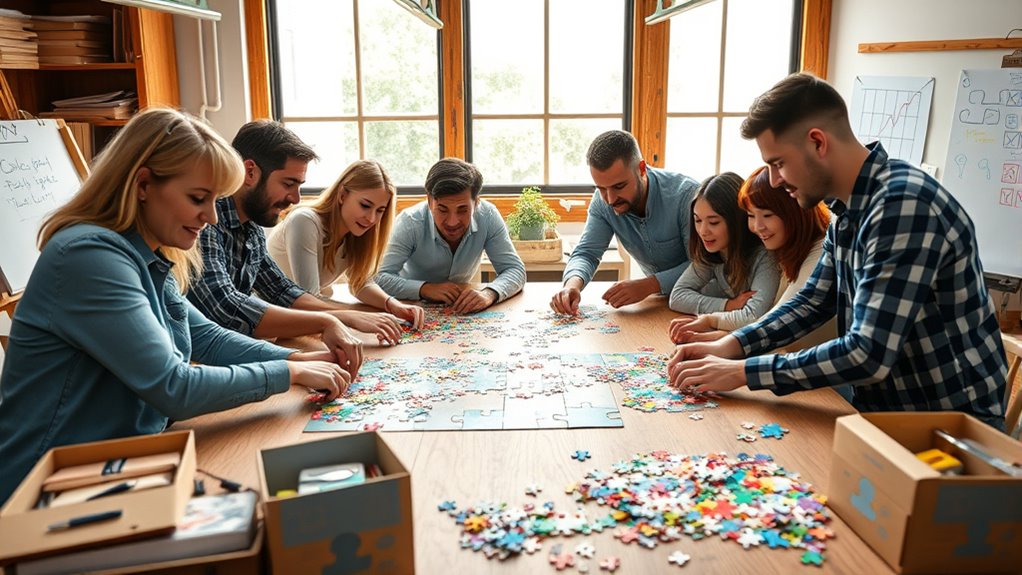

Using puzzles in team-building workshops invites active collaboration, problem-solving, and trust building. You can choose activities like jigsaw puzzles or complex riddles that require everyone’s input and perspective. These tasks encourage open communication, foster stronger relationships, and showcase how teamwork speeds up solutions. Plus, they highlight individual strengths in a supportive environment. If you keep exploring, you’ll discover more ways to make your team work better together through engaging puzzle activities.
Key Takeaways
- Use collaborative puzzles like jigsaw or complex riddles to foster teamwork and creative problem-solving.
- Set clear objectives and encourage open communication to enhance trust and idea sharing during activities.
- Incorporate reflection sessions post-activity to reinforce lessons on collaboration, patience, and mutual support.
- Design activities that promote inclusive participation, valuing diverse perspectives for stronger team cohesion.
- Combine puzzle challenges with debriefing to strengthen relationships and improve understanding of team dynamics.

Puzzles are an engaging way to boost teamwork and problem-solving skills within any group. When you incorporate puzzles into your team activities, you create opportunities for participants to practice collaborative problem solving. These challenges require everyone to contribute their ideas, listen actively, and work towards a common goal. As team members navigate through the puzzle, they learn to communicate effectively, share perspectives, and build on each other’s strengths. This process naturally fosters trust among participants, especially when the puzzle demands collective effort and patience. Trust building exercises embedded within puzzle activities help break down barriers, encouraging openness and a sense of camaraderie. When your team faces a puzzle together, they see firsthand that each person’s input is valuable, which reinforces mutual reliance and confidence. Consent is often necessary to ensure participants are comfortable with the level of challenge involved in puzzle activities. To maximize the impact, choose puzzles that encourage collaboration rather than competition. For example, jigsaw puzzles or complex riddles that require multiple perspectives push team members to brainstorm and strategize collectively. As the group works through the puzzle, they experience firsthand how collaborative problem solving leads to faster, more creative solutions. This not only improves their ability to work together but also boosts morale, as everyone sees their contributions making a difference. Trust building exercises are naturally woven into these activities because they depend on honest communication, patience, and shared responsibility. When a team member hesitates or struggles, others step in to support, reinforcing a sense of trust and safety within the group. Creating an environment where everyone feels comfortable sharing ideas is critical to effective puzzle-based team-building. Set clear goals at the outset and encourage open dialogue. During the activity, remind your team that every suggestion counts, fostering an inclusive atmosphere that values diverse perspectives. As they collaborate, they’ll develop stronger relationships and a better understanding of each other’s working styles. These experiences build trust that can translate into smoother collaborations in daily work tasks. Furthermore, debriefing after the activity provides an opportunity for reflection, allowing team members to discuss what strategies worked, what challenges they faced, and how they supported each other. This reflection solidifies the lessons learned and emphasizes the importance of teamwork and trust, making the activity more impactful.

Trainers Warehouse PuzzleBlind Teambuilding Game, 12 Pieces
Blindfolded Puzzle Challenge: PuzzleBlind challenges blindfolded players to assemble a gigantic, humongous, super-sized puzzle
As an affiliate, we earn on qualifying purchases.
As an affiliate, we earn on qualifying purchases.
Frequently Asked Questions
How Do I Choose the Right Puzzle for My Team?
To choose the right puzzle for your team, consider their skills and interests, aiming for collaborative problem solving and creativity enhancement. Pick puzzles that challenge them without causing frustration, such as strategy or logic games, and guarantee they encourage teamwork. Observe your team’s dynamics and select a puzzle that promotes communication and innovation. This way, you’ll foster engagement, build trust, and strengthen problem-solving abilities effectively.
What Is the Ideal Team Size for Puzzle Activities?
You’ll find that a team of 4 to 6 members hits the sweet spot for puzzle activities. Smaller groups might struggle with group cohesion, while larger ones risk chaos and confusion. This size encourages everyone to participate, sharpening problem-solving skills and fostering unity. Any bigger, and you’ll need a referee—less team, more chaos. Keep it intimate enough for collaboration, and watch problem-solving skills flourish.
How Can Puzzles Improve Team Communication?
Puzzles boost your team’s communication by encouraging collaborative problem solving, where everyone shares ideas and strategies. As you work together, you develop trust building exercises that strengthen rapport and understanding. This process helps break down barriers, making it easier for team members to express themselves openly. Ultimately, puzzles foster a collaborative environment where effective communication becomes second nature, improving your team’s overall synergy and productivity.
Are Digital Puzzles Effective for Remote Teams?
Yes, digital puzzles are effective for remote teams. They boost virtual engagement by encouraging team members to collaborate in real-time, enhancing problem-solving skills. You’ll find that these puzzles foster communication and teamwork, helping everyone stay connected despite physical distance. By working together to solve challenges, your team develops stronger problem-solving abilities and builds trust, making digital puzzles a valuable tool for remote team development.
How Do I Debrief After a Puzzle Activity?
Think of debriefing as harvesting the fruits of your team’s puzzle-solving. Start with reflection strategies that encourage honest sharing, like open-ended questions. Use feedback techniques to highlight successes and areas for growth, turning the activity into a learning garden. This approach helps your team connect insights, reinforce collaboration, and grow stronger together, transforming a simple puzzle into a catalyst for meaningful development.

Escape Room The Game Puzzle Adventures: The Baron, The Witch and The Thief | Jigsaw Puzzle and Escape Room in One for Adults and Teens (English Version)
ESCAPE ROOM & JIGSAW PUZZLE IN 1 – In this Escape Room-meets-jigsaw puzzle board game, you must solve…
As an affiliate, we earn on qualifying purchases.
As an affiliate, we earn on qualifying purchases.
Conclusion
Incorporating puzzles into your team activities gently encourages connection and collaboration without pressure. These activities subtly foster trust and communication, helping your team grow closer and more cohesive. As everyone works together, they’ll discover new strengths and perspectives, enriching your workplace atmosphere. With a touch of fun and a dash of challenge, puzzles become more than just games—they become opportunities for meaningful bonding and effortless teamwork, making your team stronger and more united, one piece at a time.

Tanglers Too!: More Cooperative Problem-solving Puzzles
As an affiliate, we earn on qualifying purchases.
As an affiliate, we earn on qualifying purchases.
Trainers Warehouse PuzzleBlind Teambuilding Game, 12 Pieces
Blindfolded Puzzle Challenge: PuzzleBlind challenges blindfolded players to assemble a gigantic, humongous, super-sized puzzle
As an affiliate, we earn on qualifying purchases.
As an affiliate, we earn on qualifying purchases.





![Januscape: Guest-to-Host Escape In KVM/x86 [CVE-2026-53359]](https://cipherdot.com/wp-content/uploads/2026/07/januscape-guest-to-host-escape-in-kvm-x86-cve-2026-53359-featured-260x140.jpg)