Smart home security sensors range from single door contacts to alarm kits that cover doors, windows, and motion. My best overall pick is the Ring Alarm 14-Piece Wireless Security System Kit for shoppers who want a recognizable, expandable system with multiple sensor types. The SimpliSafe Gen 3 11-Piece System stands out for buyers who want an indoor camera alongside sensors, while the Tapo Starter Kit is a more focused option for monitoring several doors and windows through a hub. The main tradeoff is between a ready-made alarm system and lower-commitment sensors that may depend on a particular hub, app, or ecosystem. Read on for the full breakdown and a guide to choosing coverage that fits your home.

Get privacy and security gear delivered free with Prime
- Fast, free delivery on millions of items
- Prime Video, Amazon Music and more included
- Member-only deals all year
Key Takeaways
- Complete kits lead when you need coverage across rooms: Ring’s 14-piece kit and SimpliSafe’s 11-piece package combine several device types, while standalone sensors cover a narrower set of entry points.
- Alarm systems and contact sensors solve different problems: Kits with a siren, keypad, or motion sensor can support broader intrusion alerts; a door-and-window sensor mainly reports that one opening has changed state.
- Hub compatibility can shape the real cost and effort: Tapo and YoLink kits include a hub, while some single sensors may require a compatible hub or ecosystem that is not part of the sensor package.
- Cellular connectivity is a distinct feature, not a default: The 24-piece GSM/4G and Wi-Fi kit advertises multiple connection paths, but buyers should check service requirements and backup behavior before relying on them.
- More pieces do not automatically mean better coverage: The right kit depends on the number and location of usable entry points, whether motion detection is needed, and how alerts reach the household.
| Ring Alarm 14-Piece Wireless Security System Kit |  | Best Overall for Multi-Room Coverage | Kit contents: 1 base station, 2 keypads, 8 contact sensors, 2 motion detectors, 1 range extender | Connectivity: Ethernet, Wi-Fi, Z-Wave, Bluetooth for setup | Base station backup: Rechargeable 24-hour battery | VIEW LATEST PRICE | See Our Full Breakdown |
| 24-Piece GSM/4G and Wi-Fi Home Security Alarm System with 4.3-Inch Touchscreen |  | Best for Subscription-Free DIY Setup | Set size: 24 pieces | Screen: 4.3-inch color touchscreen | Connectivity: 2.4 GHz Wi-Fi, GSM/4G, RF, wired | VIEW LATEST PRICE | See Our Full Breakdown |
| Tolviviov 15-Piece WiFi Home Security System with App Alerts |  | Best for Door-Heavy Coverage | Included components: Wi-Fi alarm base station, keypad, motion sensor, 10 door sensors, 2 remote controls | Connectivity: 2.4 GHz Wi-Fi | Smart-home compatibility: Alexa | VIEW LATEST PRICE | See Our Full Breakdown |
| Wireless WiFi Home Security Alarm System with 120 dB Siren, Sensors, and Remote |  | Best for Broad Accessory Expansion | Included components: Alarm hub with rechargeable backup battery, 4 door and window sensors, 1 remote control | Connectivity: 2.4 GHz Wi-Fi and 433 MHz | Compatible devices: Alexa, Google Home | VIEW LATEST PRICE | See Our Full Breakdown |
| eufy Security Entry Sensor E20 for Doors and Windows |  | Best Standalone Entry Sensor for eufy Homes | Model: E20 | Power source: CR123A battery | Battery life: Up to 5 years | VIEW LATEST PRICE | See Our Full Breakdown |
| Tapo Door and Window Sensor Starter Kit with Smart Hub, 3 Sensors |  | Best for Smart-Home Integration | Included: 3 Tapo T110 contact sensors and 1 Tapo H100 smart hub with chime | Wireless protocol: Sub-G | Wi-Fi requirement: 2.4 GHz | VIEW LATEST PRICE | See Our Full Breakdown |
| ecobee SmartSensor for Doors and Windows, 2-Pack |  | Best for ecobee Households | Pack size: 2 sensors | Power source: Battery | Battery life: Up to 3 years | VIEW LATEST PRICE | See Our Full Breakdown |
| WiFi Home Security Alarm System with Door, Window, and Motion Sensors |  | Best for Touchscreen Control | Model: A107F | Control panel: 4.3-inch color touchscreen | Connectivity: Wi-Fi | VIEW LATEST PRICE | See Our Full Breakdown |
| Gaoducash Tuya WiFi Door and Window Contact Sensor | 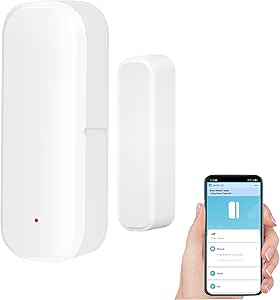 | Best Hub-Free Pick | Connectivity: 2.4 GHz Wi-Fi | Hub required: No | App compatibility: Tuya Smart, Smart Life | VIEW LATEST PRICE | See Our Full Breakdown |
| tolviviov 8-Piece WiFi Home Security Alarm Kit |  | Best for Multi-Entry Alarm Coverage | Kit contents: 1 alarm station, 5 door and window sensors, 2 remote controls | Wi-Fi compatibility: 2.4 GHz only; does not support 5 GHz | Maximum expansion: 20 sensors and 5 remote controls or keypads | VIEW LATEST PRICE | See Our Full Breakdown |
| Tolviviov 14-Piece Wireless Home Security System with WiFi App Alerts |  | Best for Broad DIY Coverage | Included components: Hub with keypad, 8 door/window sensors, 2 motion sensors, 3 remote controls | Connectivity: WiFi, wireless | Siren: 120 dB | VIEW LATEST PRICE | See Our Full Breakdown |
| SimpliSafe Gen 3 11-Piece Wireless Home Security System with Indoor HD Camera |  | Best for Camera-Assisted Monitoring | Included components: Base station, indoor camera, keypad, 6 entry sensors, 2 motion sensors, key fob | Video resolution: 1536p | Motion sensor range: Up to 35 feet | VIEW LATEST PRICE | See Our Full Breakdown |
| YoLink Door and Window Sensor Kit with SpeakerHub, 3-Pack |  | Best for Long-Range Custom Alerts | Included items: 1 SpeakerHub and 3 door/window sensors | Wireless technology: LoRa, 900 MHz | Maximum open-air range: Up to 2,034 feet (620 meters) | VIEW LATEST PRICE | See Our Full Breakdown |
| YoLink Door and Window Sensor Kit with Hub, 4 Sensors |  | Best for Expanding a Sensor Network | Included: 1 YoLink Hub and 4 door sensors | Wireless technology: LoRa, 900 MHz | Maximum open-air range: Up to 2,034 feet | VIEW LATEST PRICE | See Our Full Breakdown |
| Ring Window and Door Sensor, 6-Pack |  | Best for Ring and Sidewalk Homes | Package contents: 6 window and door sensors | Connectivity: Amazon Sidewalk or Z-Wave | Power: 2 CR2032 coin-cell batteries, included | VIEW LATEST PRICE | See Our Full Breakdown |
| smart home security sensor | Connectivity | Maximum range |
|---|---|---|
| Ring Alarm 14-Piece Wireless S | Ethernet, Wi-Fi, Z-Wave, Bluetooth for setup | — |
| 24-Piece GSM/4G and Wi-Fi Home | 2.4 GHz Wi-Fi, GSM/4G, RF, wired | 100 feet |
| Tolviviov 15-Piece WiFi Home S | 2.4 GHz Wi-Fi | 100 feet |
| Wireless WiFi Home Security Al | 2.4 GHz Wi-Fi and 433 MHz | 10 meters |
| eufy Security Entry Sensor E20 | — | 656 ft (200 m) open air |
| Tapo Door and Window Sensor St | — | — |
| ecobee SmartSensor for Doors a | — | 16 feet |
| WiFi Home Security Alarm Syste | Wi-Fi | 100 feet |
| Gaoducash Tuya WiFi Door and W | 2.4 GHz Wi-Fi | — |
| tolviviov 8-Piece WiFi Home Se | — | 100 meters |
| Tolviviov 14-Piece Wireless Ho | WiFi, wireless | 100 meters |
| SimpliSafe Gen 3 11-Piece Wire | — | — |
| YoLink Door and Window Sensor | — | — |
| YoLink Door and Window Sensor | — | — |
| Ring Window and Door Sensor | Amazon Sidewalk or Z-Wave | — |
More Details on Our Top Picks
Ring Alarm 14-Piece Wireless Security System Kit
The Ring Alarm 14-Piece Kit is the strongest fit here for buyers who want a coordinated sensor system rather than a single entry sensor. Its eight contact sensors and two motion detectors cover a mix of doors, windows, and interior areas, while two keypads make daily arming easier from more than one spot. Compared with the Tolviviov 15-Piece WiFi Home Security System, Ring includes a second keypad and a base-station backup battery rated for 24 hours, but fewer contact sensors. Its wider connectivity mix—Ethernet, Wi-Fi, Z-Wave, and Bluetooth for setup—also gives it more flexibility than the Wi-Fi-only Tolviviov kit. The tradeoff is that professional monitoring, cellular backup, and some remote features require a compatible subscription. I’d choose it for broad household coverage, not for buyers seeking a subscription-free setup.
Pros:- Eight contact sensors and two motion detectors cover a range of entry points and interior spaces.
- Two keypads make arming and disarming convenient from separate locations.
- Ethernet, Wi-Fi, Z-Wave, and Bluetooth for setup offer more connectivity options than Wi-Fi-only kits.
- The base station has a rechargeable battery rated for 24 hours.
Cons:- Professional monitoring, cellular backup, and some remote-control features require a compatible subscription.
- The indoor keypad has a narrower operating temperature range than the base station.
- Some monitoring features are unavailable for commercially zoned addresses.
Best for: Households with two to four bedrooms that want several doors and rooms covered, plus keypads at multiple access points.
Not ideal for: Buyers who require professional monitoring or cellular backup without a subscription, or who want a one-time, standalone sensor with no hub system.
- Kit contents:1 base station, 2 keypads, 8 contact sensors, 2 motion detectors, 1 range extender
- Connectivity:Ethernet, Wi-Fi, Z-Wave, Bluetooth for setup
- Base station backup:Rechargeable 24-hour battery
- Security modes:Disarmed, Away, Home
- Base station dimensions:6.65 × 6.65 × 1.46 in
- Keypad power:AC adapter; rechargeable battery included
- Warranty:1-year limited warranty and service
Our verdict“Choose Ring for a multi-room sensor system with varied connectivity and keypad access, provided subscription-dependent features fit your plan.”
24-Piece GSM/4G and Wi-Fi Home Security Alarm System with 4.3-Inch Touchscreen
This 24-piece alarm system stands apart for buyers who want a large, pre-paired sensor package and alerts without a required monthly subscription. Its 4.3-inch touchscreen provides a direct control point, while push notifications, audible alarms, and optional calls or SMS give it more alert routes than the app-centered Tolviviov 15-Piece WiFi Home Security System. GSM alerts need a compatible SIM card, so the added fallback is not automatic. The system also supports 2.4 GHz Wi-Fi only; homes relying on a 5 GHz network need to check their router setup. Peel-and-stick or screw-mount installation gives renters and DIY users flexibility, and SOS buttons add a quick emergency control. Compared with Ring’s larger, more established ecosystem, this kit is less subscription-dependent, but its smart-home compatibility and accessory ecosystem are not specified in the provided product details.
Pros:- Includes a 4.3-inch color touchscreen and pre-paired accessories.
- Supports Wi-Fi alerts and GSM alerts through a compatible SIM card.
- Offers push notifications, phone calls, SMS, and an audible alarm.
- Peel-and-stick and screw-mount options suit different DIY installation needs.
Cons:- Does not support 5 GHz Wi-Fi.
- SMS and voice-call alerts require a compatible GSM card.
- The provided details do not specify compatibility with Alexa or other smart-home platforms.
Best for: DIY households seeking a large pre-paired alarm kit, touchscreen control, and Wi-Fi alerts without a required subscription.
Not ideal for: Homes with only 5 GHz Wi-Fi or buyers who need GSM calls and texts but do not want to provide a compatible SIM card.
- Set size:24 pieces
- Screen:4.3-inch color touchscreen
- Connectivity:2.4 GHz Wi-Fi, GSM/4G, RF, wired
- App:Smart Life/Tuya
- Alert types:Push notifications, phone calls, SMS, audible alarm
- Siren volume:110 dB
- Maximum range:100 feet
- Installation:DIY; peel-and-stick or screw-mount
- Monthly fee:None
Our verdict“Pick this kit for subscription-free DIY coverage and multiple alert channels, if 2.4 GHz Wi-Fi and a compatible SIM meet your needs.”
Tolviviov 15-Piece WiFi Home Security System with App Alerts
For buyers with many entry points to monitor, the Tolviviov 15-Piece WiFi System puts its sensor count to work: the package includes 10 door sensors, a motion sensor, a keypad, and two remotes. That makes it a better match for covering multiple doors and windows than the smaller four-sensor Wireless WiFi Home Security Alarm System. It also allows expansion to 20 sensors and five remotes or keypads, so the setup can grow with a home. App, remote, and voice control, plus Alexa compatibility, give household members more than one way to operate it. The tradeoff is a 2.4 GHz-only Wi-Fi connection and an advertised 100-foot range, which may constrain hub placement. Its 120 dB siren is loud, but this is still a DIY alarm kit rather than a substitute for a separately specified professional monitoring service.
Pros:- Ten included door sensors provide broad entry-point coverage.
- Two remote controls and a keypad offer alternatives to app operation.
- Can expand to 20 sensors and five remote controls or keypads.
- Supports app alerts and Alexa-compatible voice control.
Cons:- Works only with 2.4 GHz Wi-Fi and does not support 5 GHz.
- The stated 100-foot maximum range can limit sensor placement relative to the base station.
- Backup battery is rated for eight hours, shorter than Ring’s 24-hour base-station backup.
Best for: Homeowners with numerous doors or windows who want a DIY alarm kit with app, keypad, and remote control.
Not ideal for: Buyers whose Wi-Fi network is 5 GHz-only, or those who need a system with a stated professional monitoring option.
- Included components:Wi-Fi alarm base station, keypad, motion sensor, 10 door sensors, 2 remote controls
- Connectivity:2.4 GHz Wi-Fi
- Smart-home compatibility:Alexa
- Control methods:App, remote, voice
- Siren volume:120 dB
- Backup battery:8 hours
- Maximum range:100 feet
- Expandable capacity:Up to 20 sensors and 5 remote controls/keypads
- Installation:DIY
Our verdict“Choose Tolviviov when a high count of door sensors matters more than broader Wi-Fi support or longer stated backup time.”
Wireless WiFi Home Security Alarm System with 120 dB Siren, Sensors, and Remote
This compact hub kit is a practical entry point for buyers who want basic door-and-window alerts now, with room to add devices later. It includes four contact sensors, a remote with a one-touch SOS function, and a hub with a rechargeable backup battery. Its stated capacity of up to 100 accessories is the key distinction: it offers a larger expansion ceiling than the Tolviviov 15-Piece system, which supports up to 20 sensors, though Tolviviov includes more sensors in its initial package. Alexa and Google Home voice control also give it broader named smart-home compatibility than that Alexa-compatible Tolviviov kit. Placement is the main constraint: the listed maximum range is just 10 meters, and the system requires 2.4 GHz Wi-Fi. I’d favor it for a smaller starting setup that may grow, not for a spread-out home needing distant sensor coverage.
Pros:- Supports expansion with up to 100 accessories.
- Works with Alexa and Google Home voice controls.
- Includes a rechargeable backup battery and an SOS button on the remote.
- Self-adhesive installation requires no wiring.
Cons:- Only supports 2.4 GHz Wi-Fi, not 5 GHz.
- The stated maximum range is 10 meters.
- Includes four door and window sensors, fewer than the 10 contact sensors in the Tolviviov 15-Piece kit.
Best for: Smart-home users who want a small starter alarm with Alexa or Google Home control and plans to add compatible accessories.
Not ideal for: Buyers needing broad initial sensor coverage or long-distance placement between the hub and sensors, given the 10-meter stated range.
- Included components:Alarm hub with rechargeable backup battery, 4 door and window sensors, 1 remote control
- Connectivity:2.4 GHz Wi-Fi and 433 MHz
- Compatible devices:Alexa, Google Home
- Siren volume:120 dB
- Maximum range:10 meters
- Accessory capacity:Up to 100 accessories
- Installation:Self-adhesive; no wiring required
- Dimensions:6.3 × 3.94 × 1.18 in
- Warranty:2-year replacement warranty
Our verdict“Choose this system for smart-speaker compatibility and a high accessory expansion ceiling, if its short stated range suits your layout.”
eufy Security Entry Sensor E20 for Doors and Windows
The eufy Security Entry Sensor E20 is the only pick here focused on adding a single door or window sensor to an existing compatible security setup, rather than supplying a full alarm kit. Its battery life of up to five years can reduce routine replacements, while the bypass button lets household members temporarily deactivate this sensor without changing the status of others. Compared with the multi-sensor Ring Alarm 14-Piece Kit, the E20 is a more targeted add-on, not a ready-made whole-home system; it depends on a compatible eufy HomeBase and a current-enough app. The advertised 656-foot range applies in open air, so walls and layout may reduce practical reach. Left- or right-side installation adds placement flexibility, but buyers outside the eufy ecosystem should skip it rather than buy a hub just for one contact sensor.
Pros:- Battery life is rated for up to five years.
- A bypass button temporarily deactivates this sensor while other sensors remain active.
- Supports left- or right-side installation.
- Can trigger connected cameras or lights through smart automation.
Cons:- Requires a compatible eufy HomeBase and eufy app version 6.0.00 or later.
- The 656-foot maximum range applies to open-air distances, not typical indoor conditions.
- It is a single entry sensor, not a complete alarm system like the Ring or Tolviviov kits.
Best for: Existing eufy HomeBase owners who want to add a door or window sensor and value long stated battery life and a bypass button.
Not ideal for: Buyers without a compatible eufy HomeBase, or anyone seeking a complete alarm kit with keypad, siren, and multiple sensors.
- Model:E20
- Power source:CR123A battery
- Battery life:Up to 5 years
- Compatible devices:HomeBase 2, HomeBase 3, HomeBase Mini, HomeBase Pro
- Maximum range:656 ft (200 m) open air
- Control method:App
- Installation:Left- or right-side
- App requirement:eufy app v6.0.00 or later
- Dimensions:2.88 × 1.54 × 0.85 in
Our verdict“Add the E20 if you already use a compatible eufy HomeBase and need a low-maintenance sensor for one entry point.”
Tapo Door and Window Sensor Starter Kit with Smart Hub, 3 Sensors
I’d pick this kit for households that want entry alerts to work as part of a broader smart-home setup, not just as a notification. Its three contact sensors and included hub can trigger lights, cameras, or a 90 dB alarm, while activity history in the Tapo app makes it easier to check when a monitored entry opened or closed. The hub supports up to 64 compatible devices, giving it more room to grow than the single-sensor Gaoducash Tuya WiFi Contact Sensor. Compatibility is a notable strength here, with Alexa, Google Home, Apple HomeKit, SmartThings, and Matter listed. The tradeoff is that every sensor depends on the hub, and the hub needs 2.4 GHz Wi-Fi; buyers seeking a direct-to-Wi-Fi sensor should favor Gaoducash instead.
Pros:- Includes three contact sensors and the hub needed to run them.
- Can trigger a customizable 90 dB alarm, compatible cameras, or smart lights.
- Supports a broad mix of smart-home platforms, including Matter and Apple HomeKit.
- Hub can support up to 64 sensors, switches, and buttons.
Cons:- Sensors require the included Tapo hub to operate.
- The hub requires 2.4 GHz Wi-Fi.
- The kit adds a hub to set up and place alongside the sensors.
Best for: Households that want several entry points monitored and plan to connect alerts with lights, cameras, or a wider smart-home platform.
Not ideal for: Buyers who want a sensor that connects directly to Wi-Fi without a hub, or who cannot use a 2.4 GHz Wi-Fi network.
- Included:3 Tapo T110 contact sensors and 1 Tapo H100 smart hub with chime
- Wireless protocol:Sub-G
- Wi-Fi requirement:2.4 GHz
- Alarm volume:90 dB
- Hub capacity:Up to 64 sensors, switches, and buttons
- Sensor battery:CR2032; up to 2 years
- Mounting:Door or window mount; magnetic or adhesive
- Compatibility:Alexa, Google Home, Apple HomeKit, Samsung SmartThings, Matter
Our verdict“Choose this kit if you want three hub-based entry sensors that can trigger a broader smart-home routine; choose Gaoducash if avoiding a hub matters more.”
ecobee SmartSensor for Doors and Windows, 2-Pack
This two-pack makes the most sense when entry monitoring should also support an ecobee thermostat or security setup. Along with open-and-close notifications, the sensors can help shut off HVAC when an entry stays open for five minutes, a practical way to avoid heating or cooling the outdoors. The listed up-to-three-year battery life also means less frequent battery attention than the Gaoducash sensor, whose stated battery life is over six months. Ecobee’s extra motion capability gives these sensors a role beyond contact alerts, but some motion features require a Smart Security subscription, and the HVAC action requires a compatible ecobee Smart Thermostat. Unlike the Tapo kit, this package doesn’t list a hub or a multi-platform device capacity, so I’d skip it if you need a standalone, broad smart-home sensor system.
Pros:- Sends app alerts when a monitored entry opens or closes.
- Batteries are designed to last up to three years.
- Can monitor access points beyond doors and windows, including drawers and cabinets.
- Can trigger an HVAC shutoff when an entry remains open for five minutes with a compatible ecobee thermostat.
Cons:- HVAC shutoff requires an ecobee Smart Thermostat.
- Some motion alert features require an ecobee Smart Security subscription.
- The two-pack is less suited to buyers who want a standalone kit with a hub and alarm.
Best for: People who already use an ecobee Smart Thermostat or Smart Security and want entry alerts to work alongside their home climate setup.
Not ideal for: Households without ecobee devices or people who want all motion and automation features without a subscription-dependent setup.
- Pack size:2 sensors
- Power source:Battery
- Battery life:Up to 3 years
- Maximum range:16 feet
- Motion detection:Up to 120° arc at 16 feet
- Operating temperature:32–113 °F
- Dimensions:1.3 × 1.77 × 3.66 inches
- Weight:1.37 ounces
Our verdict“Choose this pair if ecobee already anchors your home and you want entry sensors to support both security alerts and climate control.”
WiFi Home Security Alarm System with Door, Window, and Motion Sensors
I’d shortlist this system for buyers who prefer a central touchscreen and a mix of entry and motion detection over a small app-only sensor setup. The 4.3-inch color panel gives users a local control point, while the Smart Life/Tuya app can send push alerts or phone calls when sensors trigger; factory-paired accessories may also reduce setup steps. That makes it a broader alarm-style package than the Gaoducash contact sensor, which focuses on a single door or window and app notifications. The tradeoff is that the listing calls for connecting the control panel to a power supply despite describing the system as battery powered, so it isn’t a fully placement-flexible, wire-free panel. Its 85 dB siren is also less powerful on paper than the 120 dB alarm station in the tolviviov 8-Piece Kit.
Pros:- 4.3-inch color touchscreen provides a local control interface.
- Can send app notifications and phone calls for triggered sensors.
- Includes door, window, and motion detection in one alarm system.
- Accessories arrive pre-paired, with setup guided by the app.
Cons:- App-based alerts require Wi-Fi and a companion smartphone app.
- Installation instructions call for connecting the control panel to a power supply.
- The listed 85 dB siren is less powerful than the 120 dB siren in the tolviviov 8-Piece Kit.
Best for: Buyers who want a touchscreen alarm panel with app or phone alerts and a mix of door, window, and motion coverage.
Not ideal for: People who need a clearly battery-only panel, a stronger listed siren, or a simple standalone contact sensor.
- Model:A107F
- Control panel:4.3-inch color touchscreen
- Connectivity:Wi-Fi
- Alert types:Phone call and app notification
- Sensor technology:Motion detection; system also includes door and window sensors
- Maximum range:100 feet
- Siren volume:85 dB
- Installation:Wireless; instructions call for connecting the panel to a power supply
Our verdict“Choose this if a touchscreen panel and mixed sensor coverage matter more than a clearly wire-free installation or a louder listed siren.”
Gaoducash Tuya WiFi Door and Window Contact Sensor
This sensor suits buyers who want a direct route from a door or window to a phone alert without adding a separate hub. It connects to 2.4 GHz Wi-Fi and works with Tuya Smart or Smart Life, with Alexa and Google Assistant support and the ability to trigger other Tuya devices. Compared with the three-sensor Tapo Starter Kit, Gaoducash keeps the hardware count simpler but gives up the Tapo hub’s 64-device capacity, included chime, and listed Matter and Apple HomeKit compatibility. Its two AAA batteries are included, though the manufacturer states battery life of over six months, so this is a less hands-off choice than ecobee’s up-to-three-year battery design. Adhesive mounting avoids tools, but Wi-Fi-only operation makes a stable 2.4 GHz connection part of the setup.
Pros:- Connects directly to 2.4 GHz Wi-Fi without a hub.
- Works with Tuya Smart and Smart Life, plus Alexa and Google Assistant.
- Can trigger other Tuya smart-home devices.
- Includes two AAA batteries and an adhesive mounting sticker.
Cons:- Works with 2.4 GHz Wi-Fi only.
- Manufacturer-stated battery life is over six months, shorter than ecobee’s listed battery life.
- A single sensor offers less room to cover several entry points than the Tapo three-sensor kit.
Best for: Renters or smart-home newcomers who need one entry point monitored and want app alerts without buying a hub.
Not ideal for: People monitoring many doors and windows, seeking longer stated battery life, or relying on a platform beyond Tuya, Alexa, and Google Assistant.
- Connectivity:2.4 GHz Wi-Fi
- Hub required:No
- App compatibility:Tuya Smart, Smart Life
- Voice assistant compatibility:Amazon Alexa, Google Assistant
- Power source:2 AAA batteries
- Battery life:Over 6 months, manufacturer stated
- Mounting:Door mount with included adhesive sticker
- Dimensions:2.83 × 0.98 × 0.78 inches
Our verdict“Choose Gaoducash for a straightforward, hub-free sensor at one entry point, but pick Tapo for a larger setup with more platform options and a hub.”
tolviviov 8-Piece WiFi Home Security Alarm Kit
When several doors and windows need coverage, this kit offers a more complete starting point than buying contact sensors one at a time: it includes five sensors, two remote controls, and an alarm station. The station’s listed 120 dB alarm is a stronger local deterrent than the 85 dB siren in the touchscreen RenseCum system, while app, remote, and voice control give household members more than one way to manage the alarm. Expansion supports up to 20 sensors and five remotes or keypads, which helps if coverage needs grow. The station must stay connected to an AC adapter, however, and its eight-hour backup is for outages rather than extended off-grid use. Like the RenseCum system, it requires 2.4 GHz Wi-Fi; it’s a poor fit if you need 5 GHz support or a fully cordless base.
Pros:- Includes five door and window sensors and two remote controls.
- 120 dB alarm station provides a louder listed siren than the RenseCum touchscreen system.
- Supports app, remote, and voice control.
- Can expand to 20 sensors and five remotes or keypads.
Cons:- Works with 2.4 GHz Wi-Fi only and does not support 5 GHz.
- Alarm station must remain connected to an AC adapter during normal use.
- Backup battery runtime is limited to eight hours.
Best for: Households with several doors or windows to cover that want a loud local alarm, remote controls, and room to add more sensors.
Not ideal for: Buyers who need a station that runs indefinitely without mains power, rely on 5 GHz Wi-Fi, or only want one standalone sensor.
- Kit contents:1 alarm station, 5 door and window sensors, 2 remote controls
- Wi-Fi compatibility:2.4 GHz only; does not support 5 GHz
- Maximum expansion:20 sensors and 5 remote controls or keypads
- Alarm volume:120 dB
- Backup battery runtime:8 hours
- Control methods:App, remote, voice
- Maximum range:100 meters
- Power:Station requires AC adapter; 5 V, USB Type-C
Our verdict“Choose this kit for multi-entry coverage and a loud alarm with remote controls, but not if you need a cord-free station or 5 GHz Wi-Fi.”
Tolviviov 14-Piece Wireless Home Security System with WiFi App Alerts
The Tolviviov makes sense when a few entry sensors are not enough: its eight door/window sensors and two motion sensors cover several openings and shared rooms from one hub. That gives it a wider whole-home role than the YoLink Door and Window Sensor Kit with SpeakerHub, which focuses on openings rather than motion detection. The all-in-one keypad and 120 dB siren keep local control and audible alerts together, while WiFi notifications and three remotes offer several ways to arm or check the system. A built-in battery provides up to eight hours of backup, but that is a limited outage window compared with the SimpliSafe system’s stated 24-hour base-station battery life. Setup also depends on getting the WiFi and app configuration right.
Pros:- Eight entry sensors and two motion sensors provide broad coverage in one kit.
- Combines a keypad and 120 dB siren in the hub.
- Includes three remotes alongside WiFi app notifications.
- Built-in backup battery runs for up to eight hours during a power outage.
Cons:- Backup battery runtime is limited to up to eight hours.
- WiFi setup and app configuration are required for app alerts.
Best for: DIY households that want one kit to cover many doors, windows, and rooms, with keypad, app, and remote control options.
Not ideal for: Buyers who need longer outage coverage or want to avoid WiFi setup and app configuration.
- Included components:Hub with keypad, 8 door/window sensors, 2 motion sensors, 3 remote controls
- Connectivity:WiFi, wireless
- Siren:120 dB
- Maximum range:100 meters
- Backup battery:Up to 8 hours
- Control methods:App, remote
- Smart home compatibility:Alexa
- Installation:DIY wireless
Our verdict“Choose this kit for broad DIY entry and room coverage, but pick SimpliSafe if longer stated battery backup matters more.”
SimpliSafe Gen 3 11-Piece Wireless Home Security System with Indoor HD Camera
This SimpliSafe bundle is the strongest fit for buyers who want entry sensors and room motion detection backed by an indoor camera. Its six entry sensors and two motion sensors provide a solid starting layout, while the camera adds two-way audio and a controllable privacy shutter. Selected monitoring plans can support live agent intervention through that audio, a layer the Tolviviov 14-Piece Wireless Home Security System does not list. The tradeoff is that the camera’s most responsive monitoring features depend on an eligible plan, and network backup also requires professional monitoring. Its base station battery is stated to last up to 24 hours, longer than Tolviviov’s eight hours, but pet households should check the motion-sensor guidance: human detection is the design focus, with compatibility listed for pets under 60 pounds.
Pros:- Includes six entry sensors, two motion sensors, and an indoor camera.
- Camera offers two-way audio and a controllable privacy shutter.
- Works with Amazon Alexa and Google Assistant.
- Base-station battery life is listed as up to 24 hours.
Cons:- Live agent intervention is available only with selected monitoring plans.
- Network backup requires a professional monitoring plan.
- Motion sensors are designed for human detection rather than pet detection.
Best for: Households that want a camera alongside entry and motion sensors, and are willing to use a selected professional monitoring plan for agent intervention.
Not ideal for: Pet owners who need motion sensors tuned specifically for animal detection, or buyers who want camera intervention without a monitoring plan.
- Included components:Base station, indoor camera, keypad, 6 entry sensors, 2 motion sensors, key fob
- Video resolution:1536p
- Motion sensor range:Up to 35 feet
- Motion sensor field of view:90 degrees
- Base-station battery life:Up to 24 hours
- Base-station siren:100 dB
- Smart home compatibility:Amazon Alexa and Google Assistant
- Camera features:Two-way audio, controllable privacy shutter
Our verdict“Pick SimpliSafe for a camera-centered security setup with optional agent intervention, provided its plan and pet-sensing limits suit your household.”
YoLink Door and Window Sensor Kit with SpeakerHub, 3-Pack
For openings beyond reliable WiFi reach, this YoLink set takes a different route from the app-centered Ring Window and Door Sensor 6-Pack: its 900 MHz LoRa connection has a stated open-air range of up to 2,034 feet. The bundle includes three contact sensors and a SpeakerHub that can play customizable tones, uploaded MP3s, or text-to-speech announcements. That makes alerts more adaptable than a simple phone notification, especially when someone at home needs to hear which opening changed. The sensors use adhesive mounting and are rated for up to five years of battery life, reducing routine battery attention. In exchange, this is a focused opening-monitoring kit, not a full alarm system with motion sensors. It also needs a hub for full functionality and a 2.4 GHz network band for setup.
Pros:- LoRa connectivity has a stated open-air range of up to 2,034 feet.
- SpeakerHub supports customizable tones, uploaded MP3 files, and text-to-speech.
- Adhesive mounting avoids drilling for sensor installation.
- Sensor batteries are rated for up to five years.
Cons:- Full functionality requires the included hub.
- Setup requires a 2.4 GHz network band.
- The kit monitors openings and does not include motion sensors.
Best for: Owners of larger homes or outbuildings who need opening alerts at a distance and want customizable audible announcements.
Not ideal for: Buyers seeking a complete alarm system with motion sensors, or those who do not want a hub-based setup.
- Included items:1 SpeakerHub and 3 door/window sensors
- Wireless technology:LoRa, 900 MHz
- Maximum open-air range:Up to 2,034 feet (620 meters)
- Battery life:Up to 5 years
- Mounting:Pre-applied 3M adhesive tape
- Maximum supported devices:300+
- Required network band:2.4 GHz
Our verdict“Choose this YoLink kit for long-range, customizable opening alerts, not as a substitute for a broader alarm system like SimpliSafe.”
YoLink Door and Window Sensor Kit with Hub, 4 Sensors
This four-sensor YoLink kit is a practical starting point for buyers who plan to add more openings over time. It includes its own hub, supports 300+ devices, and uses LoRa with a stated open-air range of up to 2,034 feet. Compared with the three-sensor YoLink Door and Window Sensor Kit with SpeakerHub, this bundle prioritizes an extra contact sensor and a standard hub rather than customizable spoken or uploaded audio alerts. Its app can report open and left-open states, while device-to-device pairing supports local actions. The sensors suit doors, windows, cabinets, and other openings, and their preinstalled batteries are rated for up to five years. The hub still needs a compatible phone and Ethernet or stable 2.4 GHz WiFi, so it is less self-contained than a simple standalone sensor.
Pros:- Includes four sensors and a hub, with batteries preinstalled.
- Supports open and left-open alerts through the app.
- LoRa wireless has a stated open-air range of up to 2,034 feet.
- System capacity supports more than 300 devices.
Cons:- Full functionality requires the YoLink Hub.
- Hub setup requires a compatible smartphone and Ethernet or stable 2.4 GHz WiFi.
- Does not include the SpeakerHub’s customizable audio announcement features.
Best for: Smart-home owners who want four opening sensors now and expect to expand a YoLink setup across many devices.
Not ideal for: Buyers who want spoken or custom audio alerts from the hub, or who cannot provide the required hub network connection.
- Included:1 YoLink Hub and 4 door sensors
- Wireless technology:LoRa, 900 MHz
- Maximum open-air range:Up to 2,034 feet
- Battery life:Up to 5 years between battery changes
- System capacity:300+ devices
- Control method:App
- Requirements:Android or Apple smartphone and wired Ethernet or stable 2.4 GHz WiFi connection
- Installation:Mounting tape
Our verdict“Pick this kit to start an expandable YoLink opening-sensor network; choose the SpeakerHub version if custom audible announcements matter more.”
Ring Window and Door Sensor, 6-Pack
For a household already using compatible Ring devices or Amazon Sidewalk coverage, this six-pack offers a straightforward way to monitor multiple openings without adding a separate alarm kit. The sensors install without tools or wiring, and Amazon Sidewalk connectivity can avoid the need for a dedicated base station when coverage is available. That makes the setup simpler than the YoLink Door and Window Sensor Kit with Hub, which depends on its included hub and a network connection. Ring’s advantage is conditional, though: Sidewalk coverage varies by location, and Z-Wave use requires an alarm base station. The sensors are also narrower in purpose than the Tolviviov 14-Piece system, which adds motion sensors, a siren, keypad, and remotes. Treat this as an entry-sensor expansion, not a full alarm package.
Pros:- Six sensors cover multiple doors or windows.
- Installs without tools or wiring.
- Can connect through Amazon Sidewalk without a base station when coverage is available.
- Two CR2032 coin-cell batteries are included per product data.
Cons:- Amazon Sidewalk coverage varies by location.
- Z-Wave connectivity requires an alarm base station.
- Professional monitoring requires a compatible Ring subscription.
Best for: Ring households with confirmed Sidewalk coverage that want to add contact sensors to several doors or windows without tools.
Not ideal for: Buyers outside reliable Sidewalk coverage who lack a compatible alarm base station, or anyone needing a complete alarm system in the box.
- Package contents:6 window and door sensors
- Connectivity:Amazon Sidewalk or Z-Wave
- Power:2 CR2032 coin-cell batteries, included
- Battery life:Up to 3 years, depending on usage and proximity to a Sidewalk Gateway
- Device dimensions:2.09 x 1.59 x 0.57 inches
- Operating temperature:32°F to 120°F (0°C to 49°C)
- Warranty:One-year limited warranty
- Monitoring:Optional 24/7 professional monitoring requires a compatible Ring subscription
Our verdict“Choose this six-pack as a simple Ring-compatible opening-sensor addition when Sidewalk coverage is available, not as a standalone alarm system.”
How We Picked
I compared these 15 options by the job they can do in a home: monitoring an individual opening, covering multiple entry points, or forming a broader alarm system. I gave more weight to the fit between the package and its intended buyer than to piece count alone, looking at sensor variety, included hubs or control equipment, connectivity claims, and the clarity of the system’s scope. A contact sensor can be the better choice for one vulnerable window, while a multi-piece kit makes more sense when a household needs a coordinated set of sensors and an alarm interface.
The ranking favors products with a clearer role and a more complete path from detection to household alerts. Ring Alarm and SimpliSafe rank highly as recognizable, broader-system options; Tapo and YoLink stand out for sensor-focused kits that include a hub. The broad assortment of Wi-Fi alarm kits remains useful for buyers prioritizing included pieces or connectivity features, but I rank them lower where the product name alone leaves more questions about ecosystem fit, monitoring, or setup. Standalone sensors are ranked for targeted coverage rather than treated as substitutes for a full alarm system.
Factors to Consider When Choosing Smart Home Security Sensors
Before choosing a kit, map what you want to detect and how you expect to respond. The sensor itself is only one part of the decision: the hub, app, alarm, network, and household routine determine whether a notification becomes useful protection.
Choose between an alarm system and targeted sensors
Start by listing the openings and rooms you want to monitor, then decide whether you need an alarm response or only a status alert. A complete system can combine contact sensors with motion detection, a control panel, or a siren, which is a different role from monitoring one door. A standalone contact sensor may be simpler when you only want to know whether a garage door or medicine cabinet opens. A common mistake is buying a large kit before checking whether its sensor types match the home’s actual risks. If you already have an alarm platform, check whether adding a few sensors to it is more practical than installing a second system.
Check the hub, app, and ecosystem before ordering
Wireless does not mean universally compatible: sensors may communicate only with a specific hub, app, or product family. Confirm whether the listed package includes the hub and whether your intended features depend on another device or service. Mixing brands can create separate apps and alerts, even when every sensor connects to Wi-Fi somewhere in the chain. That split can make household handoffs and troubleshooting harder than the hardware setup suggests. If you use a smart-home platform, verify the exact sensor and hub support rather than assuming that a general compatibility label covers every function.
Match sensor placement to the home
Count doors and windows that matter, but also note frame material, unusual trim, and whether a door or window is frequently left open. Contact sensors need their two parts aligned closely enough to detect opening and closing, so a difficult frame can make placement more important than the number in the box. Motion sensors can add room coverage, but they do not replace contacts on entry points and may be a poor fit for spaces with pets or frequent movement. Plan sensor positions before buying a large bundle; otherwise, spare devices may sit unused while a key opening remains uncovered. For renters, choose mounting and placement that fit lease rules and avoid interfering with doors or windows.
Understand what happens when the internet or power fails
Ask what the system can do without home internet, whether it has battery backup, and whether cellular features require a separate plan or setup. A product advertising Wi-Fi and GSM/4G may offer more than one communication path, but the precise fallback behavior matters more than the list of network terms. A siren that sounds locally can still be useful if an app alert cannot get through, while a sensor that only sends a cloud notification has different limits. Check the manufacturer’s documentation for outage behavior before treating any connection feature as guaranteed backup. This matters most for homes with unreliable broadband or people who will be away for long periods.
Compare maintenance and alert routines, not just included pieces
More sensors mean more batteries, device names, placement decisions, and alerts to manage. Find out how the app identifies which opening triggered an alert and whether the household can share access without sharing one login. Think through how often you want notifications and whether an alarm can be armed or disarmed in a way everyone at home will follow. A large package can save setup steps when it covers the right areas, but a smaller, clearly managed system may be more dependable for a household that wants fewer devices. Review battery replacement guidance and test alerts after installation so a quiet failure does not go unnoticed.
Pay more for the capability you will actually use
A bigger kit or a camera bundle is worthwhile only if those extra devices address a real need. Pay for a broader system when you want several sensor types and a coordinated alarm setup; favor a focused sensor kit when you mainly need to monitor a few openings. Camera access, cellular connectivity, and expanded automation can add value, but each may bring setup, privacy, or service considerations. Do not assume a higher piece count means every important area is covered, or that every advertised feature works without extra hardware. Compare the complete setup required for your home, including hubs and any service conditions, rather than comparing package size alone.
Frequently Asked Questions
Should I buy a complete alarm kit or just add door and window sensors?
Choose a complete kit if you need several monitored openings, motion coverage, and a central alarm or control interface in one setup. Targeted sensors are a better fit when you already have an alarm system or only want alerts from a few specific doors or windows. Check whether a standalone sensor needs a hub before treating it as a lower-effort option. Also consider who will arm and respond to the system; a feature-rich kit is of limited use if the household will not follow its routine.
Do these sensors need a hub to work?
Some packages include a hub, while some individual sensors are designed to pair with a compatible hub or specific ecosystem. Read the package contents and compatibility details for the exact model, rather than relying on a general statement that a device is wireless or app-connected. A hub can provide coordination among multiple sensors, but it is another device to place, power, and configure. If you already own a supported hub, confirm that the sensor works with your exact generation and that the functions you need are supported.
Will a Wi-Fi security sensor keep alerting me if my internet goes down?
That depends on the device and the way it communicates; a Wi-Fi label alone does not promise alerts during an outage. Some alarm products advertise cellular connectivity, but buyers should check whether it is included, how it is activated, and whether a service plan is needed. A local siren may still operate even when remote app notifications cannot reach you, but those are different forms of protection. Look up documented backup behavior for both internet and power failures before choosing a system for a property that is often empty.
How many sensors do I need for a typical home?
There is no reliable number without knowing the home’s layout and your priorities. Start with accessible exterior doors and ground-level windows, then decide whether interior motion detection adds useful coverage. Count openings that you genuinely want monitored and check that the kit’s sensor types match them; a large bundle with the wrong mix can leave gaps. You can also begin with the most important entry points and add compatible sensors later, provided the system supports expansion.
Can I use sensors from different brands in one smart home?
Sometimes, but cross-brand support varies by hub, app, and smart-home platform. A device may appear in a shared platform while lacking features available in its own app, so confirm the functions you need rather than assuming basic connection means full integration. Separate systems can also create duplicate notifications and make it harder for household members to know which app controls the alarm. If you already use a security ecosystem, favor sensors explicitly supported by it unless you are comfortable managing another hub and app.
Conclusion
For the broadest ready-made setup, I’d start with the Ring Alarm 14-Piece Kit as my best overall choice; its multi-piece system suits households that want more than a single contact sensor. For best value in focused entry-point coverage, the Tapo Door and Window Sensor Starter Kit is the pick to compare, especially if its included hub and three sensors fit your layout. My best premium recommendation is the SimpliSafe Gen 3 11-Piece System for buyers who want an indoor camera as part of a broader security package. Beginners who want a defined starter system can look first at Tapo for doors and windows or Ring Alarm for wider alarm coverage. For specific needs, choose a YoLink kit when its hub-and-sensor package suits your setup, a standalone Ring or eufy sensor when you are extending a compatible system, or the 24-piece GSM/4G and Wi-Fi kit only after confirming its connectivity and service details. The best fit is the system that covers the openings you care about and delivers alerts in a way your household will actually use.