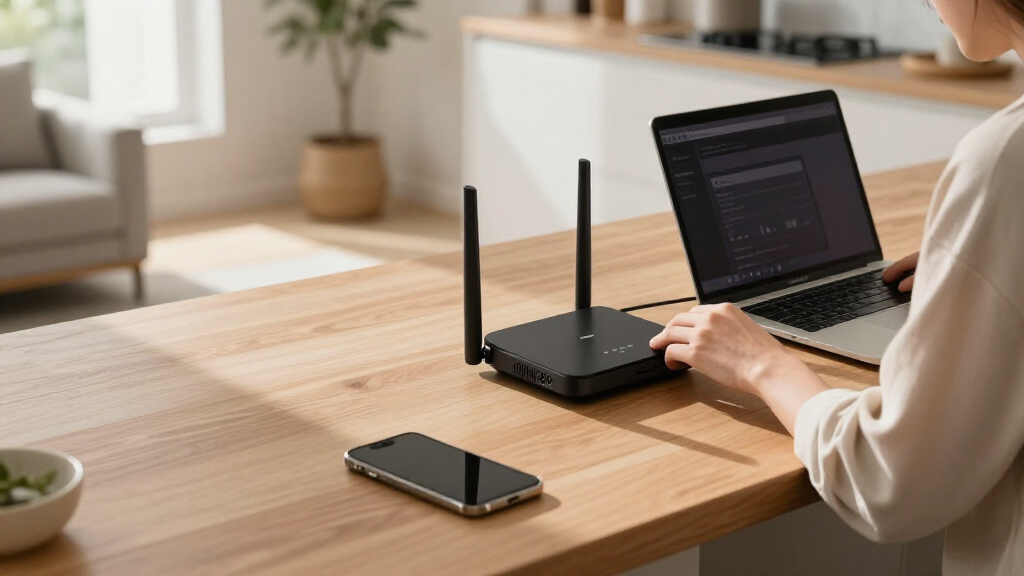

Privacy-focused VPN routers encrypt every device on your network at the source, which means you don’t have to install and manage a VPN app on each phone, laptop, or smart TV. The GL.iNet GL-MT5000 Brume 3 stands out as the best overall pick because it pairs hardware-accelerated VPN throughput with open-source firmware that privacy purists can actually audit. If you need something portable, the GL.iNet GL-AXT1800 Slate AX delivers the same privacy-first firmware in a travel-friendly body, while the Deeper Connect Air offers a decentralized alternative with no subscription at all. The main tradeoffs in this category are throughput versus privacy flexibility (heavier encryption slows speeds), upfront hardware cost versus recurring VPN subscription fees, and travel convenience versus full-home coverage. Read on for the full breakdown of all 14 options and which buyer each one fits.

Get privacy and security gear delivered free with Prime
- Fast, free delivery on millions of items
- Prime Video, Amazon Music and more included
- Member-only deals all year
Key Takeaways
- Open-source firmware (GL.iNet‘s OpenWrt base) was the single biggest differentiator among privacy-focused routers, because auditable software matters as much as strong encryption for this audience.
- Wired gateways like the GL-MT5000 Brume 3 and TP-Link ER605 consistently outperformed Wi-Fi routers in VPN throughput, since encryption overhead hits wireless chipsets harder than dedicated wired hardware.
- Decentralized options (Deeper Connect Air and Mini) eliminate subscription costs entirely but sacrifice the server-choice flexibility and audited no-log policies of paid VPN services like Mullvad.
- Travel routers dominated the lower half of the rankings for home use — their compact radios can’t cover a full house — but they were unmatched for protecting connections on hotel and café networks.
- VPN subscription bundles only appeared once in this lineup (Mullvad), signaling that most buyers in this category prefer bringing their own VPN service to router hardware they control.
| Deeper Connect Air (2026 Version) Pocket-Sized Wireless Travel VPN Router |  | Best Decentralized Privacy Pick | Type: Wireless Travel VPN Router | Protocols: OpenVPN, WireGuard, DPN | Protection: Full network security at router level | VIEW LATEST PRICE | See Our Full Breakdown |
| Mullvad VPN – 6 Months for 5 Devices – No-Log VPN Service |  | Best No-Log VPN Service | Duration: 6 months | Devices: 5 simultaneous connections | Protocol: WireGuard | VIEW LATEST PRICE | See Our Full Breakdown |
| Omada ER706W Gigabit AX3000 WiFi 6 VPN Router |  | Best Whole-Home VPN Powerhouse | WiFi Standard: WiFi 6 AX3000 | Wireless Speed: 2402 Mbps (5 GHz) / 574 Mbps (2.4 GHz) | Ports: 1x Gigabit SFP, 5x Gigabit RJ45 | VIEW LATEST PRICE | See Our Full Breakdown |
| ASUS RT-AX57 GO – AX3000 Dual Band WiFi 6 Portable Travel Router |  | Best Versatile Travel Router | Wireless Standard: WiFi 6 (802.11ax), dual-band | Max Speed: 2402 Mbps (5 GHz) / 574 Mbps (2.4 GHz) | Device Capacity: Up to 70 devices | VIEW LATEST PRICE | See Our Full Breakdown |
| Capri CP-EL128 Server & 2 Travel Router VPN Kit |  | Best Remote-Work Duo Bundle | Wireless Standard: 802.11ac dual-band (WiFi 5) | Bandwidth: 1000 Mbps | Ports: 3 LAN ports | VIEW LATEST PRICE | See Our Full Breakdown |
| Deeper Connect Mini Decentralized VPN Router with Lifetime Free DPN |  | Best for Subscription-Free Privacy | Type: Decentralized VPN Router | VPN Model: Lifetime free DPN (no subscription) | Residential IP Support: Yes | VIEW LATEST PRICE | See Our Full Breakdown |
| TP-Link ER605 Wired Gigabit VPN Router |  | Best for Small Business Networks | Ports: 5 (1 WAN, 2 WAN/LAN, 2 LAN) | USB WAN: Yes, mobile broadband backup | Max Upstream Rate: 4000 Mbps | VIEW LATEST PRICE | See Our Full Breakdown |
| PW-AX1800 WiFi 6 Dual-Band Router with VLAN Support, VPN, Parental Controls, and Ad Blocking |  | Best All-in-One for Families | Wi-Fi: WiFi 6 dual-band (2.4GHz / 5GHz) | Processor: IPQ6000 quad-core ARM 1.2GHz | RAM: 256MB | VIEW LATEST PRICE | See Our Full Breakdown |
| GL.iNet GL-MT5000 Brume 3 Wired VPN Security Gateway |  | Best VPN Performance Pick | VPN Throughput: Up to 1100 Mbps (hardware accelerated) | Ports: 3 x 2.5G Ethernet | Multi-WAN: Yes | VIEW LATEST PRICE | See Our Full Breakdown |
| TP-Link Roam 6 AX3000 Dual-Band Wi-Fi 6 Travel Router |  | Best Compact Travel Option | Wireless Speed: Up to 2402 Mbps (5 GHz) / 574 Mbps (2.4 GHz) | Wi-Fi Standard: Wi-Fi 6 (AX) | Ports: 1x 2.5 Gbps WAN/LAN, 1x 1 Gbps LAN, USB 3.0 | VIEW LATEST PRICE | See Our Full Breakdown |
| S1 WiFi 6 Home Router with Built-in VPN, AX3000 Dual-Band, 2.5G Ports |  | Best Home VPN Router for Wired Speed | Wi-Fi Standard: Wi-Fi 6 (802.11ax) | Wireless Speed: 3000 Mbps dual-band | WAN Port: 2.5G | VIEW LATEST PRICE | See Our Full Breakdown |
| TP-Link TL-WR902AC WiFi Travel Router (AC750) |  | Best Budget Travel Pick | Wi-Fi Standard: Wi-Fi 5 (802.11ac) | Wireless Speed: Up to 733 Mbps | Frequency Bands: 2.4 GHz & 5 GHz | VIEW LATEST PRICE | See Our Full Breakdown |
| GL.iNet GL-SFT1200 Opal Travel Router |  | Best Value VPN Travel Router | Wi-Fi Standard: Wi-Fi 5 | Wireless Speed: 300 Mbps (2.4 GHz) + 867 Mbps (5 GHz) | Ports: 2× Gigabit LAN, 1× Gigabit WAN | VIEW LATEST PRICE | See Our Full Breakdown |
| GL.iNet GL-AXT1800 Slate AX Pocket Wi-Fi 6 Travel Router |  | Best Premium Travel VPN Router | Wi-Fi Standard: Wi-Fi 6 | Dual-band Speed: 1800 Mbps (600 + 1200) | Device Capacity: Up to 120 devices | VIEW LATEST PRICE | See Our Full Breakdown |
| privacy-focused VPN router | Ports |
|---|---|
| Deeper Connect Air | — |
| Mullvad VPN | — |
| Omada ER706W Gigabit AX3000 Wi | 1x Gigabit SFP, 5x Gigabit RJ45 |
| ASUS RT-AX57 GO | 2 |
| Capri CP-EL128 Server & 2 Trav | 3 LAN ports |
| Deeper Connect Mini Decentrali | — |
| TP-Link ER605 Wired Gigabit VP | 5 (1 WAN, 2 WAN/LAN, 2 LAN) |
| PW-AX1800 WiFi 6 Dual-Band Rou | — |
| GL.iNet GL-MT5000 Brume 3 Wire | 3 x 2.5G Ethernet |
| TP-Link Roam 6 AX3000 Dual-Ban | 1x 2.5 Gbps WAN/LAN, 1x 1 Gbps LAN, USB 3.0 |
| S1 WiFi 6 Home Router with Bui | — |
| TP-Link TL-WR902AC WiFi Travel | 1× 10/100Mbps WAN/LAN, 1× USB 2.0 |
| GL.iNet GL-SFT1200 Opal Travel | 2× Gigabit LAN, 1× Gigabit WAN |
| GL.iNet GL-AXT1800 Slate AX Po | — |
More Details on Our Top Picks
Deeper Connect Air (2026 Version) Pocket-Sized Wireless Travel VPN Router
This option stands out for its decentralized DPN network, which sets it apart from every conventional VPN router in this lineup. Instead of routing traffic through a paid subscription service, it uses a peer-to-peer model, meaning there is no monthly VPN fee — a sharp contrast to the subscription-dependent Mullvad offering and the Capri CP-EL128, which needs a paid VPN to function fully. Add in residential IP routing, ad blocking, and a built-in firewall, and this pocket router covers most of what a privacy-conscious traveler actually cares about. The tradeoff is setup: unlike the plug-and-play ASUS RT-AX57 GO, this model demands more technical comfort, and the sparse published specs on speed and range make it harder to compare on paper against WiFi 6 rivals.
Pros:- No subscription fees thanks to the decentralized DPN network
- Residential IP routing for more stable, less-flagged connections
- Ad blocking and firewall protection at the router level
- Pocket-sized design built for travel
Cons:- Setup requires technical knowledge beyond typical consumer routers
- No published speed or range specifications to verify performance
Best for: Privacy-focused travelers and remote workers who want subscription-free, router-level protection for every device they connect
- Type:Wireless Travel VPN Router
- Protocols:OpenVPN, WireGuard, DPN
- Protection:Full network security at router level
- Additional features:Ad blocking, firewall, traffic monitoring
- Connectivity:Residential IP routing supported
- Form factor:Pocket-sized, travel-ready
Our verdict“This pick makes the most sense for travelers willing to trade setup complexity for lifetime, subscription-free privacy protection.”
Mullvad VPN – 6 Months for 5 Devices – No-Log VPN Service
Unlike the hardware picks in this roundup, Mullvad is the software layer that makes any router privacy-focused — and it earns its place by being arguably the strictest privacy provider available. No logs, no email, no personal data at signup: you get an account number and nothing else. Compared with the Deeper Connect Air’s decentralized approach, Mullvad offers more conventional, well-audited WireGuard performance across five simultaneous devices, but you pay recurring fees rather than owning the infrastructure once. The activation code requirement adds a small friction point at setup, and the six-month term means budgeting for renewals. Paired with an open-platform router like the ASUS RT-AX57 GO or the GL.iNet models in this guide, it becomes the privacy engine of a serious setup.
Pros:- No logs and no personal data required at signup
- WireGuard protocol for fast, modern encryption
- Works across iOS, Android, Windows, macOS, and Linux
- Five simultaneous device connections
Cons:- Ongoing subscription cost after the six-month term
- Limited to five devices — no router-level coverage by itself
Best for: Privacy maximalists who want an audited no-log VPN to pair with an open firmware router like ASUS or GL.iNet hardware
Not ideal for: Households wanting whole-home protection for every device without per-device installs — this covers five clients, not your entire network
- Duration:6 months
- Devices:5 simultaneous connections
- Protocol:WireGuard
- Supported OS:iOS, Android, Windows 10+, macOS, Linux
- Logging policy:No logs, no personal data collected
- Setup:Activation code required
Our verdict“This is the right choice for buyers who prioritize verifiable anonymity and want a trusted VPN service to bolt onto compatible router hardware.”
Omada ER706W Gigabit AX3000 WiFi 6 VPN Router
Where most entries here are travel-sized, this model is built to be the privacy backbone of a permanent home network. With AX3000 WiFi 6 speeds, five gigabit ports, an SFP slot, and support for six VPN protocols including WireGuard, it handles encrypted traffic without the throughput collapse cheaper routers suffer. Compared with the ASUS RT-AX57 GO — which shares the same AX3000 radio specs — the ER706W offers far more wired flexibility and mesh expansion via Omada, making it the stronger pick for multi-room homes and smart-home households. The catch is accessibility: its enterprise-leaning feature set and configuration options assume real networking knowledge, and TP-Link’s Omada ecosystem is overkill for someone who just wants a travel router for hotel WiFi.
Pros:- Six VPN protocols supported, including WireGuard and OpenVPN
- Five gigabit ports plus an SFP slot for wired flexibility
- Mesh compatibility extends coverage as your home grows
- AX3000 WiFi 6 speeds minimize VPN-related slowdowns
Cons:- Setup and configuration demand solid networking knowledge
- No published WiFi range specifications to verify large-home coverage
Best for: Tech-comfortable homeowners who want permanent, router-level VPN encryption across a large multi-device network
Not ideal for: Casual users and travelers — the enterprise feature set, setup complexity, and desk-bound design are wasted on occasional use
- WiFi Standard:WiFi 6 AX3000
- Wireless Speed:2402 Mbps (5 GHz) / 574 Mbps (2.4 GHz)
- Ports:1x Gigabit SFP, 5x Gigabit RJ45
- WAN Ports:Up to 5
- VPN Support:SSL, IPSec, GRE, WireGuard, PPTP, L2TP, OpenVPN
- Mesh Compatibility:Yes, via Omada ecosystem
Our verdict“This router makes the most sense for a permanent household installation where VPN coverage, wired capacity, and expandability outweigh ease of use.”
ASUS RT-AX57 GO – AX3000 Dual Band WiFi 6 Portable Travel Router
This model wins on sheer versatility for the price of admission: 4G/5G tethering, public WiFi (WISP) mode, a guest portal, and USB-C powering make it adaptable to almost any travel scenario. Unlike the Deeper Connect Air, which bakes in its own decentralized VPN, the RT-AX57 GO lets you choose your VPN provider — pair it with Mullvad and you get a no-log stack with full WiFi 6 speed behind it. Supporting up to 70 devices, it comfortably outclasses the Capri CP-EL128 for capacity, though its two Ethernet ports limit wired setups. The ASUSWRT interface is friendlier than the Omada ER706W’s business-oriented menus, but first-time travel router users should still expect a learning curve before everything clicks.
Pros:- 4G/5G tethering plus WISP mode for connection options anywhere
- Up to 70 connected devices at AX3000 WiFi 6 speeds
- VPN flexibility to use any provider, including no-log services
- USB-C powered with AiProtection and guest portal built in
Cons:- Only two Ethernet ports limits wired configurations
- Setup can frustrate non-technical users despite the friendly interface
Best for: Frequent travelers and digital nomads who want one portable router that adapts to hotel Ethernet, public WiFi, and phone tethering alike
Not ideal for: Wired-first users and beginners expecting instant setup — only two ports and a layered feature set demand some patience
- Wireless Standard:WiFi 6 (802.11ax), dual-band
- Max Speed:2402 Mbps (5 GHz) / 574 Mbps (2.4 GHz)
- Device Capacity:Up to 70 devices
- Connectivity:4G/5G tethering, WISP mode, guest portal
- Security:VPN, WPA3, WPA2, AiProtection
- Ports:2
- Power:USB-C
Our verdict“If you want a single travel router that handles every connection scenario while running the VPN of your choice, this is the most flexible option here.”
Capri CP-EL128 Server & 2 Travel Router VPN Kit
This bundle takes a different angle from every other pick: instead of one router, you get two travel routers plus a server component, purpose-built for securely reaching your home or office network from the road. For remote professionals, that means one unit stays plugged in at home while the second travels — a setup the single-unit ASUS RT-AX57 GO can’t replicate without extra hardware. The included one-month VPN subscription gets you started, but ongoing privacy depends on continued payment, unlike the Deeper Connect Air’s fee-free DPN model. At 116 grams and just over two inches square, it is the most pocketable option in this batch, though its WiFi 5-era 802.11ac radios and 128 MB of RAM put it a generation behind the WiFi 6 alternatives.
Pros:- Two-router bundle creates a home-and-travel secure tunnel setup
- Free one-month VPN subscription included to start
- Extremely compact and lightweight at 116 g
- Handles laptop, tablet, and phone simultaneously with 3 LAN ports
Cons:- VPN functionality requires an ongoing paid subscription
- WiFi 5 (802.11ac) radios lag behind WiFi 6 competitors on speed
Best for: Remote workers who need a two-router kit — one anchored at home, one traveling — for always-available secure network access
Not ideal for: Speed-focused buyers — WiFi 5 radios and modest hardware trail the AX3000-class routers in this lineup by a full generation
- Wireless Standard:802.11ac dual-band (WiFi 5)
- Bandwidth:1000 Mbps
- Ports:3 LAN ports
- RAM:128 MB
- Weight:116 g
- Dimensions:2.28″ L x 2.28″ W x 0.98″ H
- Included:2 travel routers, server component, 1-month VPN subscription
Our verdict“This kit suits remote professionals who value the two-router secure-access workflow over raw wireless performance.”
Deeper Connect Mini Decentralized VPN Router with Lifetime Free DPN
Most VPN routers assume you’ll keep paying a VPN provider month after month, but the Deeper Connect Mini breaks that pattern with a decentralized peer-to-peer network and no recurring fees. Where the GL.iNet Brume 3 relies on you supplying (and paying for) a VPN service, this device routes traffic through its own community network, which means privacy from day one without subscription math. It also covers the whole household — smart TVs, consoles, and IoT gear get protected with zero per-device setup. Network-level ad blocking and traffic monitoring add visibility most consumer routers simply don’t offer. The tradeoff is trust: you’re depending on a smaller company’s infrastructure rather than an audited VPN like Mullvad, and documentation is thin enough that configuration can feel like guesswork.
Pros:- Protects every device on the network without individual VPN apps or setup
- Lifetime free decentralized VPN with no subscription fees
- Built-in ad blocking, firewall, and traffic monitoring at the network level
- Residential IP support for more stable, less-blocked connectivity
Cons:- Requires trusting a smaller company’s decentralized infrastructure rather than an established audited VPN
- Sparse technical documentation makes troubleshooting and configuration harder
Best for: Privacy-minded households who want whole-network protection without ongoing VPN subscription costs
Not ideal for: Buyers who need verified no-log guarantees — a decentralized network isn’t a substitute for an independently audited VPN service
- Type:Decentralized VPN Router
- VPN Model:Lifetime free DPN (no subscription)
- Residential IP Support:Yes
- Firewall:Built-in
- Ad Blocking:Network-level
- Traffic Monitoring:Yes
Our verdict“This pick makes the most sense for households that want set-and-forget network privacy with no monthly bill, provided they’re comfortable with a decentralized model instead of a traditional VPN provider.”
TP-Link ER605 Wired Gigabit VPN Router
The ER605 plays a different game than everything else here: instead of portability or Wi-Fi tricks, it delivers multi-WAN redundancy for networks that can’t afford downtime. With three WAN-capable ports plus a USB modem backup, it can fail over between internet connections automatically — something neither the PW-AX1800 nor the Deeper Connect Mini can match. Its DoS defense and advanced firewall position it closer to business-grade security than consumer convenience. The catch is significant for home users: there’s no built-in Wi-Fi, so you’ll pair it with a separate access point, and the setup assumes you know what VLANs and VPN protocols are. Compared with the GL.iNet Brume 3, which offers faster VPN throughput on paper, the ER605 counters with broader protocol support and a more established ecosystem.
Pros:- Multi-WAN support with USB broadband backup keeps the network online during outages
- Business-grade security including DoS defense and advanced firewall rules
- Gigabit wired throughput suitable for heavy office traffic
- Supports multiple VPN protocols for flexible client and server configurations
Cons:- No built-in Wi-Fi — requires a separate access point for wireless devices
- Configuration assumes networking knowledge and can intimidate non-technical buyers
Best for: Small offices and remote-work setups that need wired VPN termination with multi-WAN failover
Not ideal for: Home users wanting one-box simplicity — no Wi-Fi and a business-oriented interface make it overkill for a basic household
- Ports:5 (1 WAN, 2 WAN/LAN, 2 LAN)
- USB WAN:Yes, mobile broadband backup
- Max Upstream Rate:4000 Mbps
- Data Transfer Rate:1 Gbps
- Connectivity:Ethernet (wired only)
- Security:Advanced firewall, VPN, DoS defense
- Control Method:Remote management
Our verdict“This model is better suited to a small business or serious home lab than a family living room, thanks to its failover and firewall strengths.”
PW-AX1800 WiFi 6 Dual-Band Router with VLAN Support, VPN, Parental Controls, and Ad Blocking
If the ER605 is a specialist tool, the PW-AX1800 aims to be the household workhorse: Wi-Fi, VPN, parental controls, and ad blocking in one box with no subscriptions attached. Its standout feature is five preconfigured VLANs, letting you wall off IoT gadgets, kids’ devices, and work laptops from each other — a level of segmentation most consumer routers bury or omit entirely. VPN flexibility is strong too, with OpenVPN, WireGuard, and IPsec working as both client and server, so you can roll your own private access while traveling. Compared with the TP-Link Roam 6, you get real network-level privacy tools rather than just VPN pass-through. The downsides: mesh support needs a firmware update, and the interface will overwhelm anyone who has never configured a router manually.
Pros:- Five preconfigured VLANs make network segmentation genuinely accessible
- OpenVPN, WireGuard, and IPsec support in both client and server modes
- Subscription-free parental controls and network-wide ad blocking
- Quad-core IPQ6000 processor handles multitasking households well
Cons:- Mesh WiFi requires a firmware update rather than working out of the box
- Advanced feature set creates a steeper learning curve than mainstream consumer routers
Best for: Busy households that want VPN privacy, parental controls, and device segmentation in a single subscription-free router
Not ideal for: Non-technical buyers who want plug-and-play simplicity — VLAN setup and firmware updates demand patience
- Wi-Fi:WiFi 6 dual-band (2.4GHz / 5GHz)
- Processor:IPQ6000 quad-core ARM 1.2GHz
- RAM:256MB
- Storage:128MB flash
- VPN Protocols:OpenVPN, WireGuard, IPsec (client and server)
- VLAN Support:Yes, five preconfigured VLANs
- Extras:Parental controls, ad blocking, encrypted DNS, mesh via firmware update
Our verdict“This option stands out for families who want serious privacy and control features without monthly fees, as long as someone in the house is willing to tinker.”
GL.iNet GL-MT5000 Brume 3 Wired VPN Security Gateway
VPN speed is where most routers embarrass themselves, throttling connections to a fraction of their raw bandwidth. The Brume 3 solves that with hardware acceleration delivering up to 1100 Mbps of encrypted throughput — enough to run WireGuard at near line speed on its three 2.5G ports. That makes it a different animal from the travel-oriented GL.iNet Slate AX, which prioritizes portability over raw tunnel performance. The OpenWrt firmware opens the door to plugins, custom DNS, and VPN obfuscation for bypassing restrictive networks, appealing to anyone whose threat model goes beyond casual privacy. The obvious sacrifice: it’s wired-only, so you’ll pair it with an access point or existing Wi-Fi router. Beginners should also know that OpenWrt’s power comes with a learning curve the PW-AX1800’s preconfigured approach deliberately avoids.
Pros:- 1100 Mbps hardware-accelerated VPN throughput avoids the speed penalty most routers suffer
- Three 2.5G Ethernet ports with multi-WAN support for fast, flexible wired setups
- OpenWrt firmware enables deep customization and plugin installation
- VPN obfuscation helps maintain access on restrictive networks
Cons:- Wired-only design requires a separate Wi-Fi access point for wireless devices
- OpenWrt configuration is genuinely complex for beginners
Best for: Power users and tinkerers who want maximum VPN throughput and full OpenWrt customization
Not ideal for: Anyone wanting a single-box Wi-Fi solution — there’s no wireless radio here at all
- VPN Throughput:Up to 1100 Mbps (hardware accelerated)
- Ports:3 x 2.5G Ethernet
- Multi-WAN:Yes
- Firmware:OpenWrt
- RAM:1 GB DDR4
- Storage:8 GB eMMC
- VPN Protocols:WireGuard, OpenVPN (with obfuscation)
Our verdict“This pick makes the most sense for enthusiasts who tunnel everything through a VPN and refuse to sacrifice speed, provided they already have or will add Wi-Fi separately.”
TP-Link Roam 6 AX3000 Dual-Band Wi-Fi 6 Travel Router
Hotel Wi-Fi and airport hotspots are privacy minefields, and the Roam 6 is built specifically to defuse them. At 4.1 inches wide with USB-C power, it slips into a bag and creates your own encrypted WPA3 network wherever you land, with OpenVPN and WireGuard support doing the actual tunneling. Compared with the cheaper GL.iNet Opal, you’re paying up for Wi-Fi 6 speeds up to 2402 Mbps and a 2.5G WAN port that keeps pace with modern hotel ethernet, plus a USB 3.0 port for travel-friendly file sharing. The ASUS RT-AX57 GO counters with cellular tethering, which the Roam 6 lacks. Tradeoffs are inherent to the size: setup still demands an app or web interface on the road, and coverage can’t match the PW-AX1800’s full-size footprint when you’re home.
Pros:- Pocket-sized, USB-C powered design built for life in a carry-on
- Fast Wi-Fi 6 speeds with a 2.5G WAN port for modern wired connections
- OpenVPN and WireGuard support plus WPA3 and guest network isolation
- Versatile router, hotspot, and access point modes adapt to any travel scenario
Cons:- No cellular tethering, unlike some competing travel routers
- Setup via app or web interface can be fiddly on the road with weak connections
Best for: Frequent travelers and remote workers who need a private, encrypted Wi-Fi bubble on unfamiliar networks
Not ideal for: Anyone shopping for a primary home router — travel-sized radios and ports can’t serve a full household
- Wireless Speed:Up to 2402 Mbps (5 GHz) / 574 Mbps (2.4 GHz)
- Wi-Fi Standard:Wi-Fi 6 (AX)
- Ports:1x 2.5 Gbps WAN/LAN, 1x 1 Gbps LAN, USB 3.0
- Processor:MTK dual-core 1.3 GHz
- VPN:OpenVPN, WireGuard, VPN pass-through
- Security:WPA3, guest networks, access control, firewall
- Power:USB-C with included adapter or 5V PD source
- Dimensions:4.1 x 3.5 x 1.1 inches
Our verdict“This model is better suited to the traveler who wants to turn hostile public Wi-Fi into a personal encrypted network than to anyone anchoring a home setup.”
S1 WiFi 6 Home Router with Built-in VPN, AX3000 Dual-Band, 2.5G Ports
This option stands out as the only full-size home router in a batch otherwise dominated by travel-sized units, and that difference shapes who should buy it. Compared with the GL.iNet Slate AX, the S1 trades portability for raw throughput: its three 2.5G LAN ports mean a wired desktop or NAS can actually use a fast fiber connection through the VPN, something no pocket router here can manage. The built-in VPN with smart routing keeps traffic management simple for households that want privacy without a steep learning curve. The tradeoff is the classic subscription hook: the included VPN service covers only one month, so the total cost of ownership grows after renewal. Compared to the PW-AX1800, it also lacks ad blocking and VLAN tools, making it less appealing to tinkerers.
Pros:- Three 2.5G LAN ports sustain fast wired speeds through a VPN tunnel
- AX3000 WiFi 6 covers a whole home, not just a hotel room
- Built-in VPN with smart routing keeps privacy simple for non-technical households
- Setup is essentially plug-and-play with an existing modem
Cons:- Included VPN service lasts only one month, adding recurring cost
- No ad blocking, VLANs, or advanced routing options for power users
- VPN throughput depends heavily on ISP speeds and conditions
Best for: Home users with gigabit-plus fiber who want whole-home WiFi privacy plus fast wired connections for desktops or a NAS
Not ideal for: Travelers and tinkerers — it’s a stationary router, and its shallow customization options will frustrate OpenWrt fans
- Wi-Fi Standard:Wi-Fi 6 (802.11ax)
- Wireless Speed:3000 Mbps dual-band
- WAN Port:2.5G
- LAN Ports:3× 2.5G
- Frequency Bands:2.4 GHz & 5 GHz
- Support:30-day return guarantee
Our verdict“Buy this if privacy at home with serious wired bandwidth matters more to you than portability or open-source flexibility.”
TP-Link TL-WR902AC WiFi Travel Router (AC750)
At this price, the TL-WR902AC makes the most sense for buyers who want a cheap, tiny emergency router rather than a serious privacy tool. Where the GL.iNet Opal has native OpenVPN and WireGuard support, this TP-Link model has no built-in VPN client at all — privacy here means relying on a companion app on your device instead. What it does offer is versatility on a shoestring: router, hotspot, range extender, and access point modes, plus a USB port that charges a phone in a pinch. Compared with the ASUS RT-AX57 GO, the aging WiFi 5 radio and single 10/100Mbps port feel dated, capping real throughput well below its AC750 headline. It’s a fine $30 stopgap, but privacy-first travelers will outgrow it quickly.
Pros:- Very low price for a dual-band travel router with four operating modes
- Small and light enough for any carry-on
- USB port doubles as a phone charger and file-sharing port
- Simple mode switch makes reconfiguration quick
Cons:- No built-in VPN support, undermining the roundup’s core purpose
- Single 10/100Mbps WAN/LAN port caps wired speeds
- WiFi 5 hardware with real-world speeds well below the AC750 rating
Best for: Budget travelers or students who need a cheap pocket router to share hotel ethernet or extend weak WiFi, with VPN handled on-device
Not ideal for: Privacy-focused buyers who want the router itself to encrypt traffic — there’s no built-in VPN client
- Wi-Fi Standard:Wi-Fi 5 (802.11ac)
- Wireless Speed:Up to 733 Mbps
- Frequency Bands:2.4 GHz & 5 GHz
- Ports:1× 10/100Mbps WAN/LAN, 1× USB 2.0
- Modes:Router, hotspot, range extender, access point
- Power:Micro USB, 5V/2A
Our verdict“Pick this only if price is the deciding factor and you’re content running VPN software on your devices rather than in the router.”
GL.iNet GL-SFT1200 Opal Travel Router
The Opal hits the sweet spot this roundup keeps circling: real VPN capability at a travel-friendly price. Unlike the TP-Link TL-WR902AC, it runs OpenVPN and WireGuard natively on OpenWrt, so every gadget you connect — laptop, phone, console — is encrypted without individual VPN apps. Its full gigabit ports also shame the TP-Link’s 10/100 port, making it genuinely usable for hotel ethernet. Against its sibling, the Slate AX, the Opal gives up WiFi 6 and the hardware VPN toggle switch, and its 128 MB of RAM shows when many devices connect. The retractable antennas do help signal in awkward hotel layouts, though. One quirk: the default toggle switch needs configuring in the admin panel before it behaves as expected, a small speed bump on an otherwise friendly setup.
Pros:- Native OpenVPN and WireGuard support on OpenWrt at a budget price
- Full gigabit WAN and dual LAN ports outclass cheaper travel routers
- Retractable antennas improve signal in unpredictable spaces
- Lightweight, pocket-friendly design with straightforward app control
Cons:- Wi-Fi 5 tops out below the Slate AX for modern devices
- No easy-tethering support for phone USB connections
- Toggle switch requires manual configuration in the admin panel
Best for: Travelers who want router-level WireGuard or OpenVPN encryption without paying the Wi-Fi 6 premium
Not ideal for: Households or heavy multi-device users — 128 MB RAM and Wi-Fi 5 speeds strain beyond a handful of connections
- Wi-Fi Standard:Wi-Fi 5
- Wireless Speed:300 Mbps (2.4 GHz) + 867 Mbps (5 GHz)
- Ports:2× Gigabit LAN, 1× Gigabit WAN
- VPN Support:OpenVPN, WireGuard
- Security:WPA2-PSK, WPA3
- Operating System:OpenWrt
- RAM:128 MB
Our verdict“This is the smart spending pick for travelers who want genuine router-level VPN privacy at the lowest sensible price.”
GL.iNet GL-AXT1800 Slate AX Pocket Wi-Fi 6 Travel Router
The Slate AX is where this travel-router category peaks, and it earns the top travel spot on capability alone. Compared directly with the Opal, it upgrades you to WiFi 6, doubles the 5 GHz ceiling to 1200 Mbps, and handles up to 120 connected devices — enough for a small team at a conference, not just one traveler’s kit. Pre-installed OpenVPN and WireGuard plus a physical VPN toggle mean you can flip encryption on and off without digging through menus, once you complete the initial manual setup. Running OpenWrt 21.02 opens the door to NAS file sharing, repeater mode, and captive portal workarounds for hotel logins. Those same powers demand technical comfort: buyers who want appliance-like simplicity — closer to what the S1 home router offers — will find the learning curve steep.
Pros:- WiFi 6 with 1800 Mbps dual-band speeds and support for up to 120 devices
- Pre-installed OpenVPN and WireGuard with a hardware VPN toggle switch
- OpenWrt enables NAS file sharing, repeater mode, and captive portal handling
- Genuinely pocket-sized despite flagship travel features
Cons:- VPN toggle switch requires manual setup out of the box
- Public hotspot time limits can force reconnection hassles
- Advanced features assume comfort with technical configuration
Best for: Digital nomads and remote workers who need fast WiFi 6, router-level VPN, and multi-device capacity wherever they land
Not ideal for: Plug-and-play buyers — manual VPN toggle setup and OpenWrt’s depth assume technical patience
- Wi-Fi Standard:Wi-Fi 6
- Dual-band Speed:1800 Mbps (600 + 1200)
- Device Capacity:Up to 120 devices
- VPN Support:OpenVPN, WireGuard
- Operating System:OpenWrt 21.02
- Features:NAS, repeater mode, captive portal, VPN toggle switch
Our verdict“If you live on the road and want the most capable pocket VPN router available, the Slate AX justifies its premium over the Opal.”

How We Picked
My ranking logic starts with privacy fundamentals: firmware transparency, encryption protocol support (WireGuard and OpenVPN at minimum), kill-switch behavior, and whether the vendor has a track record of prompt security patches. A fast router with opaque software fails this category outright, which is why open-source platforms ranked higher than closed consumer firmware with a VPN menu bolted on. The second filter is VPN throughput in real-world conditions, because a privacy router that throttles your connection to 30 Mbps will end up disabled — and a disabled privacy tool protects nothing.
From there I weighed versatility and cost structure: whether the device works as a travel companion or a whole-home gateway, whether it needs a separate Wi-Fi access point, and whether you’re locked into recurring fees. Ease of setup mattered too, since a router too complicated to configure correctly is a privacy liability. Finally, I balanced each product against its peers in the same role — travel models were compared against travel models, gateways against gateways — so the ordering reflects who each device serves best rather than raw specs alone.
Factors to Consider When Choosing Privacy-focused VPN Routers
Choosing a privacy-focused VPN router involves more than picking the fastest model. These are the factors that separate a purchase you’ll be happy with from one that quietly undermines the privacy goals you started with.Firmware Transparency Matters More Than Speed
The most common mistake buyers make is treating a VPN router like any other router and focusing purely on Wi-Fi specs. Ax3000 radios mean nothing if the underlying firmware is a black box — you’re trusting the vendor to handle your encrypted traffic correctly with no way to verify it. Open-source platforms like OpenWrt let security researchers audit the code, and that auditability is the foundation of genuine privacy. Closed firmware isn’t automatically insecure, but it demands more trust in the manufacturer’s update discipline. Before buying, check whether the manufacturer publishes firmware changelogs, how long devices receive security patches, and whether the VPN client implementation is documented. A slightly slower router with transparent software will serve a privacy-focused buyer better than a speed champion you can’t inspect.
Understand the Subscription-versus-Hardware Tradeoff
There are two cost models in this category, and mixing them up leads to bad math. Hardware-only devices — gateways and travel routers that accept any VPN provider — let you bring your own service, so your ongoing cost is whatever VPN subscription you choose, typically $5–10 monthly for a reputable no-log provider. Decentralized devices like the Deeper Connect models eliminate subscription fees by routing traffic through a peer network, but you trade away the audited no-log policies and jurisdiction choice that paid providers offer. Neither approach is wrong, but they protect against different threat models. If your concern is corporate tracking and ISP snooping, decentralized routing can be enough. If you need known server locations and verifiable logging policies, budget for a quality VPN service on top of the router.
VPN Throughput Is the Spec That Decides Whether You Keep It On
Encryption is computationally expensive, and many buyers discover too late that their “gigabit” router slows to a crawl once the VPN tunnel activates. VPN throughput is separate from and always lower than raw WAN-to-LAN speed — sometimes dramatically so on chipsets without hardware acceleration. WireGuard generally runs faster than OpenVPN on the same hardware, so protocol support directly affects your real-world speeds. Before buying, estimate your actual internet plan speed and look for tested VPN throughput figures rather than the router’s headline bandwidth. A device that delivers 200 Mbps through an encrypted tunnel covers most households comfortably; one that manages 40 Mbps will tempt you to switch the VPN off for streaming, which defeats the entire purpose of the purchase.
Match the Form Factor to Where You Actually Need Protection
This lineup mixes three distinct form factors, and choosing the wrong one wastes money. Wired security gateways protect an entire home network but need a separate Wi-Fi access point to serve wireless devices. Full Wi-Fi routers with built-in VPN clients offer the simplest one-box solution for apartments and small homes. Pocket travel routers exist for a different job entirely: securing hotel Ethernet, café Wi-Fi, and tethered 4G/5G connections on the road. A travel router can technically run a home network, but its small radio and antenna will leave dead zones across a multi-room space. Conversely, hauling a full-size router through airports makes no sense. Buyers who split time between home and travel may be better served by a gateway at home plus an inexpensive travel unit than by one compromised middle-ground device.
Kill Switches and DNS Leak Protection Separate Serious Tools From Toys
A VPN router has one job that a per-device VPN app does less reliably: keeping every connection encrypted all the time. That promise collapses if the router leaks traffic when the tunnel drops. A proper kill switch blocks all traffic when the VPN connection fails, rather than silently reverting to your unencrypted ISP connection — and not every consumer router implements one correctly. DNS leak protection is equally important: if the router forwards DNS requests outside the tunnel, your browsing history is exposed even while your data is encrypted. Look also for features like ad and tracker blocking at the network level, which reduces the amount of data leaking out before encryption even comes into play. These details rarely appear on the box, so check documentation and community forums before committing.
Don’t Overpay for Ports and Radios You Won’t Use
Price creep in this category usually comes from features that have nothing to do with privacy. Multi-gig ports, mesh capabilities, and gaming optimizations add cost without adding protection — a 2.5G WAN port only matters if your internet plan exceeds gigabit speeds, which few VPN tunnels can match anyway once encryption overhead is factored in. Meanwhile, features that genuinely matter for privacy — VLAN support for isolating IoT devices, policy-based routing to send only some traffic through the tunnel, and per-device VPN rules — often appear on midrange models. Decide which devices actually need the tunnel; smart TVs and streaming boxes may need it while a gaming console suffers lag from it. Policy-based routing lets you be selective, and it’s worth more in daily use than any headline spec.
Frequently Asked Questions
Do I still need a VPN subscription if I buy a privacy-focused VPN router?
It depends entirely on the type of router you buy. Most devices in this lineup — the GL.iNet models, TP-Link VPN routers, and similar hardware — are VPN clients, not VPN services, meaning they connect to a provider you separately pay for. Without a subscription, these routers can encrypt traffic between devices on your network but can’t tunnel your traffic through an external server. The exceptions are the decentralized Deeper Connect devices, which route traffic through a peer-to-peer network with no recurring fee, at the cost of giving up traditional server locations. My advice: if privacy is the priority, pair open router hardware with a reputable no-log provider like Mullvad rather than relying on free or built-in services of unknown provenance.
Will a VPN router slow down my internet connection?
Yes, some slowdown is unavoidable because encryption consumes processing power, but the degree varies enormously between devices. Routers with hardware encryption acceleration, like the GL-MT5000 Brume 3, can maintain hundreds of megabits through a WireGuard tunnel, while budget chipsets may drop to 30–50 Mbps. WireGuard consistently outperforms OpenVPN on identical hardware, so the protocol you run matters as much as the router itself. For most households with plans under 300 Mbps, a well-chosen router will feel barely slower than a direct connection. If you’re on a gigabit plan, expect to sacrifice some of that headroom unless you buy a gateway-class device specifically built for high-throughput encryption.
Is a travel VPN router worth it if I mostly use my home network?
Probably not as your only device, and that’s a tradeoff worth facing honestly. Travel routers like the Slate AX and Opal have small radios designed for a hotel room, not a multi-bedroom home — you’ll get weak coverage and frustration trying to use one as your primary router. Where they earn their price is on the road: hotel Wi-Fi, café networks, and tethered cellular connections are the least secure environments most people regularly use, and a pocket router encrypts every device you carry without fiddling with per-device VPN apps. If you travel even a few times a year, a sub-$100 travel router is cheap insurance. If you never leave home, put that money toward a proper gateway instead.
What’s the difference between a decentralized VPN router and a traditional VPN router?
A traditional VPN router tunnels your traffic to servers operated by a VPN company you pay, while a decentralized router routes traffic through other users’ devices in a peer-to-peer network. The decentralized model, used by the Deeper Connect devices here, has clear appeal: no monthly fees, no single company holding all the routing data, and lifetime use from one purchase. The tradeoffs are real, though. You can’t choose specific server locations as precisely, performance depends on peer availability, and there’s no audited no-log policy in the way providers like Mullvad have been independently verified. Traditional setups also give you recourse — canceling a subscription — if a provider betrays trust. Choose decentralized if you want set-and-forget privacy without recurring costs; choose traditional if you need jurisdiction control and verifiable policies.
Can I set up a VPN router myself, or do I need technical skills?
Modern devices have made this far more approachable than the reputation suggests. GL.iNet routers in particular use a simplified web interface where adding a VPN is roughly as complex as entering a Wi-Fi password — you scan a provider QR code or paste a configuration file, and the tunnel activates. Traditional enterprise units like the TP-Link ER605 involve more menu navigation and concepts like tunnel interfaces, which can intimidate first-timers. The genuinely technical territory is flashing custom firmware like OpenWrt onto unsupported hardware, and I’d steer beginners away from that path entirely. If you can set up a normal router, you can set up most devices in this lineup. Start with a model known for friendly software, then graduate to more configurable gear once you understand what settings actually do.
Conclusion
After comparing all 14 options, the right choice comes down to where you need protection and how much control you want over it. For the best overall pick, the GL.iNet GL-MT5000 Brume 3 combines auditable firmware, hardware-accelerated VPN throughput, and provider flexibility in a way no other device here matches — just budget for a separate access point if you need Wi-Fi. The GL.iNet GL-AXT1800 Slate AX takes best value by delivering the same privacy-first software platform with built-in Wi-Fi at a friendlier price, and it doubles as a capable travel unit.
For beginners, the GL-SFT1200 Opal is the gentlest entry point into VPN routing, while the ASUS RT-AX57 GO suits travelers who want cellular tethering built in. Best premium goes to the Capri CP-EL128 bundle, which covers both a fixed server setup and two travel routers for multi-location protection. For specific needs: choose the Deeper Connect Air or Mini if you refuse to pay subscriptions, the TP-Link ER605 or Omada ER706W for small-business wired networks, the S1 or PW-AX1800 for straightforward whole-home Wi-Fi with VPN built in, and pair any of them with Mullvad if you don’t yet have a no-log provider you trust. Whatever you pick, the device you configure correctly and leave running beats the one with better specs sitting in a drawer.