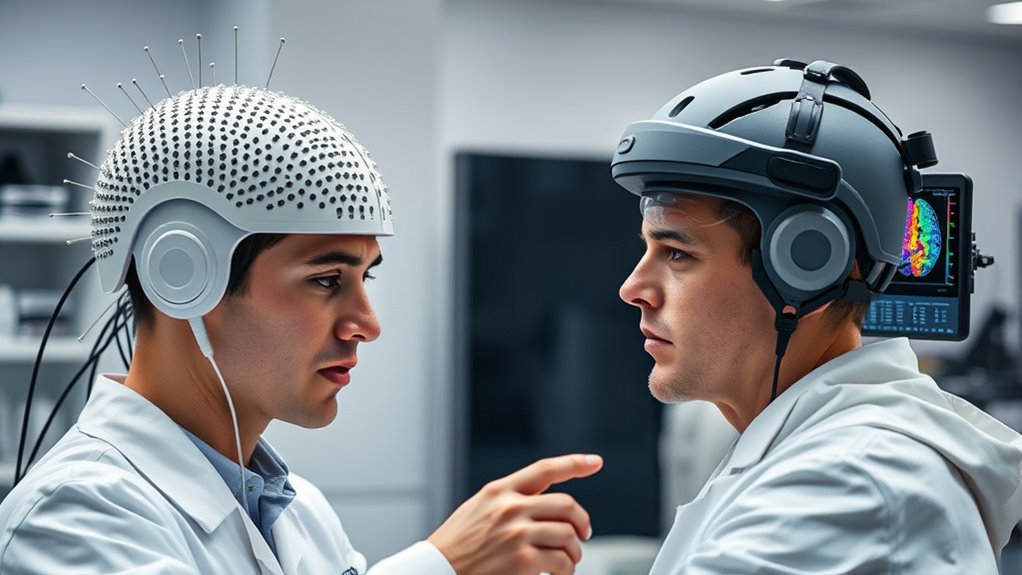

EEG and fNIRS are both useful for brain training, but they serve different needs. EEG tracks rapid electrical activity, giving you immediate feedback and helping you learn to control specific brainwaves quickly. In contrast, fNIRS offers better spatial detail, showing which brain regions are active, but responds more slowly. If you want to understand more about how these tools compare and which might suit your goals, you’ll find helpful insights as you explore further.
Key Takeaways
- EEG offers high temporal resolution for real-time neurofeedback, while fNIRS provides better spatial localization of brain activity.
- EEG is ideal for rapid, immediate feedback; fNIRS is better suited for targeting specific brain regions during training.
- Combining EEG and fNIRS leverages their respective strengths in timing and spatial accuracy for comprehensive brain training.
- EEG’s limited spatial resolution may challenge precise localization, whereas fNIRS offers clearer regional activity insights.
- Technological advancements are improving fNIRS signal quality, making it increasingly viable for effective brain training applications.
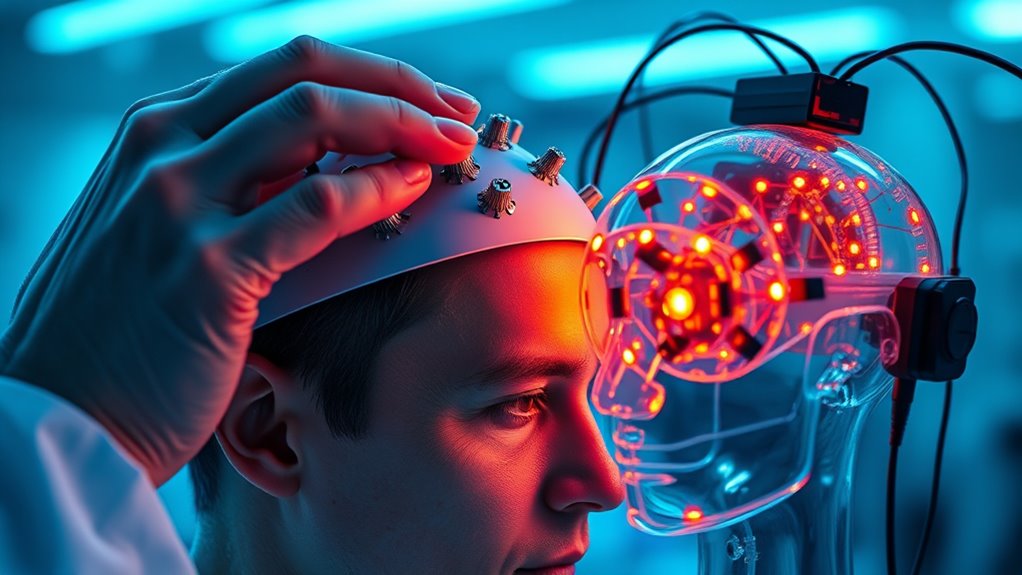
When it comes to brain training, choosing the right neuroimaging technology can make a significant difference in your progress. Two popular options are EEG and fNIRS, each offering unique advantages and limitations. Understanding their differences, especially in terms of neurofeedback accuracy and signal resolution, helps you make an informed decision about which technology best supports your goals.
EEG, or electroencephalography, is widely used because it records electrical activity directly from your brain. Its high temporal resolution allows it to detect rapid changes in brain activity, making it excellent for real-time neurofeedback. When it comes to neurofeedback accuracy, EEG provides precise timing information, which helps you learn to regulate specific brainwave patterns quickly. However, its spatial resolution is relatively limited; it can be challenging to pinpoint the exact location of neural activity because electrical signals diffuse across the scalp. This means that while EEG is superb for tracking fast brain dynamics, it may not always offer the detailed spatial information some training protocols require.
In contrast, fNIRS, or functional near-infrared spectroscopy, measures changes in blood oxygenation in your brain. It provides better signal resolution in terms of localizing activity because it detects hemodynamic responses tied to neural activation. Even though fNIRS has slower temporal resolution compared to EEG, it grants a clearer picture of which specific brain regions are involved during training. This makes it useful if you’re targeting particular areas for improvement, such as the prefrontal cortex. Still, the slower response time means it’s less suited for applications requiring instant feedback. The signal resolution of fNIRS is generally considered superior for spatial accuracy, but it’s more susceptible to noise from external factors like movement or ambient light. Additionally, advancements in technology are improving the signal-to-noise ratio of fNIRS, making it more reliable for precise measurements.
Choosing between EEG and fNIRS depends on your priorities. If rapid, real-time feedback is essential, EEG’s high neurofeedback accuracy and quick response make it a strong candidate. But if your focus is on understanding and training specific brain regions with greater spatial clarity, fNIRS offers better signal resolution for that purpose. Keep in mind that these technologies can complement each other; some advanced setups even combine EEG and fNIRS to leverage both temporal and spatial strengths. Ultimately, your choice should align with your training goals, whether you need immediate, precise feedback or detailed regional insights.
Frequently Asked Questions
How Cost-Effective Are EEG and Fnirs Devices for Home Use?
EEG devices tend to be more cost-effective for home use, especially since they require less frequent device calibration and offer reliable data accuracy for personal training. Fnirs devices, while providing good data accuracy, are often pricier and may need more calibration, making them less accessible. You’ll find EEGs more practical if you’re seeking affordability and ease of use, but consider your specific needs for precision when choosing.
What Are the Maintenance Requirements for Each Technology?
You might wonder what it takes to keep these devices running smoothly. With EEG, you’ll need regular device calibration to guarantee accuracy, and battery life varies but often requires recharging after several hours. Fnirs devices demand minimal calibration, mostly just initial setup, and typically have longer battery life. Both need occasional cleaning and software updates, but EEGs tend to require more frequent attention to maintain ideal performance.
Can EEG or Fnirs Be Used Simultaneously With Other Neurofeedback Tools?
Yes, you can use EEG or Fnirs simultaneously with other neurofeedback tools through multimodal integration, allowing for simultaneous monitoring of different brain signals. This approach enhances your training by providing thorough insights into brain activity. Just ensure your equipment is compatible and properly synchronized, so you get accurate data without interference. Combining these tools can optimize your brain training experience and improve overall effectiveness.
How Do User Comfort Levels Differ Between EEG and Fnirs Devices?
You’ll find that EEG headsets often have better ergonomics, making them more comfortable for extended use, but some users with sensory sensitivity may find the sensor patches or caps intrusive. FNIRS devices tend to be less invasive and more comfortable overall, especially for those sensitive to sensory input. Your comfort depends on your sensory sensitivity and how well the headset’s ergonomics suit your head shape, so trying both options helps determine the best fit.
Are There Specific Age Groups That Benefit More From One Technology?
You might find that children benefit more from fNIRS due to its developmental suitability and comfort, making it ideal for younger users. Conversely, EEG devices often suit older adults better, offering age-related benefits like detailed brain activity insights. Your choice depends on the user’s age group, as each technology provides specific advantages aligned with age-related needs, ensuring effective brain training tailored to different developmental stages.
Conclusion
So, whether you prefer the loud, buzzing EEG or the subtle, shy fNIRS, remember—both promise to uncover your brain’s secret superpowers. One’s like a rock concert, the other a whisper in a library. Either way, you’re just a gadget away from outsmarting your own neurons. So go ahead, pick your poison, and enjoy the thrill of pretending you’re a brainiac—because, after all, who needs facts when you’ve got fancy tech?