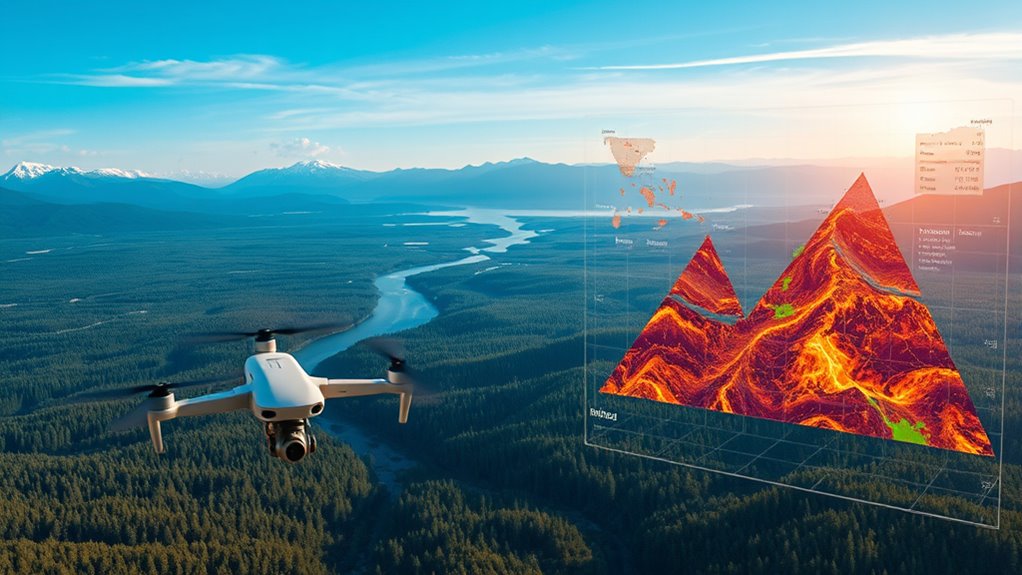

AI plays a vital role in climate science and environmental monitoring by analyzing huge datasets quickly and accurately, helping you understand complex environmental systems. It uses machine learning to identify patterns, predict future impacts, and create detailed models of climate phenomena. These tools support better decision-making, resource management, and conservation efforts. If you want to discover how AI’s advancements are shaping a sustainable future, keep exploring this exciting field.

Get privacy and security gear delivered free with Prime
- Fast, free delivery on millions of items
- Prime Video, Amazon Music and more included
- Member-only deals all year
Key Takeaways
- AI analyzes large environmental datasets rapidly to improve climate models and forecast future scenarios.
- Machine learning identifies patterns in climate data, aiding in understanding complex environmental processes.
- Data modeling simulates climate phenomena, supporting policy decisions and conservation efforts.
- AI enhances environmental monitoring by integrating diverse data sources for real-time insights.
- AI tools assist policymakers in evaluating mitigation strategies and tracking ecosystem changes effectively.

Artificial Intelligence is transforming how we comprehend and address climate change and environmental challenges. With its ability to analyze vast amounts of data quickly and accurately, AI tools are becoming essential for scientists working to understand complex environmental systems. One of the key ways AI contributes is through machine learning, a subset of artificial intelligence that enables computers to identify patterns and make predictions based on data. By applying machine learning algorithms, researchers can develop sophisticated data modeling techniques that simulate climate behaviors, predict future environmental impacts, and identify critical trends. These models help us grasp the intricacies of climate phenomena, from temperature fluctuations to greenhouse gas emissions, giving us clearer insights into what’s happening and why. Additionally, the integration of diverse data sources enhances the robustness of these models, providing a more comprehensive view of environmental dynamics.
You’ll find that data modeling is at the heart of many AI-driven climate solutions. It allows you to create detailed representations of environmental processes, which can then be used to test hypotheses or forecast future scenarios. For example, by feeding satellite images, weather data, and pollution measurements into advanced models, you can predict how deforestation might influence local climates or how rising sea levels could affect coastal communities. These models aren’t just theoretical—they inform real-world decisions, guiding policymakers and conservation efforts. AI-powered data modeling also helps identify vulnerable ecosystems, track changes over time, and evaluate the effectiveness of mitigation strategies. The ability of AI to process diverse datasets enables more accurate and timely environmental monitoring, which is crucial for effective intervention and resource management.
AI environmental monitoring device
As an affiliate, we earn on qualifying purchases.
As an affiliate, we earn on qualifying purchases.
Frequently Asked Questions
How Does AI Predict Long-Term Climate Change Impacts?
You can see how AI predicts long-term climate change impacts through climate modeling and predictive analytics. It analyzes vast data sets from historical climate patterns, greenhouse gas levels, and environmental changes. By identifying trends and simulating future scenarios, AI helps you understand potential outcomes. This enables better decision-making for mitigation and adaptation efforts, making climate predictions more accurate and timely for policymakers and scientists alike.
What Are Ai’s Limitations in Environmental Data Analysis?
You should know AI’s limitations in environmental data analysis include data bias, which can skew results if the data isn’t exhaustive or balanced. Additionally, model interpretability remains a challenge, making it hard to understand how AI reaches certain conclusions. These issues can affect decision-making and trust in AI outputs, so it’s crucial to address them through better data collection and transparent modeling practices.
How Is AI Used in Real-Time Disaster Response?
Imagine AI as a vigilant guardian, instantly analyzing satellite imaging and drone surveillance data during disasters. You rely on AI to detect wildfires early, track hurricanes’ paths, or monitor floods in real-time. It processes vast information swiftly, helping responders make quick decisions. For example, AI identified a flood’s progression within minutes, allowing effective evacuation plans. This rapid analysis saves lives and minimizes damage during emergencies.
Can AI Help Reduce Greenhouse Gas Emissions Effectively?
Yes, AI can help reduce greenhouse gas emissions effectively by optimizing renewable energy systems and supporting policy implementation. You can leverage AI to improve energy efficiency, predict renewable energy outputs, and identify the best locations for new infrastructure. Additionally, AI-driven data analysis assists policymakers in crafting targeted regulations that promote cleaner energy. This combination accelerates the progression to sustainable practices, ultimately lowering emissions and combating climate change.
What Ethical Concerns Arise From AI in Environmental Monitoring?
Like a double-edged sword, AI in environmental monitoring cuts through data but raises ethical concerns. You might worry about privacy concerns, as sensitive info could be exposed or misused. Bias and fairness also creep in, skewing results and decisions that impact communities. You must balance innovation with responsibility, ensuring AI acts as a guardian rather than a threat, respecting rights and promoting equitable outcomes for all.
As an affiliate, we earn on qualifying purchases.
Conclusion
Just like a lighthouse guides ships safely through storms, AI illuminates the path forward in climate science and environmental monitoring. It helps you analyze vast data, predict changes, and make informed decisions faster than ever. By harnessing AI’s power, you can act more effectively to protect our planet. Embrace this technology, and together, you’ll navigate the challenges of climate change with confidence and clarity, turning uncertainty into opportunity for a sustainable future.
As an affiliate, we earn on qualifying purchases.
As an affiliate, we earn on qualifying purchases.
Halloween Picks
halloween
As an affiliate, we earn on qualifying purchases.