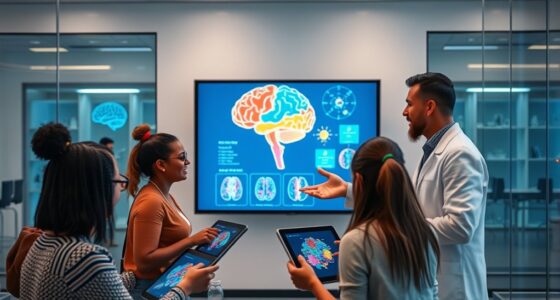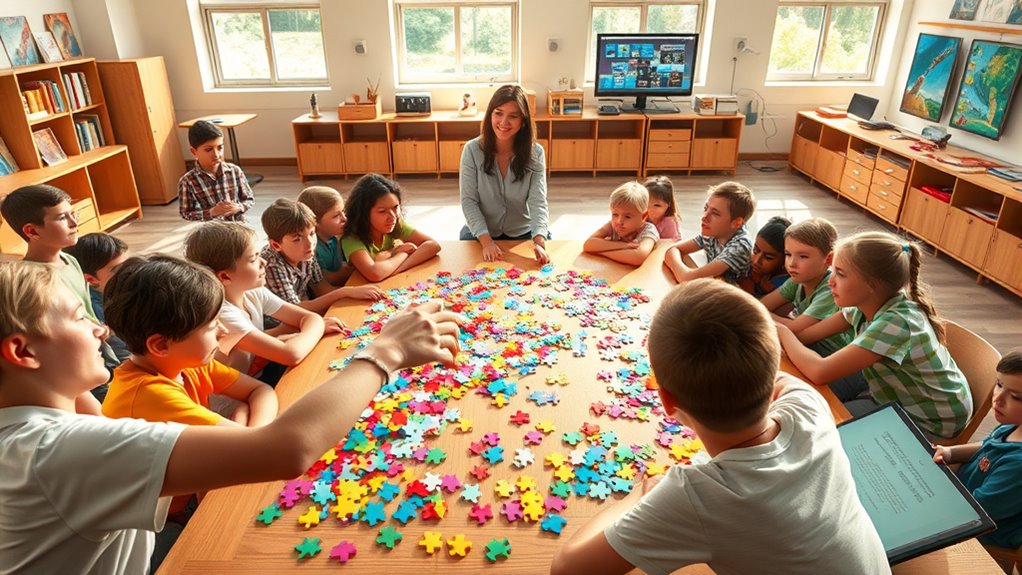

Gamification of learning using puzzles transforms education into a fun, interactive experience that boosts motivation and engagement. When you incorporate puzzles like challenges, quizzes, or problem-solving tasks, you encourage learners to think critically and stay actively involved. These activities create a sense of achievement, foster persistence, and make lessons more relevant. By adding rewards and social recognition, you can inspire students to persist through difficulties. Keep exploring to discover how these strategies can truly energize your teaching approach.
Key Takeaways
- Puzzles serve as engaging tools that reinforce curriculum concepts through critical thinking and problem-solving activities.
- Incorporating puzzles boosts motivation by transforming learning into a game-like experience with rewards and challenges.
- Gamification elements like badges and leaderboards foster social recognition, encouraging persistence and effort.
- Tailoring puzzles to student interests and traits enhances personalization, increasing engagement and relevance.
- Puzzle-based challenges promote experimentation, resilience, and a sense of accomplishment in learners.
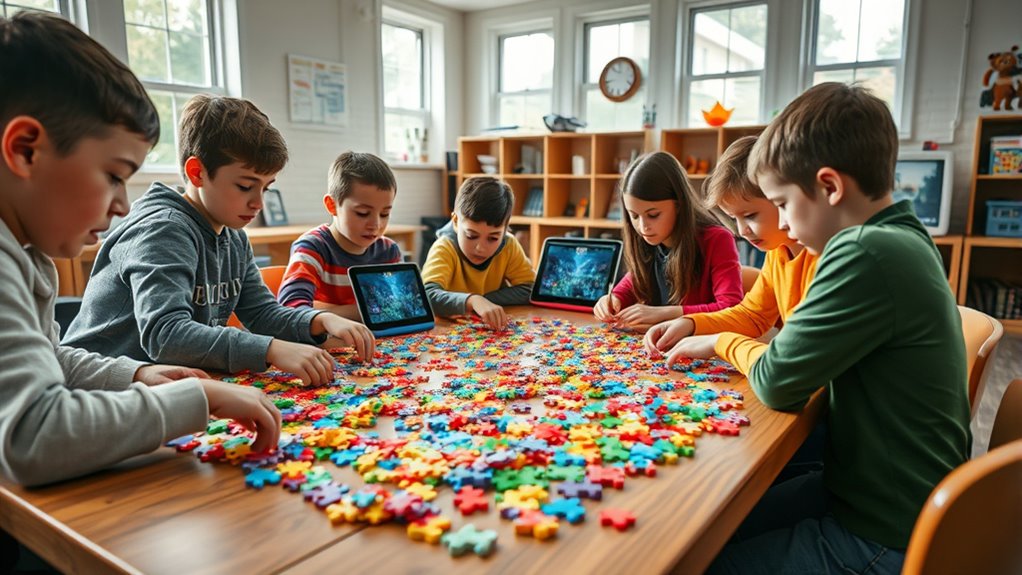
Gamification of learning transforms traditional education by incorporating game elements like points, badges, and leaderboards to boost motivation and engagement. When you integrate these features into your teaching methods, you create a dynamic environment where students are more likely to stay focused and participate actively. Puzzles, in particular, serve as excellent tools within this framework, offering a fun yet challenging way to reinforce concepts. They stimulate educational engagement by encouraging students to think critically, analyze problems, and develop solutions—all while feeling motivated to progress through levels or earn rewards.
Using puzzles as part of your motivation strategies helps turn learning into an interactive experience. Instead of passively absorbing information, students become problem solvers, which increases their intrinsic motivation. When you design puzzles that align with your curriculum, you make learning feel like a game, where success is achieved through perseverance and clever thinking. For example, riddles, crosswords, or logic puzzles can be tailored to match subject matter, making abstract ideas more tangible and relatable. This approach not only enhances understanding but also fosters a sense of accomplishment, which further fuels motivation.
By leveraging the natural human love for challenge and achievement, you can elevate educational engagement. Puzzles encourage students to experiment with different strategies, learn from mistakes, and celebrate small wins along the way. As they progress through increasingly difficult levels, their confidence grows, and they develop a mindset that values persistence and problem-solving. This is especially effective for learners who may struggle with traditional instruction, as puzzles turn learning into a rewarding treasure hunt rather than a chore.
Furthermore, incorporating leaderboards or badges tied to puzzle completion can add a competitive edge that energizes your classroom. Students often thrive on recognition, and earning a badge or climbing a leaderboard can serve as a tangible acknowledgment of their effort and progress. These motivation strategies tap into the desire for achievement and social recognition, making students enthusiastic to participate and improve. Additionally, understanding zodiac sign compatibility can inspire personalized puzzle challenges that cater to students’ interests and traits, increasing engagement and motivation. When you make learning feel like a game, your students are more likely to stay engaged, retain information longer, and develop skills that extend beyond the classroom.

Learning Resources STEM Explorers Brainometry – 3d Puzzle, Brain Games, Brainteaser, Building Logic Toys, Gifts For Boys and Girls, Fine Motor Skills , Pattern Blocks, Math Manipulatives
BRAIN-BOOSTING PLAY – Develops critical thinking and mathematical skills through colorful pattern matching activities that challenge young minds…
As an affiliate, we earn on qualifying purchases.
As an affiliate, we earn on qualifying purchases.
Frequently Asked Questions
How Can Teachers Integrate Puzzles Into Their Existing Curriculum Effectively?
You can effectively integrate puzzles into your curriculum by leveraging educational technology to create interactive activities that boost classroom engagement. Start by aligning puzzles with your learning objectives and subjects, then incorporate digital tools or physical puzzles during lessons. This approach encourages active participation, making lessons more dynamic. Regularly assess student responses to refine your methods, ensuring puzzles complement your teaching style while enhancing understanding and motivation.
What Are the Best Types of Puzzles for Different Age Groups?
When choosing puzzles for different age groups, you need to take into account age-appropriate puzzles that match their cognitive development levels. For young children, simple jigsaw puzzles and shape sorting games work best, fostering fine motor skills and problem-solving. Older students benefit from logic puzzles and riddles that challenge critical thinking. Tailoring puzzles to their developmental stage keeps them engaged and promotes effective learning through appropriate cognitive challenges.
How Do You Assess Student Progress Through Gamified Puzzle Activities?
When evaluating student progress through gamified puzzle activities, you should focus on formative assessment strategies that track their problem-solving skills, critical thinking, and engagement levels. Observe how students approach puzzles, noting improvements or persistent challenges. You can also incorporate real-time feedback and quizzes to gauge understanding. By doing so, you keep students engaged and gain valuable insights into their learning progress, allowing you to tailor your instruction accordingly.
Can Digital Puzzles Replace Traditional Teaching Methods Entirely?
You wonder if digital puzzles can fully replace traditional teaching methods. While they boost digital engagement and support cognitive development, they shouldn’t be the sole approach. Combining digital puzzles with lectures, discussions, and hands-on activities offers a well-rounded education. This balanced mix guarantees students develop critical thinking, creativity, and social skills, making learning more effective and engaging without depending entirely on digital tools.
What Are Common Challenges Faced When Implementing Gamification in Classrooms?
Steering gamification in classrooms can feel like walking a tightrope. You often face challenges like maintaining student engagement and overcoming technological barriers. Limited access to devices or unreliable internet can hinder implementation, making it hard to keep students motivated. Additionally, integrating gamified activities smoothly into the curriculum requires careful planning. Addressing these issues demands patience and flexibility, but with persistence, you can turn these obstacles into opportunities for dynamic learning experiences.

Teacher Created Resources I Am__ Years Old Today WearEm Badges (5470)
32 badges per pack
As an affiliate, we earn on qualifying purchases.
As an affiliate, we earn on qualifying purchases.
Conclusion
By incorporating puzzles into your teaching, you make learning more engaging and effective. Studies show that gamified lessons can boost student motivation by up to 60%, making complex concepts easier to grasp. When you turn education into a game, you not only foster curiosity but also enhance retention. So, next time you’re planning a lesson, think about adding a puzzle—it’s a proven way to keep your learners motivated and enthusiastic to discover more.
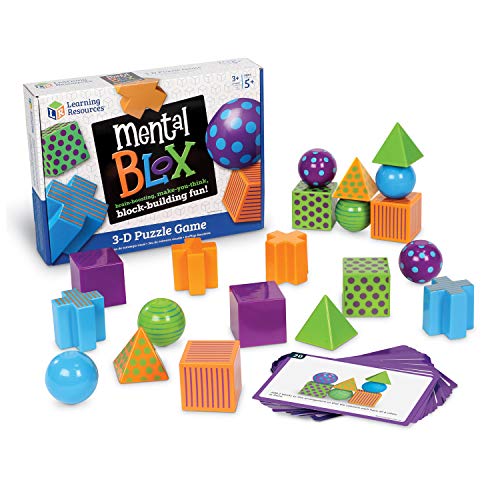
Learning Resources Mental Blox Critical Thinking Game, Homeschool, 20 Blocks, 40 Activity Cards, Ages 5+,Multicolor
Stack, pattern and match the multicolor shapes, but don’t be fooled by these endlessly enjoyable blocks mean brain-boosting…
As an affiliate, we earn on qualifying purchases.
As an affiliate, we earn on qualifying purchases.

Learn About Life Dinosaur Trivia Puzzle – Large 72-Piece Educational Dinosaur Puzzle with Fun Dino Trivia | Interactive Learning Puzzles for Kids Ages 6+ | Giant Floor Puzzles for Playtime & Discovery
Dinosaur Trivia Learning Puzzle for Kids: This Learn About Life Dinosaur Trivia Floor Puzzle includes a unique dinosaur…
As an affiliate, we earn on qualifying purchases.
As an affiliate, we earn on qualifying purchases.