

AI-driven personal assistants can help you manage tasks, access information quickly, and control smart devices to simplify your daily routine. They save time by automating routine activities but also raise privacy concerns since they require access to your personal data. Limitations include misunderstandings, inaccuracies, and a lack of genuine empathy or judgment. To understand how to make the most of these tools while staying aware of their boundaries, keep exploring their capabilities and risks.
Key Takeaways
- AI personal assistants can manage tasks, access information, and control smart devices to enhance daily convenience.
- They rely on personal data, raising privacy concerns about data security and user control.
- Limitations include misinterpretation, inaccuracies, lack of empathy, and dependence on training data.
- Ethical issues involve transparency, bias, and potential reinforcement of stereotypes or misinformation.
- Users should be aware of AI vulnerabilities and use these tools responsibly, recognizing their reliability limits.
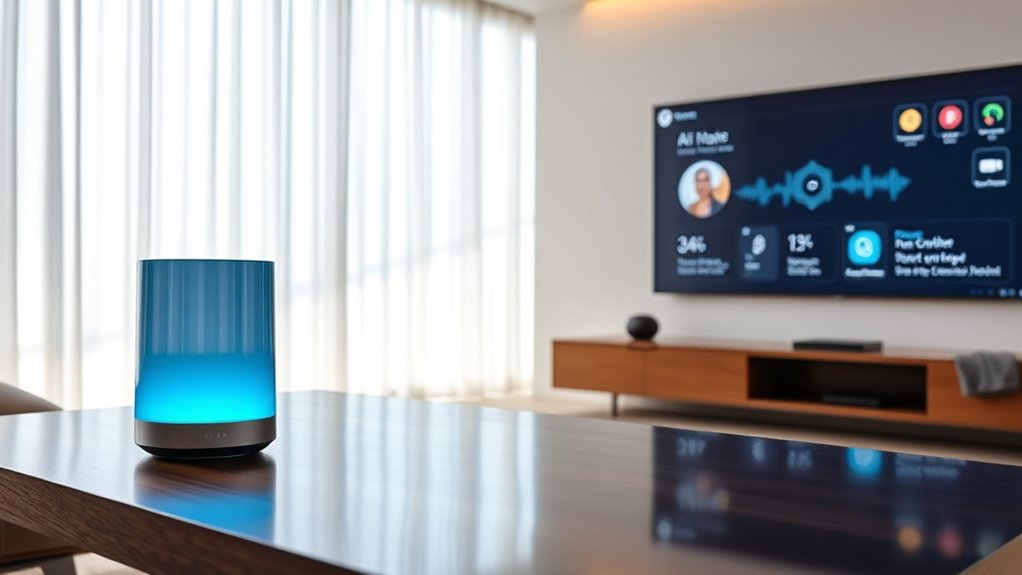
AI-driven personal assistants have become an integral part of daily life, transforming how you manage tasks, stay organized, and access information. These digital helpers can schedule appointments, set reminders, answer questions, and even control smart home devices. Their capabilities offer unmatched convenience, saving you time and effort. However, as you rely more on these assistants, it’s essential to recognize the limitations and concerns that come with their use.
One of the biggest issues revolves around privacy concerns. AI assistants require access to your personal data to function effectively, which means they collect, analyze, and store information about your routines, preferences, and even sensitive details. This data collection raises questions about how securely your information is stored and who has access to it. You might worry about data breaches or unauthorized use of your information, especially when third parties are involved. While many companies implement robust security measures, the risk of privacy violations remains an ongoing concern. You should be aware of the privacy policies and permissions you grant when setting up or using these assistants, as well as stay informed about how your data is handled.
AI assistants collect and store personal data, raising concerns about security, privacy, and potential misuse by third parties.
Alongside privacy issues, ethical considerations also come into play. AI assistants are designed to learn from your interactions and improve over time, but this raises questions about transparency and bias. For example, how much control do you really have over your data, and are the algorithms making unbiased decisions? Developers often face dilemmas about how to balance personalization with user privacy, ensuring that the AI’s actions align with ethical standards. There’s also the risk of these assistants inadvertently reinforcing stereotypes or misinformation if their training data isn’t carefully curated. As a user, it’s wise to question the ethical implications of the technology and push for transparency from service providers to ensure your rights are protected. Additionally, understanding the trustworthiness of AI models like GPT-4 is crucial, as even advanced systems can have vulnerabilities that impact reliability and safety.
Despite their impressive capabilities, AI personal assistants are not infallible. They can misinterpret commands, struggle with complex or ambiguous requests, and sometimes produce inaccurate or irrelevant responses. Their intelligence is limited to the data they’ve been trained on and the algorithms guiding their behavior. Additionally, they lack genuine human empathy and judgment, which means you shouldn’t rely solely on them for critical decisions or nuanced conversations. Recognizing their limitations helps you use these tools more effectively and responsibly.
As an affiliate, we earn on qualifying purchases.
Frequently Asked Questions
How Do AI Personal Assistants Handle Sensitive User Data?
You should know that AI personal assistants handle sensitive user data with care. They use data encryption to secure your information and make sure that your privacy stays protected. These assistants are designed to follow strict privacy policies, limiting access to your data and giving you control over what’s shared. By prioritizing user privacy and employing robust security measures, they aim to keep your personal information safe from unauthorized access.
Can AI Assistants Understand Multiple Languages Simultaneously?
Like a skilled polyglot, your AI assistant can understand multiple languages simultaneously. It’s designed for multilingual understanding, allowing seamless language switching during conversations. This means you can speak in one language and switch to another effortlessly, and your assistant will follow suit without missing a beat. Its advanced language models enable it to interpret diverse linguistic nuances, making it a versatile communicator that adapts to your multilingual needs with ease.
What Are the Main Barriers to Adopting AI Assistants in Workplaces?
You might hesitate to adopt AI assistants in your workplace because privacy concerns often arise, making you worry about data security and confidentiality. Additionally, integration challenges with existing systems can slow down implementation and cause disruptions. These barriers make it harder for you to fully trust and rely on AI assistants, even though they could boost productivity. Overcoming these issues requires addressing security protocols and ensuring seamless integration.
How Do AI Assistants Improve Over Time With User Interactions?
Ever wonder if your AI assistant is secretly taking notes on your coffee preferences? It’s not just your imagination. Thanks to learning algorithms and user feedback, AI assistants improve over time by analyzing your interactions, refining their responses, and anticipating needs. The more you engage, the smarter they get—like a digital apprentice enthusiastic to master your daily routines, making it easier to navigate your busy life, one interaction at a time.
Are AI Assistants Capable of Emotional Recognition and Response?
AI assistants are advancing in emotional recognition and response, using tools like facial recognition and emotional empathy algorithms. They can detect subtle cues, like facial expressions or tone of voice, to better understand your feelings. While they don’t truly experience emotions, they respond more empathetically over time, making interactions feel more natural. However, their emotional capabilities are still limited and can’t match genuine human empathy.
As an affiliate, we earn on qualifying purchases.
Conclusion
As you rely on AI-driven personal assistants, remember they’re like guiding stars—bright and helpful, but not the North Star itself. They illuminate your path, yet lack the depth of human understanding. Embrace their capabilities, but stay grounded in your own judgment. These tools are symbols of progress, shining light on your potential, yet always requiring your human touch to truly navigate life’s vast universe. Trust them wisely, and keep your heart at the center.
As an affiliate, we earn on qualifying purchases.
As an affiliate, we earn on qualifying purchases.