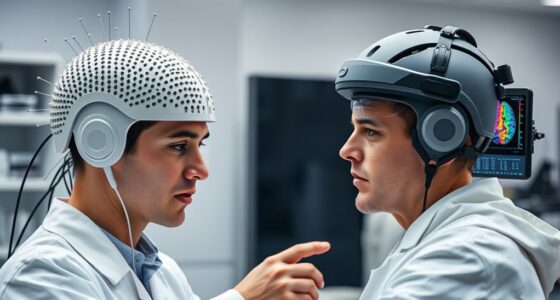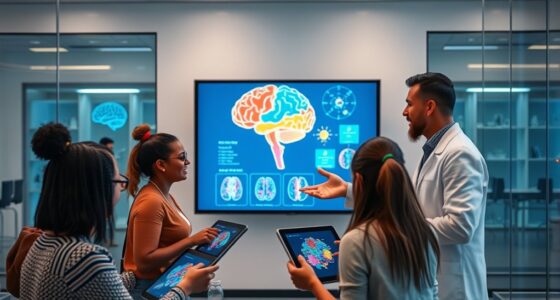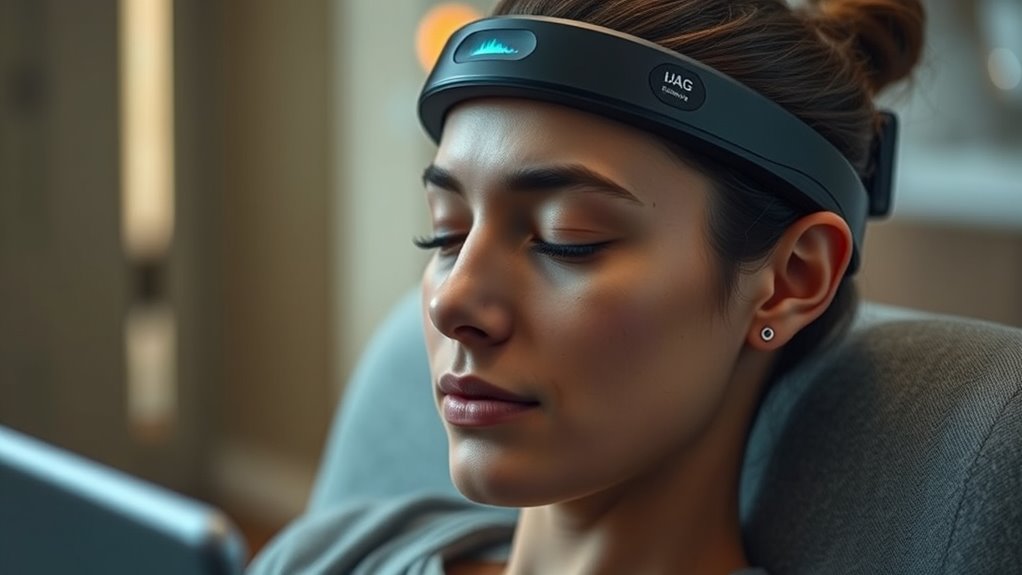

Wearable devices now let you monitor your brain health in real time, giving personalized insights into your mental well-being throughout the day. These sensors detect electrical signals in your brain, helping you track focus, relaxation, and signs of fatigue or stress. They support neurofeedback therapy, promote healthier mental habits, and enable at-home brain training routines. If you want to understand how these tools can transform your mental health management, there’s more to discover ahead.

Get privacy and security gear delivered free with Prime
- Fast, free delivery on millions of items
- Prime Video, Amazon Music and more included
- Member-only deals all year
Key Takeaways
- Wearable devices track electrical brain signals in real-time, enabling continuous monitoring of cognitive health outside clinical settings.
- These devices provide personalized feedback to help optimize mental performance and detect early signs of cognitive decline or mental health issues.
- Neurofeedback features allow users to regulate brainwaves, reducing stress and improving focus through real-time data insights.
- Wearables facilitate lifestyle adjustments by identifying patterns linked to mental states, supporting better sleep, stress management, and mental resilience.
- Ongoing advancements integrate brain monitoring into daily routines, promoting proactive mental health management and personalized cognitive enhancement.
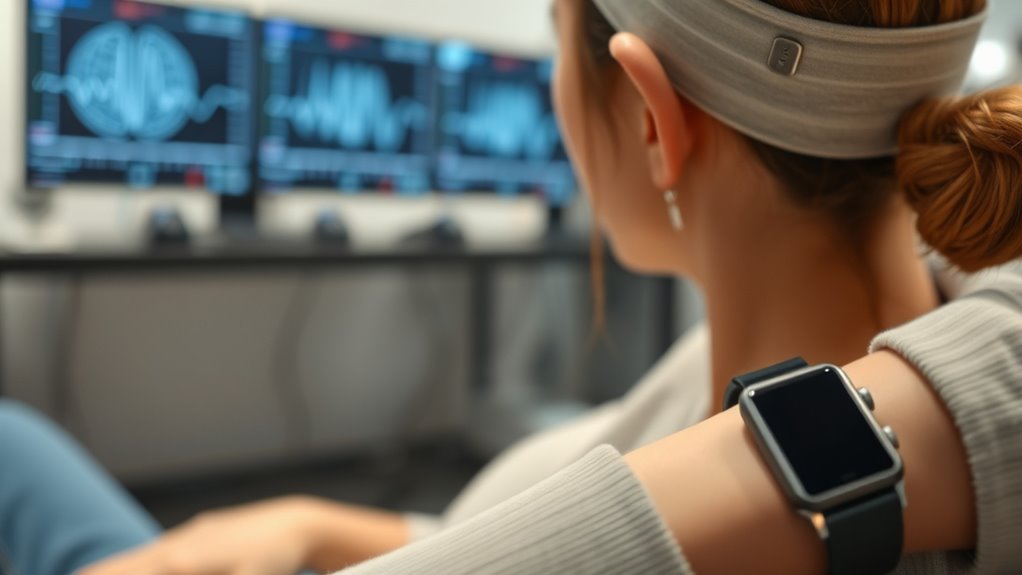
As wearable devices become more advanced, they offer a promising way to monitor your brain health in real time. These gadgets can track brain activity through sensors that detect electrical signals, helping you understand how your brain functions throughout the day. With this data, you can explore neurofeedback therapy, which trains your brain to improve its performance by providing real-time feedback. Neurofeedback uses the insights gathered from wearables to help you learn how to regulate your brainwaves, potentially reducing stress, enhancing focus, and improving overall mental well-being. This method is gaining popularity because it offers a non-invasive, personalized approach to cognitive enhancement, enabling you to actively participate in optimizing your brain health.
Wearable devices enable real-time brain monitoring and neurofeedback for personalized cognitive enhancement and mental well-being.
Using wearable devices, you can identify patterns in your brain activity linked to focus, relaxation, or fatigue. This information allows you to tailor your mental exercises and lifestyle choices to maximize cognitive performance. For instance, if the device detects increased stress levels, you might choose to practice deep breathing or mindfulness to calm your mind. Over time, this continuous feedback helps you develop healthier mental habits and strengthen neural pathways associated with attention and emotional regulation. Such proactive monitoring makes it easier to recognize early signs of cognitive decline or mental health issues, prompting timely intervention before problems escalate.
The integration of neurofeedback therapy with wearable technology also democratizes access to cognitive enhancement. Instead of relying solely on clinical settings, you can engage in brain training exercises at home, guided by data from your device. This empowers you to take control of your mental wellness, making adjustments based on your unique brain activity patterns. As these devices become more sophisticated, they can even suggest personalized routines designed to boost memory, concentration, and emotional resilience. With continuous monitoring, you’ll gain insight into how your lifestyle impacts your brain health, encouraging healthier habits like improved sleep, balanced nutrition, and regular mental exercises.
Furthermore, understanding aura variations and their meanings can complement your brain health strategies, providing additional insights into your emotional and spiritual well-being. Ultimately, wearable devices are transforming the way you approach brain health. They serve as your personal dashboard, providing real-time insights that support neurofeedback therapy and cognitive enhancement strategies. By incorporating these tools into your daily routine, you’re not just passively observing your mental state—you’re actively shaping it. This proactive approach can lead to better mental clarity, reduced stress, and a more resilient brain. As technology advances, these wearables will become even more integral to maintaining *ideal* brain health, putting powerful tools for mental fitness directly into your hands.
As an affiliate, we earn on qualifying purchases.
Frequently Asked Questions
Are Wearable Devices Accurate Enough for Clinical Brain Health Diagnosis?
Wearable devices are improving, but they still aren’t accurate enough for clinical brain health diagnosis. You need to guarantee proper device calibration and understand that data interpretation varies with each user. While they can provide useful insights and monitor trends, they shouldn’t replace thorough clinical assessments. Always consult healthcare professionals for accurate diagnosis, as wearable devices serve better as supplementary tools rather than definitive diagnostic instruments.
How Secure Is My Brain Data Stored on Wearable Devices?
Your brain data stored on wearable devices is generally secure, but it depends on the device and provider. Reputable brands follow strict data privacy protocols and use advanced encryption standards to protect your information. However, always stay informed about their privacy policies, enable security features, and limit data sharing. You’re responsible for maintaining your data privacy by choosing trusted devices and regularly updating security settings.
Can These Devices Detect Early Signs of Neurodegenerative Diseases?
Think of wearable devices as early warning systems for your brain’s health. They can detect subtle changes that may signal neurodegenerative diseases, aiding early detection and disease prediction. While data accuracy improves, privacy concerns remain, and user accessibility varies by age. These devices are becoming more age-suitable, helping you monitor your brain health proactively, much like a car’s dashboard alerts you to potential issues before a breakdown occurs.
What Is the Battery Life of Brain-Monitoring Wearable Devices?
You’ll find that the battery longevity of brain-monitoring wearable devices varies, typically lasting from one to several days depending on usage. Effective power management features help extend battery life, ensuring your device stays operational longer. To optimize performance, regularly update software, turn off unnecessary functions, and follow manufacturer guidelines. This way, you get reliable monitoring without frequent recharging, making it easier to track your brain health consistently.
Are Wearable Brain Health Devices Suitable for Children and Seniors?
Did you know that over 60% of parents consider safety a top priority? Wearable brain health devices can be suitable for children and seniors when designed with child safety and senior usability in mind. These devices often feature easy-to-use interfaces, comfortable designs, and safety features to protect vulnerable users. Always check for age-appropriate features and consult healthcare professionals to make sure they meet individual needs and safety standards.
As an affiliate, we earn on qualifying purchases.
Conclusion
So, here you are, armed with tiny gadgets promising to monitor your brain’s every move. Ironically, while they aim to protect your mind, they often overlook the simple fact that sometimes, the best way to keep your brain healthy is to give it a break from screens and sensors. In the end, these wearables might just remind you that no device can replace good old-fashioned rest, hydration, and a little human intuition.
cognitive enhancement wearable device
As an affiliate, we earn on qualifying purchases.
As an affiliate, we earn on qualifying purchases.
As an affiliate, we earn on qualifying purchases.
Halloween Picks
halloween
As an affiliate, we earn on qualifying purchases.